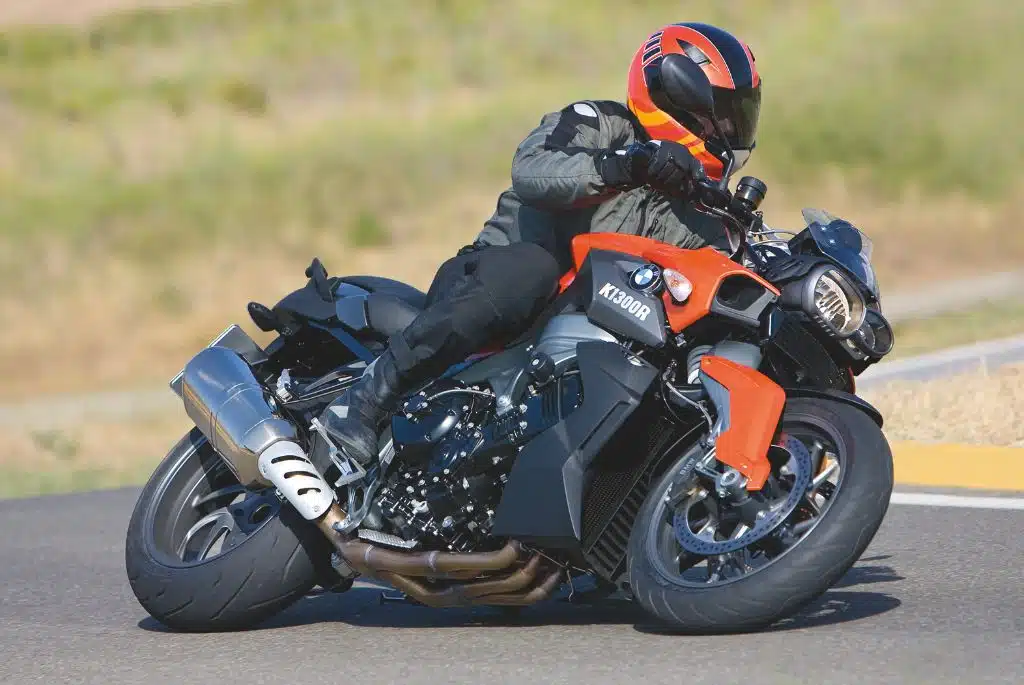
The BMW K1300R arrived in 2009 as BMW’s flagship naked “power roadster”. It was introduced at the 2008 Intermot show as the most powerful urban bike BMW had built, boasting a 1,293 cc inline-four that made about 173 hp and 140 Nm of torque. This big, broad-shouldered machine blended cruiser-like comfort with superbike thrust. Riders immediately note its long 62.4-inch wheelbase and Duolever front suspension, which give the heavy K1300R a stable, planted feel at speed even before the throttle is opened wide.
BMW K1300R: Engine and Performance
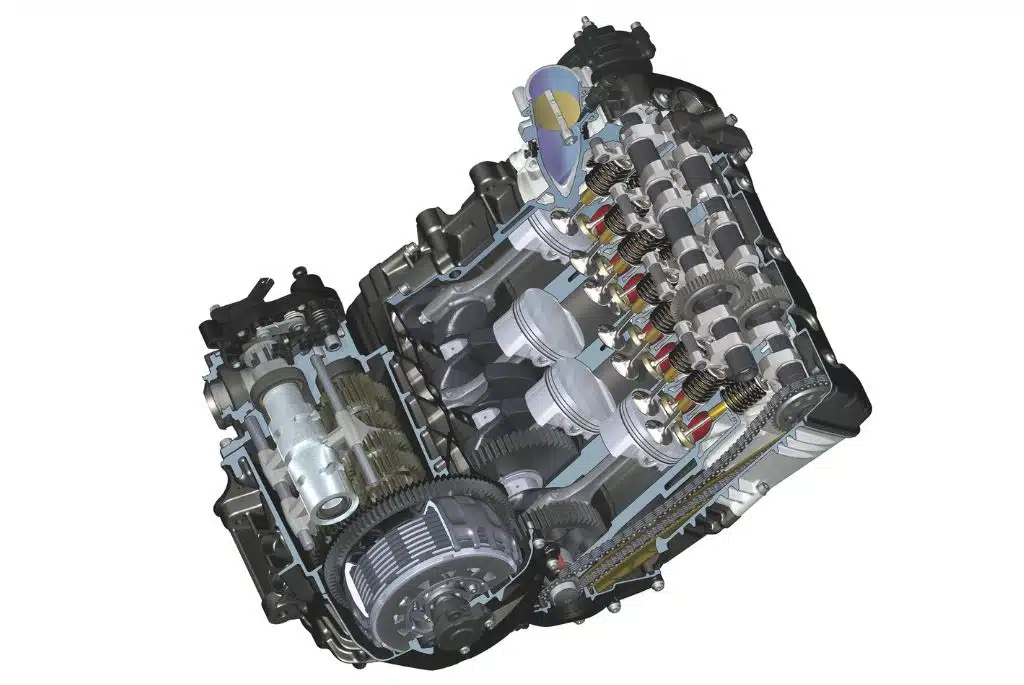
The K1300R’s muscular styling conceals a heavily modified version of BMW’s K-series four-cylinder. It replaced the 1,293 cc engine with a 13.0:1 compression ratio, and generated 127 kW (173 hp) at 9,250 rpm and 140 Nm (103 lb-ft) at 8,250 rpm. BMW built the K1300R with tractable torque in mind. More than 70 percent of maximum torque is available at just 3,000 rpm, and it offers around 10 percent more torque in the midrange than the original K1200R. This is roll-on power that is pretty much effortless. BMW claims a 0-100 km/h time in under 2.9 seconds, and a 0-150 km/h sprint in under 5 seconds. Independent tests confirmed the dragstrip supremacy: Motorcycle Magazine ran 0- 62 mph in 2.81s, only ahead of naked bikes such as the Suzuki B-King in the competition. .
Part of the fun is the sheer instant grunt. Traction control and an optional HP quickshifter keep that force in check. As one reviewer quipped, the K1300R’s throttle response “twists your arm and neck muscles to their limits” when crackling past 5,000 rpm. BMW also lowered the final drive ratio compared to the K1200R, explicitly trading top speed for stronger acceleration in the real-world riding band. The six-speed gearbox (with an up-only quickshifter option) mates to a shaft final drive a setup carried over and modified from the K1300S superbike. In sum, the K1300R feels like a serious muscle bike: “stamping on the gas on this thing squirts speed” through the 6-speed box with reassuring smoothness.
BMW K1300R: Chassis, Suspension and Handling
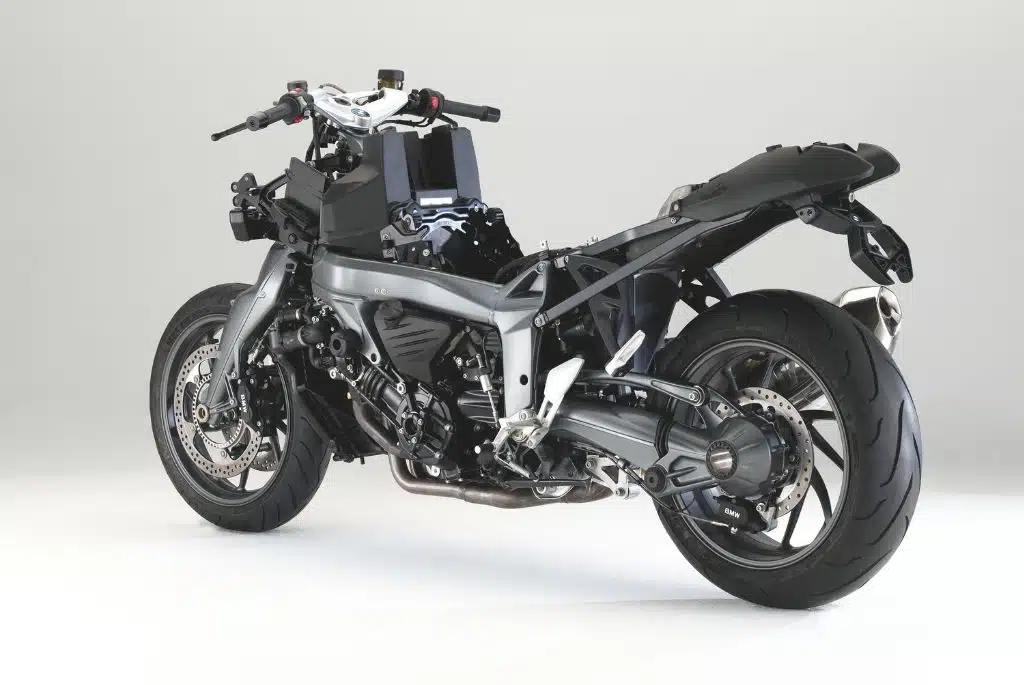
Although it packs superbike power, the K1300R was never intended as a sharp edged road racer. BMW built it on a long 1,585 mm wheelbase (up from 1,596 mm on the K1200R) and gave it slack geometry for stability. The result is a motorcycle that “is a roadster rather than a super-naked”. Its Duolever front end (with a centrally mounted spring strut) and Paralever rear suspension soak up bumps smoothly. Reviewers note that at speed the R feels surprisingly confidence-inspiring: through fast, sweeping corners it “delivers a very unique riding experience” with good stability. The uprated ESA-II optional suspension lets riders instantly stiffen the setup for sporty riding or soften it for touring, ensuring the big Roadster can adapt to tight backroads or highway runs.
Turning the bars reveals some trade-offs. At city speeds the K1300R’s weight (about 217 kg dry, 243 kg full) and long wheelbase make it a handful in tight traffic. Above walking pace, however, it tracks true. The steering is neutral and, despite the size, the bike feels “very smooth and responsive”. Late braking is a strength testers found the ABS effective even under hard stop attempts. One reviewer summed it up: it “might weigh 480 pounds dry, but it can still rock in the canyons,” mixing endless torque with surprisingly light steering. In short, the K1300R is heavy, but it can hustle through bends with poise if one is willing to work the controls and ESA settings.
BMW K1300R: Tech and Equipment
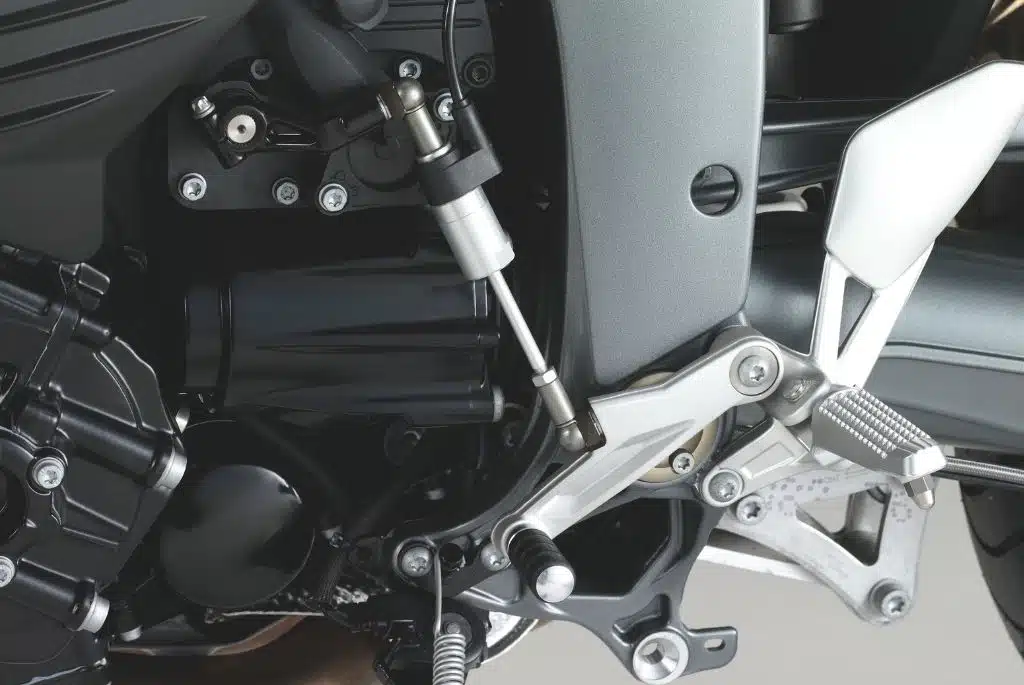
BMW lavished technology on the K1300R. In addition to the Duolever fork and Paralever swingarm, the bike offered an (almost) full suite of electronic aids. Traction control (ASC) and ABS were optional, but nearly all UK models have them fitted. An easy-shift system (called the HP Gearshift Assistant) lets riders upshift without clutch or throttle blip. A wide LCD cluster displays gear selection, fuel, temps and even a tire-pressure monitor if equipped. Deluxe features like heated grips and heated seats were popular, and many owners fit the larger touring windscreen and panniers to transform the R into a sport-tourer despite its naked stance.
Many of these features came from the K1300S sportbike or BMW’s HP accessories catalog. For example, the engine’s airbox is a derivative of the K1300S design, and many K1300R owners ticked the same optional ESA-II and HP quickshift. As MG Reviews notes, the K1300R shares “the same architecture” as the K1300S – even the Veyron-tuner Ricardo helped refine the motor – so reliability of the drivetrain is strong. The main downsides are practical: there’s minimal weather protection without a fairing, and that large aluminum tank means the seat is quite high (standard 820 mm) not a sportbike crouch. But for many riders the upright ergonomics, wide bars and electronic aids turned the K1300R into a surprisingly comfortable long-distance machine.
BMW K1300R: Reliability and Ownership
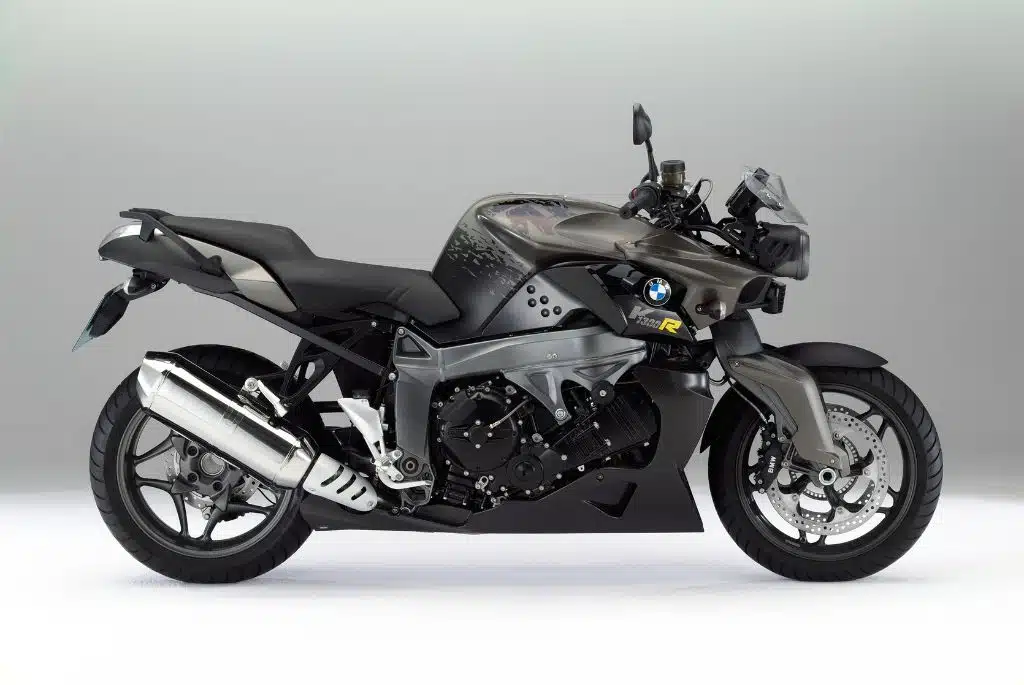
Overall, the K1300R proved more reliable than BMW’s earlier K1200R. As Bennetts observes, “unlike the K1200 models, the K1300s are much more reliable”. The K1200R had cam chain tensioner recalls and other issues; the 1300 is essentially free of those. The biggest complaint is cosmetic: paint flaking off the rear hub or swingarm. There were a couple of minor recalls (e.g. a starter switch fix), but no widespread failures. Owners should still watch for the usual: the radiator can corrode (especially if fans run constantly, implying cooling trouble) and the mandatory 18,000‑mile valve clearance check is labor-intensive (around £800 in a shop). The optional quickshifter can wear gear dogs if abused. But apart from those service items, the K1300R’s drivetrain is rock-solid.
BMW K1300R: Market Value and Rarity
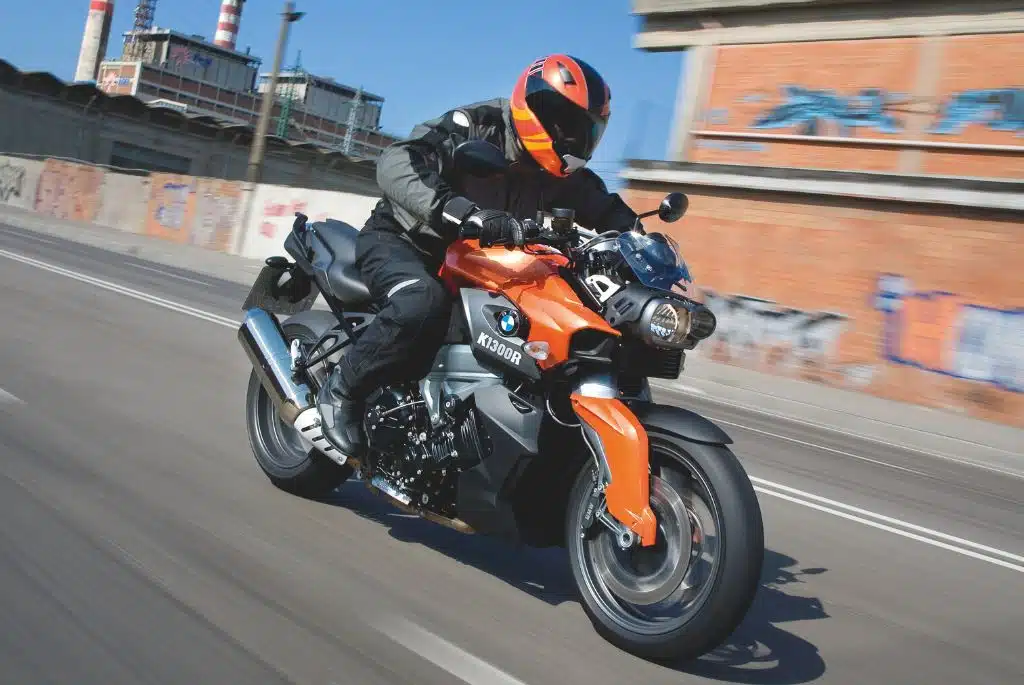
When new in 2009, the K1300R was priced at around $16,350 USD (around £12,200). But it never became a significant volume seller, in part because of its high price and restricted appeal. Today, values depend on its rarity and condition. A tidy K1300R with moderate miles (~20k) will normally trade around £5-7k in the UK. You can get unloved high-mileage examples for around £4.5k, while cared-for machines with options would command a little more. As a point of reference, a 2013 review had a base price of just over $17k CAD (≈£8k) and warned that dealer options (ABS, Akrapovic exhaust, heated gear, etc.) could easily push the total far over $20k CAD. Simply put, these folks generally buy old bikes that come with a ton of tech for the money. Replacement parts (shocks, ECU, etc) are still available from BMW and the aftermarket. Quickshifters and bespoke seats are popular additions, and you may add value with long-wheelbase touring screens or HP trims.
The K1300R’s closest challenger was the Suzuki B-King, but BMW’s roadster took the tech and refinement honors. Very few modern naked bikes can equal its throttle-on power and steadiness. Its unique spec (Duolever, reverse headlight design, large V-baffle muffler) makes a good K1300R highly collectible today.
Also read: Redefining SuperSport Experience: Exploring Yamaha R7
Why the BMW K1300R Still Matters
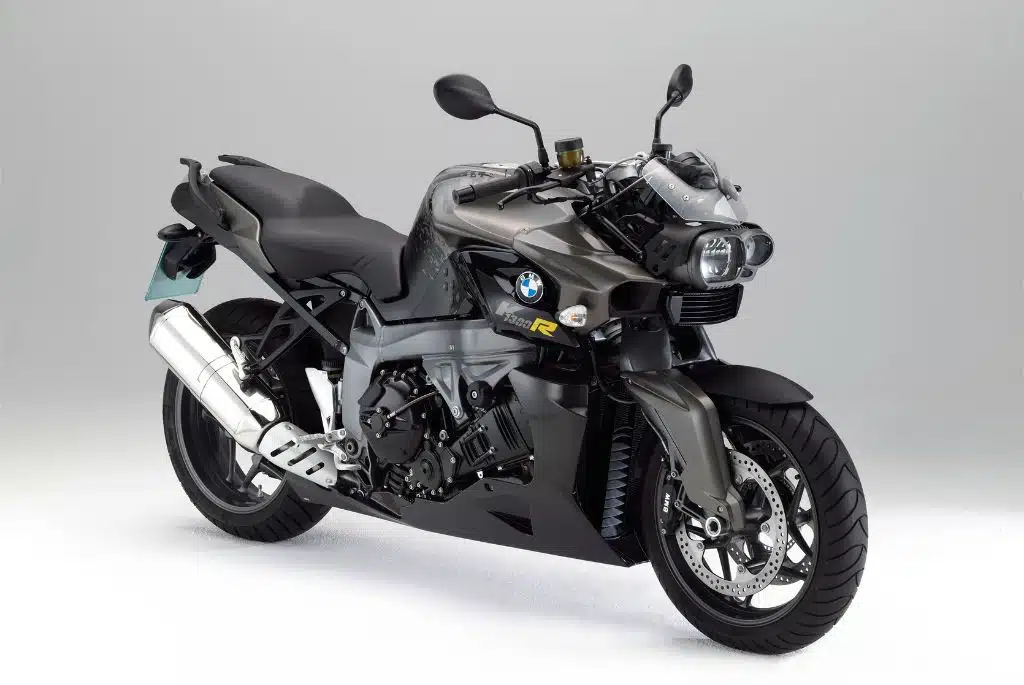
The BMW K1300R remains a great chapter in the history of BMW motorcycles. It had the brute force of acceleration and a high-tech chassis like no other naked bike at the time. With a 173-hp engine and a broad torque curve, it was a ferocious road rocket, but BMW tempered it with shaft drive, ABS, ESA and comfort features. Reviewers said it was more like “a very powerful do-it-all” roadster than a pure sportbike. The bike had its strengths – huge low-end punch and stability – sometimes working against its size (it isn’t nimble at parking-lot speeds), but it was sublime for open-road riding.
Is there a chance to get better results? Most importantly, Today, riders and collectors value the BMW K1300R for its titles, but for its complete software: a mesomorphic and standing chassis with BMW timbre and culture, and Gadgetry is still impressed. From a technical perspective, its rarity (never sold in the United States) and its distinctive vogue (large horizontal fins and LED accents on later models) complement its mystical vogue. It was a sight like BMW A.Street Muscle .. Machine volunteered both execution and polishing. This combination of props. One advantage of this is that its legacy is one of the raw forces transmitted by precision technique – an answer from Bavaria for riders who require the drama of a superbike with the simplicity of a runabout, without making it overly complicated.
About The Author