Some cars become fables because they are fast. Others merit attention by the most modern spectacular style or technology. The Mercedes-Benz W123 has outdated another road. He progressed his reputation by what a good motorway should do: start dependably, travel comfortably and act long after his kilometer time compiled some clean stories.
The W123 became one of Mercedes-Benz’s most successful models. Approximately 2.7 Million vehicles were manufactured in various body styles, including limos, coupes, sedans, and bare chassis.
Its appeal was never to watch trends. Instead, the w123 unites discreet style, sustainable technology and a comfortable driving experience. Decades subsequently, he stays a favourite among the old-time enthusiasts who appreciate the essence of the show. In a world where slashers look like smartphones, the W123 reminds us that a well-built automobile does not need a package update to gain regard.
Mercedes-Benz W123 History: How a Practical Sedan Became a Legend
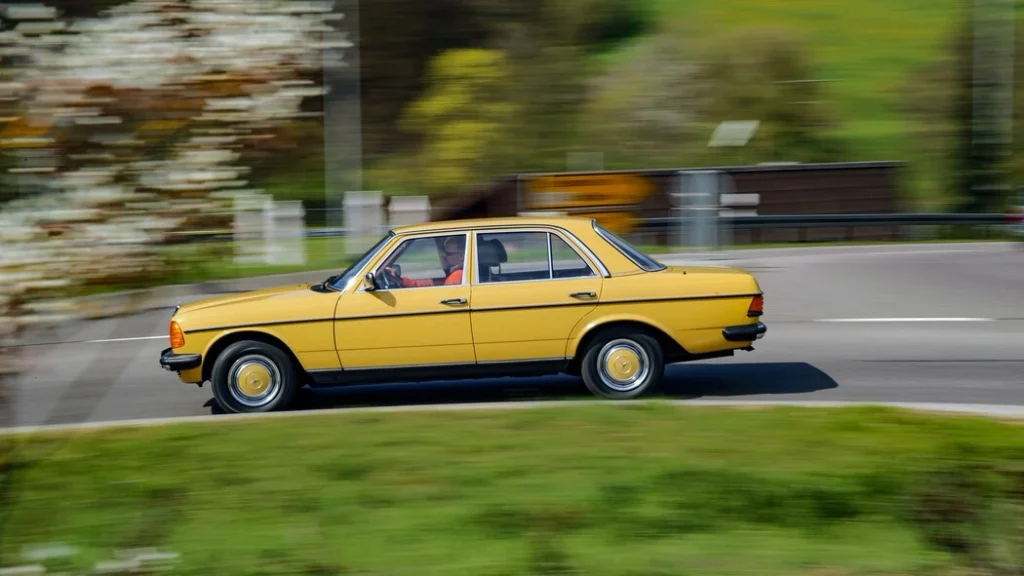
The mercedes-benz w123 superseded the W114, and W115 models, commonly known as stroke-eight. It has added an updated style, improved comfort and a range of mechanical choices while wielding the traditional mercedes-benz approach in engineering.
The saloon made its public debut in January 1976, and demand quickly outpaced supply. Buyers in some markets faced long waiting periods, demonstrating just how desirable the new model had become.
Mercedes-Benz expanded the range to appeal to different customers. The C123 coupé arrived in 1977, followed by the S123 estate, which entered production in 1977 and reached customers in 1978. Long-wheelbase versions also served chauffeur-driven transport and commercial duties.
W123 built up a great reputation because it was fun to drive everyday. It had a comfortable secret stash, and taxi drivers loved it because it was durable and practical. Although he didn’t have any flash features his success came from a combination of features which meant he was reliable.
Production of the saloon ended in November 1985, while other versions continued into 1986. By the end of the model series, Mercedes-Benz had built nearly 2.7 million vehicles.
Mercedes-Benz W123 Design: Elegance That Never Needed to Shout
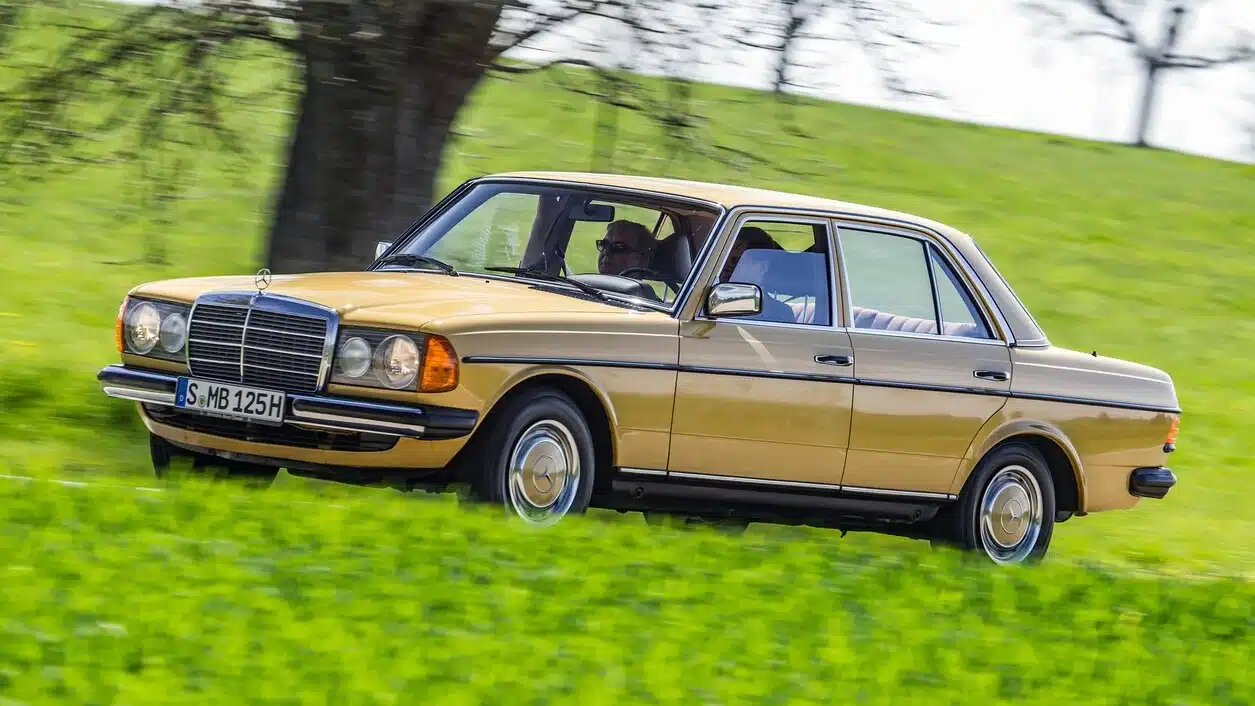
The W123 looks different from many modern luxury cars because its design follows a straightforward philosophy. It has a long bonnet, an upright cabin, clean body lines and a broad front grille that gives it a confident road presence without unnecessary drama.
The vogue was led by the friedrich tigers design team, based on the discarding appearance of mercedes-benz during the time. Chrome accents added a touch of refining, while large deoxyephedrine surfaces helped make an air cabin.
The details of light have changed over the integral spectrum and years of production. The 280 and 280 e showed orthogonal projectors from the beginning, while the facelift made major changes in september 1982, including orthogonal projectors throughout the european range.
The rear aim was evenly distinctive, with large ribbed rear lights and an included lid for luggage. Rather than focusing on aggressive style tricks, the w123 has reached its character by adjusting balanced proportions and carefully opined-out details.
Today, this simpleness is part of its appeal. The w123 seems recognizable without oversized wheels or dramatic body kits. It is a monitor that good design can grow peacefully without having to forever screen to appear in the future.
Mercedes-Benz W123 Interior: A Cabin Designed Around Comfort
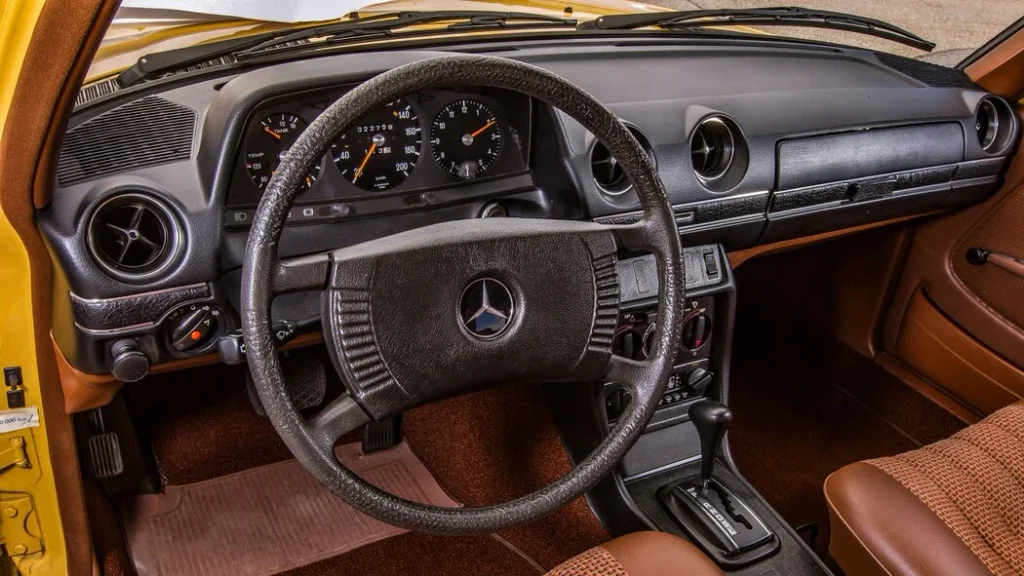
Participate in the W123 and the remainder between classic and modern luxury becomes immediately obvious. There are no giant touchscreen or digital assistants that will compete to appeal care. Instead, the cabin privileges well-defined instruments, physical controls and a complicated arrangement..
The dashboard features large, easy-to-read gauges and practical ventilation controls. Depending on the model, market and original specification, equipment could include air conditioning, power windows, central locking and cruise control.
Mercedes-Benz offered different upholstery choices, including cloth, velour, leather and its durable MB-Tex material. Wood trim and other interior details also varied with the model and specification.
Space and comfort were important pulses. The seats were designed for longer journeyings, while the intercession helped keep the cabin in position on irregular roads. The overall experience is lacking, rather than being a sport, which corresponds to the character of the W123.
Of course, age matters. A well-maintained example can still feel special, but worn upholstery, damaged dashboard surfaces and faulty electrical equipment are common concerns in older cars.
The cabin’s biggest advantage is its simplicity. Most controls have a clear purpose, and the driver does not need to navigate multiple menus just to adjust the ventilation.
Mercedes-Benz W123 Engines: Diesel Durability and Petrol Refinement
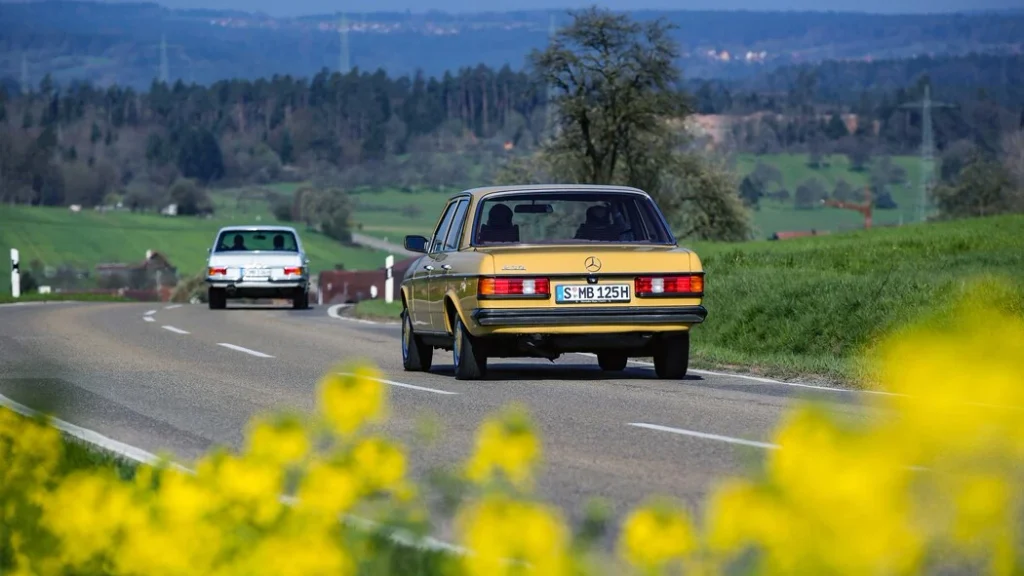
One of the W123’s greatest strengths was its broad engine range. Depending on the market and model year, buyers could choose from four-cylinder petrol engines, larger petrol units and several diesel options.
The 200 D, 220 D, 240 D and 300 D were among the diesel variants offered during the model’s life. These engines became particularly well known for their durability, although their performance was modest by modern standards. The 240 D offered a useful balance for everyday driving, while the five-cylinder 300 D provided greater capacity.
The petrol models had a good variety of designs to choose from. The 230 E model came equipped with a 2.3-Litre engine while the 280 e has a powerful 2.7-Litre six-cylinder machine. The rounder train design offers smoother esthetically appealing performance and better.
Turbocharged diesel versions added another dimension to the range. The 300 TD turbodiesel estate was introduced in 1980 in Germany, while turbo-diesel saloon and coupé versions followed in 1981, initially for export markets such as North America.
Transmission options included manual and automatic gearboxes, depending on the particular version.
The W123 was never equally quick in every configuration. Some diesel versions favour patience over acceleration, while the petrol models provide a more responsive drive. Its appeal lies in mechanical character and long-distance usability rather than winning a traffic-light sprint
Mercedes-Benz W123 Driving Experience: Made for the Miles Ahead
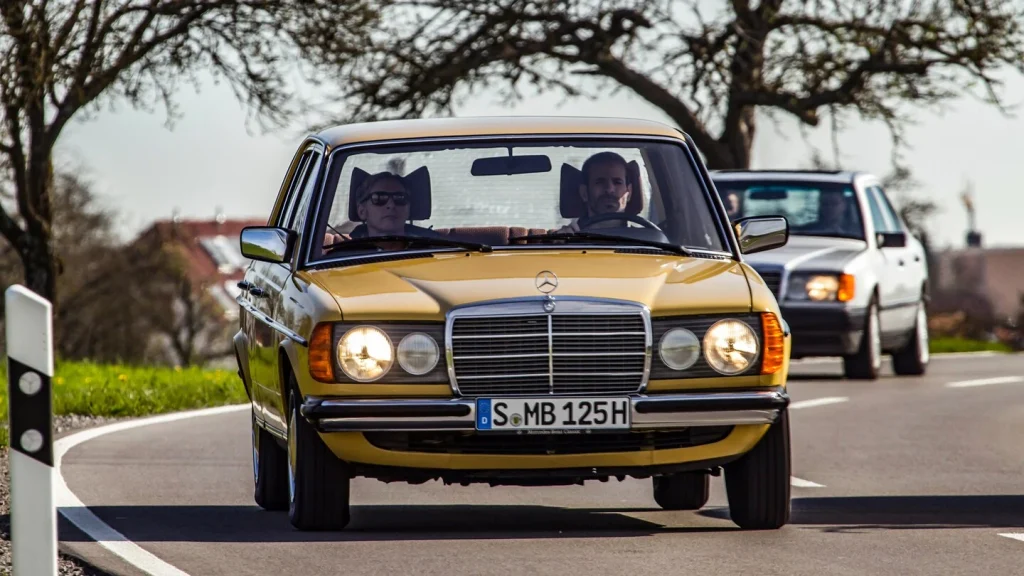
Behind the wheel, the W123 delivers the kind of driving experience expected from a traditional Mercedes-Benz. The steering, suspension and chassis are geared towards comfort and stability rather than sharp, sporty handling.
The ride is generally composed, and the substantial body gives the car a reassuring presence on the road. Long journeys suit it particularly well, especially when the suspension, steering and tyres are in good condition.
Engine choice makes a noticeable difference. Diesel versions provide a relaxed, steady driving experience, while larger petrol engines feel smoother and more responsive. Neither character needs to be mistaken for modern performance-car behaviour.
The W123 also proved its durability in competitive conditions. In the 1977 London–Sydney Marathon, two Mercedes-Benz 280 E cars finished first and second. The rally cars were based on production saloons, with modifications including changes to the suspension and wheels, along with protective equipment.
This achievement demonstrated the remote potency of the model in a demanding state. It was not only a comfortable sedan for the streets of the city; with the correct preparation, it could take a serious survival challenge.
Mercedes-Benz W123 Variants: More Than Just a Classic Sedan
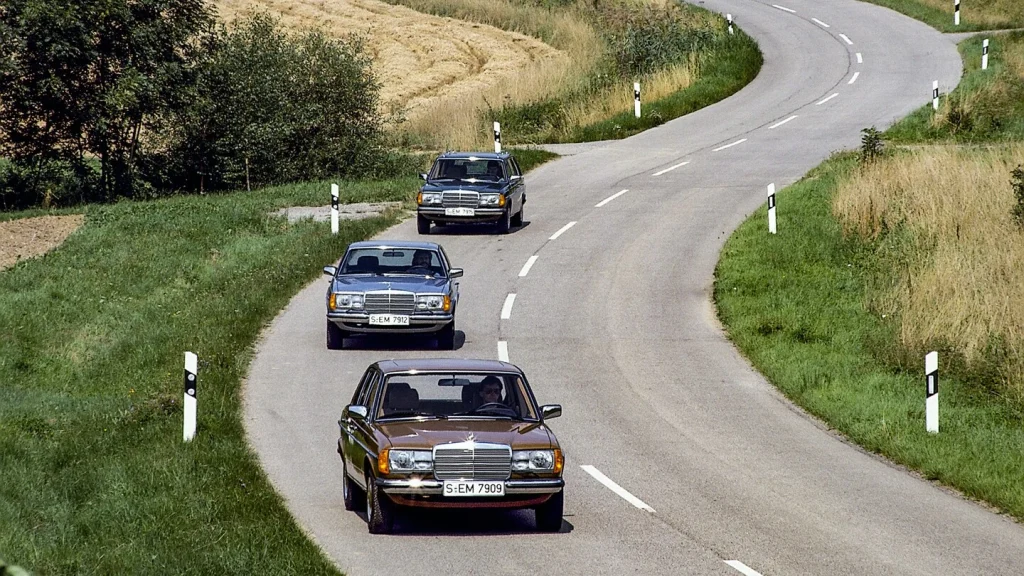
The name w123 includes a family of vehicles each with a different design
- W123 Saloon: The four-door version is the best-known model, combining traditional styling with everyday practicality.
- C123 Coupé: Introduced in 1977, the coupé features two doors and a shorter wheelbase, giving it a more personal and distinctive character.
- S123 Estate: The five-door estate adds useful luggage space while retaining the comfort of the saloon.
- V123 Long-Wheelbase Saloon: Designed to provide additional passenger space, this version suited chauffeur-driven transport and commercial use.
- Particular body tanks: Mercedes-Benz also provided anatomy for special fittings, including certain ambulance and hears applications.
The coupé is an attractive choice for collectors who require to spread a little less, while the property offers a commodious option to the familiar lounge. Each version has the same underlying technology philosophy, but it serves a different purpose.
Mercedes-Benz W123 Buying Guide: What to Check Before You Buy
Buying a W123 can be a reward, but its reputation for sustainability should not be misled for susceptibility against aging. Even excellent technology cannot stop corrosion or reject the impressions of several decades of neglected maintenance.
Start with the bodywork. Inspect the wheel arches, lower door sections, rear window surrounds, boot floor, spare-wheel well and jacking points. Rust beneath the car can be more serious than a few visible marks on the paintwork, so a specialist inspection is worthwhile.
Check the engine and gearbox. The engine should start and run consistently, without excessive smoke, unusual mechanical noises or major fluid leaks. Diesel models need careful checks of their fuel and injection systems, while petrol versions require attention to their fuel-delivery and ignition systems. Test the gearbox under different driving conditions.
Inspect the suspension and brakes. Worn components can affect both comfort and safety. Steering play, suspension noises and uneven braking deserve attention before purchase.
Test the electrical equipment. Check the windows, central locking, air conditioning and other fitted features. Original trim, damaged dashboards and worn upholstery can also add to restoration costs.
Finally, search for service information and evidence for premature repairs. The number of parts usable and the preservation vary according to the vehicle model, location, and term. A well-kept exercise is usually a better start point than a neglected car with painting employment telling.
Mercedes-Benz W123 Legacy: Why This Classic Still Deserves Attention
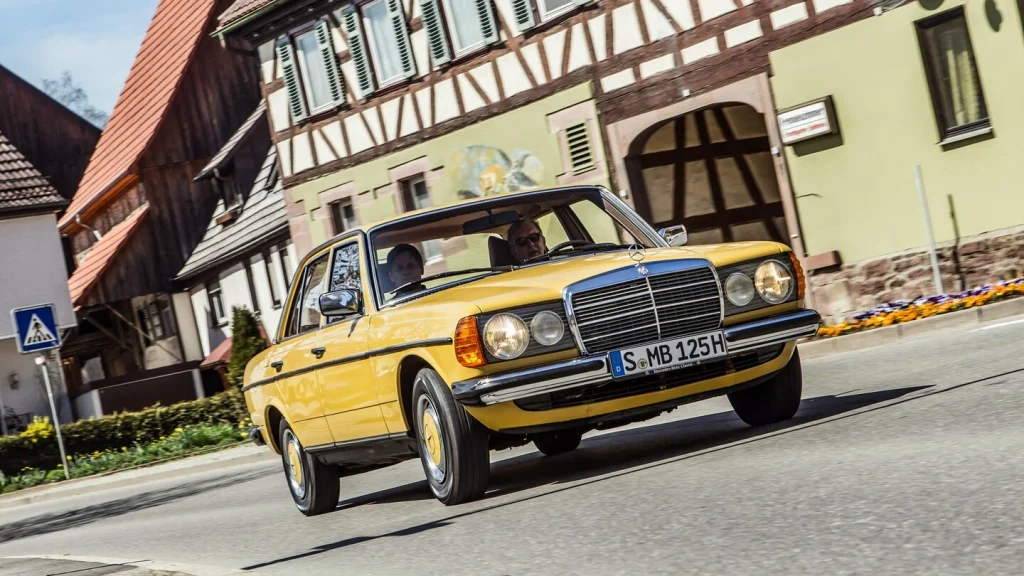
The Mercedes-Benz W123 has gained its reputation thanks to a combination of sustainable technology, discreet intent and everyday seaworthiness. Its various engine alternatives and body styles have made it versatile, while its remote puff has made it as one of the impressive Mercedes-Benz models of its time.
It’s not without compromise. Operation alters between versions, modern comfort functions are limited, and age-related resorts can be dearly-won. You also postulate to be patient to find a full example, especially when resting and maintenance stories are required.
But the W123 continues to be attractive, as it is a different approach to luxury. It shares on the necessities rather than impressing the driver with constant visual or technological play.
For classic-car enthusiasts, it remains a compelling choice. The W123 may belong to another automotive era, but its combination of comfort, character and durability still makes a strong case for the idea that a genuinely good car can remain relevant long after production ends.
About The Author