
The McLaren Solus GT is one of the most unconventional machines to emerge from McLaren’s modern road and racing programme. Unlike a conventional McLaren supercar, it has no passenger seat, no road-going equipment and no conventional doors. Instead, access comes through a sliding canopy, while a single carbon-fibre seat places the driver at the centre of a purpose-built cockpit.
The concept began as a virtual racing car before McLaren turned the idea into a real track machine. The production version uses a naturally aspirated 5.2-litre V10, a seven-speed sequential gearbox and a lightweight carbon-fibre monocoque. McLaren states that the car weighs less than 1,000kg and produces more than 840PS, while its claimed 0-100 km/h time is 2.5 seconds and top speed exceeds 200mph.
Only 25 examples were commissioned, making the McLaren Solus GT an exceptionally limited machine from the outset. More importantly, it demonstrates what happens when road-car regulations and conventional packaging requirements are removed from the engineering brief.
McLaren Solus GT: From Virtual Concept to Reality

The story of the McLaren Solus GT began long before the physical car appeared on a circuit.
McLaren’s original Vision GT concept was created for the Gran Turismo gaming series, where designers could explore proportions and aerodynamic ideas that would have been difficult to realise in a conventional production vehicle. The virtual concept eventually became the foundation for a real-world track car.
McLaren describes the Solus GT as a special commission for 25 customers, with the physical car remaining faithful to the dramatic proportions of its digital predecessor.
The transition from digital concept to functioning race-bred machine required substantial engineering work. The virtual car could be designed without consideration for real-world manufacturing, driver ergonomics, component durability or track regulations. The production Solus therefore became a heavily re-engineered interpretation rather than a direct physical copy.
One of the biggest changes was the powertrain. The virtual Vision GT used a different propulsion concept, while the production car adopted a naturally aspirated 5.2-litre V10 developed with Judd Power. Top Gear reports that the engine produces 829bhp, rising to 858bhp with the ram-air effect at speed.
The final machine is consequently closer to a specialised racing prototype than a road-derived supercar.
That distinction explains much of its unusual character. There is no attempt to make the Solus fit into an established McLaren product category. It exists almost entirely around one objective: extracting maximum performance from a single-seat, closed-cockpit track machine.
Design: A Single-Seater Built Around Airflow
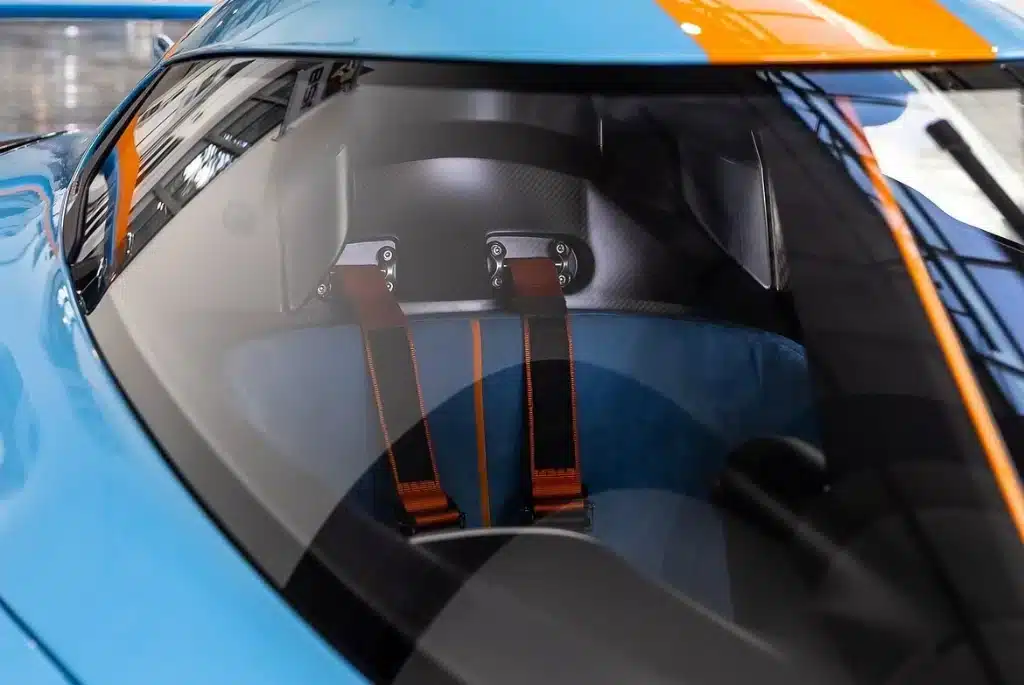
The McLaren Solus GT looks less like a conventional supercar and more like a futuristic racing prototype.
Its most obvious feature is the central driving position. A single seat sits inside a carbon-fibre survival cell, while a sliding glass canopy provides the only access to the cockpit. McLaren compares the canopy concept with a jet aircraft, and its shape gives the car an unmistakably aircraft-inspired appearance.
The wheels are enclosed by aerodynamic pods rather than exposed in the conventional open-wheel fashion. This allows the bodywork to control airflow around the tyres while creating a much cleaner aerodynamic profile.
Almost every surface serves an aerodynamic purpose.
The front section channels air towards the underbody, while the side surfaces direct airflow around the cockpit and rear bodywork. At the rear, a large diffuser and prominent aerodynamic structures work with the floor to generate substantial downforce.
McLaren states that the McLaren Solus GT generates 1,200kg of downforce at 150mph. That figure is extraordinary considering the car’s sub-1,000kg mass.
Top Gear reports a dry weight of 935kg and the same 1,200kg downforce figure at 150mph.
The relationship between weight and aerodynamic load is central to the car’s identity. A conventional road car depends heavily on mechanical grip, suspension tuning and tyres. The Solus operates in a different environment, where aerodynamic load becomes increasingly important as speed rises.
The design is therefore not merely futuristic styling. It is the visible result of a machine shaped around airflow, tyre performance and high-speed stability.
The 5.2-Litre Naturally Aspirated V10
The engine gives the McLaren Solus GT one of its strongest points of differentiation.
Instead of using one of McLaren’s familiar twin-turbocharged V8 engines, the Solus employs a naturally aspirated 5.2-litre V10 developed with Judd Power. McLaren quotes more than 840PS, while its official specification lists 650Nm of torque.
Top Gear identifies the engine as an 829bhp unit capable of revving beyond 10,000rpm. With ram-air assistance at higher speeds, output can rise to 858bhp according to the publication.
The naturally aspirated configuration changes the character of the power delivery. There are no turbochargers building boost and no electric motors supplementing the combustion engine. Instead, the V10’s output rises progressively with engine speed.
That makes the engine particularly suited to a track car. Predictable throttle response is important when the chassis is operating close to its aerodynamic and mechanical limits. A linear power curve allows precise control during corner exit and high-speed acceleration.
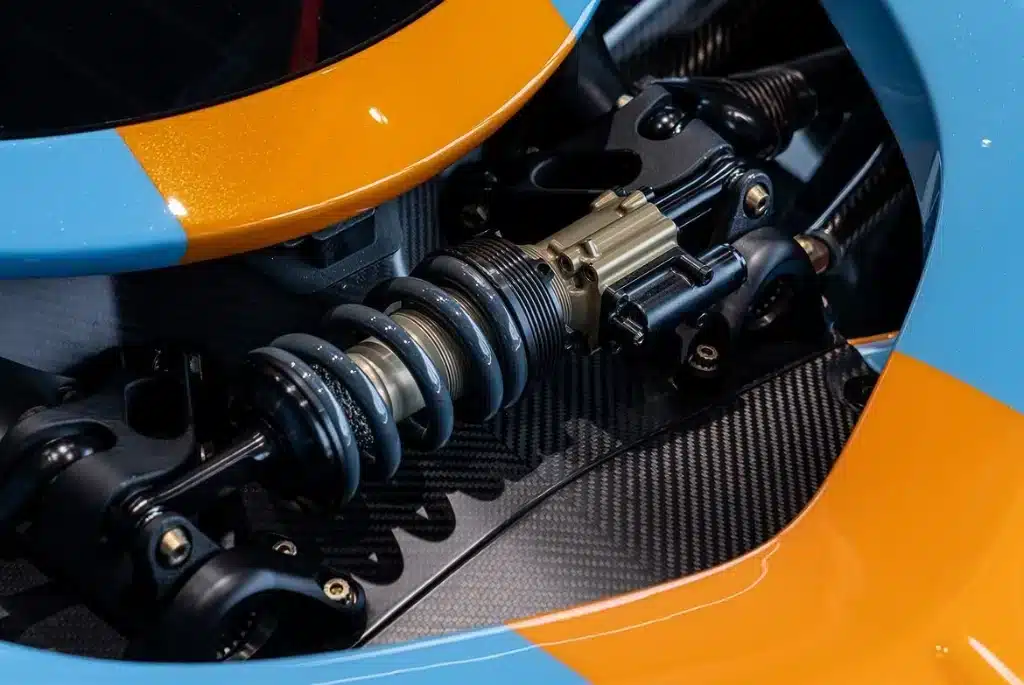
The engine also forms part of the car’s structural architecture. According to Top Gear, the V10 is directly attached to the carbon tub, while the rear suspension mounts to the seven-speed sequential gearbox.
This approach is closely associated with high-level racing-car construction. Instead of using a conventional body structure surrounding an independent engine and transmission assembly, the powertrain becomes part of the overall chassis architecture.
The result is an exceptionally compact mechanical package.
Performance: More Than Just Straight-Line Speed
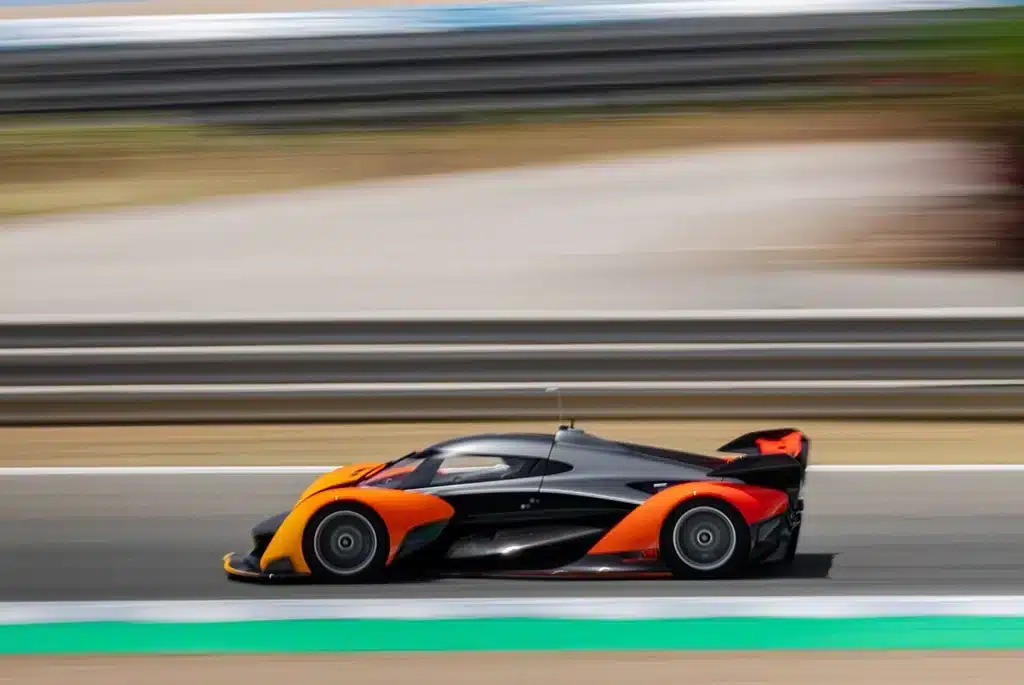
The headline figures of the McLaren Solus GT are impressive, but its acceleration is only one part of the performance equation.
McLaren claims 0-100 km/h in 2.5 seconds and a top speed of more than 200mph.
Those figures place the Solus firmly in hypercar territory, but the car’s real advantage comes from the relationship between its power, weight, tyres and aerodynamics.
At less than 1,000kg, the car carries a remarkably high power-to-weight ratio. More importantly, the aerodynamic package generates enough downforce to dramatically increase the available grip as speed rises.
Top Gear reports 935kg of dry weight and 1,200kg of downforce at 150mph.
That creates a fascinating dynamic. As speed increases, aerodynamic grip becomes progressively more significant. The car can therefore generate cornering performance that a conventional road-going supercar would struggle to approach without becoming dramatically heavier or relying on much more extensive aerodynamic hardware.
The braking system is equally important. The McLaren Solus GT uses carbon-carbon brakes, supported by adjustable ABS. Top Gear’s testing found the braking performance exceptionally strong, while the publication also highlighted the car’s ability to remain predictable despite the enormous performance available.
The seven-speed sequential gearbox further contributes to the sense of immediacy. Gear changes are designed around circuit use rather than the refinement expected from a road-going dual-clutch transmission.
The Solus therefore delivers speed through several interconnected systems rather than relying on engine output alone.
Chassis, Suspension and Aerodynamic Grip

The chassis of the McLaren Solus GT is fundamentally different from that of McLaren’s road cars.
A carbon-fibre monocoque forms the core structure, with the engine and transmission integrated into the rear of the architecture. The suspension uses double wishbones at both ends, with pushrod actuation at the front and pull-rod operation at the rear. Top Gear also notes the use of torsion bars and a heave damper to manage vertical movement under heavy aerodynamic loads.
These details reveal how closely the Solus follows racing-car engineering principles.
A road car must cope with potholes, speed bumps, poor surfaces and a wide range of conditions. A track-only machine can instead be optimised around controlled surfaces and high-speed cornering.
The suspension can therefore be designed around maintaining tyre contact and controlling the aerodynamic platform.
The heave damper is particularly important because aerodynamic downforce changes with speed. If the car moves excessively at high speed, the aerodynamic balance can change and affect stability. Controlling vertical movement helps maintain a more consistent platform.
The McLaren Solus GT also uses racing slicks supplied by Goodyear, with Top Gear identifying them as tyres derived from LMP2 competition.
The tyres, suspension and aero package work together. The enormous downforce would have limited value without tyres capable of converting that load into grip, while the tyres would be difficult to exploit without a suspension system capable of maintaining the correct contact patch.
That interconnected engineering is what separates the Solus from a road car fitted with a large rear wing.
Inside the Single-Seat Cockpit
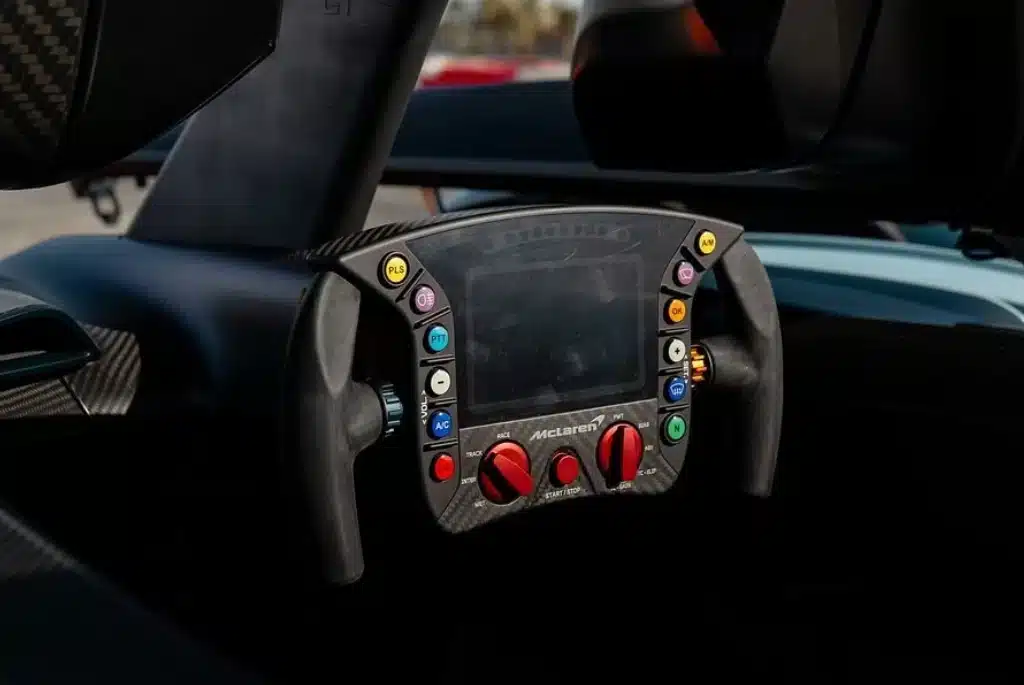
The cockpit is perhaps the clearest indication that the McLaren Solus GT was never intended to be a conventional supercar.
There is only one seat.
The driver sits centrally within the carbon-fibre survival cell, giving the car a driving position more closely associated with single-seat racing machinery than road-going sports cars.
Entry requires the canopy to be moved forward before the driver climbs over the carbon structure and settles into the seat. Top Gear describes the process as requiring the driver to step over the cockpit and lower into position.
Once inside, the environment is stripped back to the essentials.
There are no conventional passenger accommodations, luxury rear seats or road-car storage solutions. The emphasis is on visibility, control and communication with the car.
The canopy provides a wide forward view while also reinforcing the aircraft-inspired character of the cockpit. The central seating position gives the driver a symmetrical relationship with the car’s front axle and aerodynamic bodywork.
McLaren also developed different power modes, with Top Gear identifying Wet, Intermediate, Track and Race settings. The car features adjustable traction control and ABS, allowing the electronic systems to be adapted to track conditions.
Despite the extreme specification, contemporary testing has suggested that the Solus is more approachable than its appearance implies.
Top Gear’s road-test team highlighted the precision of the steering, the strength of the brakes and the progressive nature of the V10’s power delivery.
That does not make the car easy in the conventional sense. Instead, the engineering gives the driver clear feedback from a machine operating at an extraordinary level of performance.
McLaren Solus GT: Production, Exclusivity and Track-Only Purpose
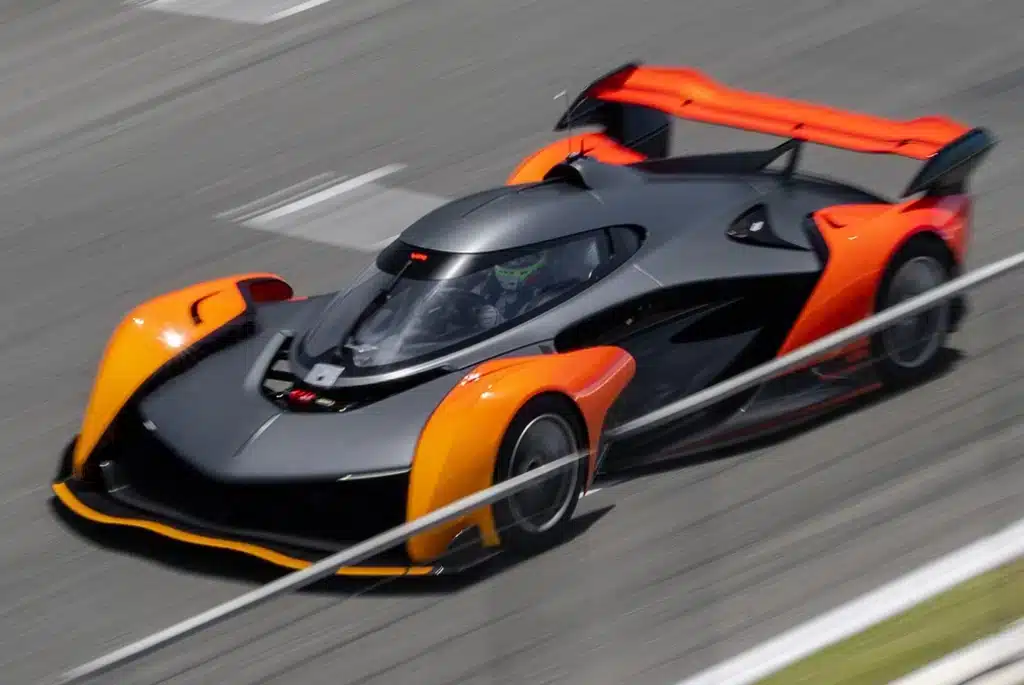
The McLaren Solus GT was conceived as an extremely limited special project rather than a conventional production model.
McLaren commissioned just 25 examples, making the car considerably rarer than the company’s regular road-going models. The manufacturer describes it as a special commission for 25 customers.
The limited production run also reflects the highly specialised nature of the machine.
Unlike a road-going McLaren, the Solus does not need to satisfy the extensive regulatory requirements associated with road registration. McLaren states that the car does not adhere to road or racing regulations in the same way as a conventional racing machine, giving engineers greater freedom in its development.
That freedom is visible throughout the car.
There is no passenger accommodation, conventional road suspension, luggage space or road-focused driver-assistance technology. The bodywork is dominated by aerodynamic requirements, while the cockpit is built around a single central driving position.
The McLaren Solus GT is also not simply a collector’s object. Its design is centred on circuit use, and McLaren developed the package around the experience of driving a highly advanced track machine.
The limited production number adds exclusivity, but the engineering remains the main story.
The car’s unusual origin also gives it a place in McLaren’s design history. Few production vehicles have travelled the path from a video-game concept to a physical machine with such little compromise between the digital vision and the finished product.
The Solus GT’s Place in McLaren’s Performance Story
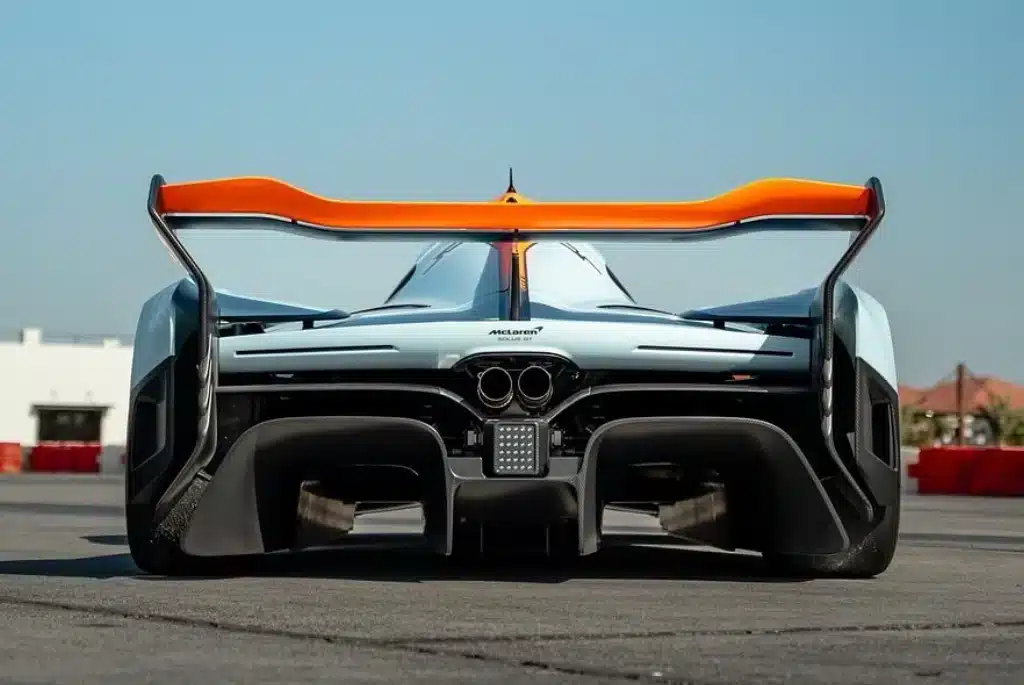
The McLaren Solus GT occupies a unique position within McLaren’s portfolio.
Cars such as the Senna, Senna GTR and other Ultimate Series models pushed the boundaries of road and track performance while retaining varying degrees of connection to road-car architecture. The Solus takes a more radical approach by abandoning the conventional two-seat layout altogether.
Its 5.2-litre V10, central driving position, carbon monocoque, racing-derived suspension and enormous aerodynamic load place it much closer to a specialised prototype than a traditional supercar. Top Gear’s testing highlighted the contrast between the car’s extreme capability and its remarkably precise responses.
The McLaren Solus GT also demonstrates the value of removing constraints from vehicle design.
Without the need for a passenger seat, road certification or conventional luggage capacity, the engineering team could concentrate on weight, aerodynamics, visibility and driver control. The result is a machine that looks as though it escaped from a racing simulation because that is effectively where its design journey began.
The figures reinforce the point. More than 840PS, less than 1,000kg, 1,200kg of downforce at 150mph, a 10,000rpm-plus V10 and a claimed 0-100 km/h time of 2.5 seconds combine to create a specification unlike almost anything else carrying a McLaren badge.
There is also a certain purity to the powertrain. The naturally aspirated V10 avoids turbochargers and hybrid assistance, giving the car a direct mechanical character that increasingly stands apart from the direction of modern high-performance vehicles.
Also read: Ferrari F8 Spider: The Last Great Open-Top V8 Ferrari?
A Digital Dream Turned Into a Track Machine
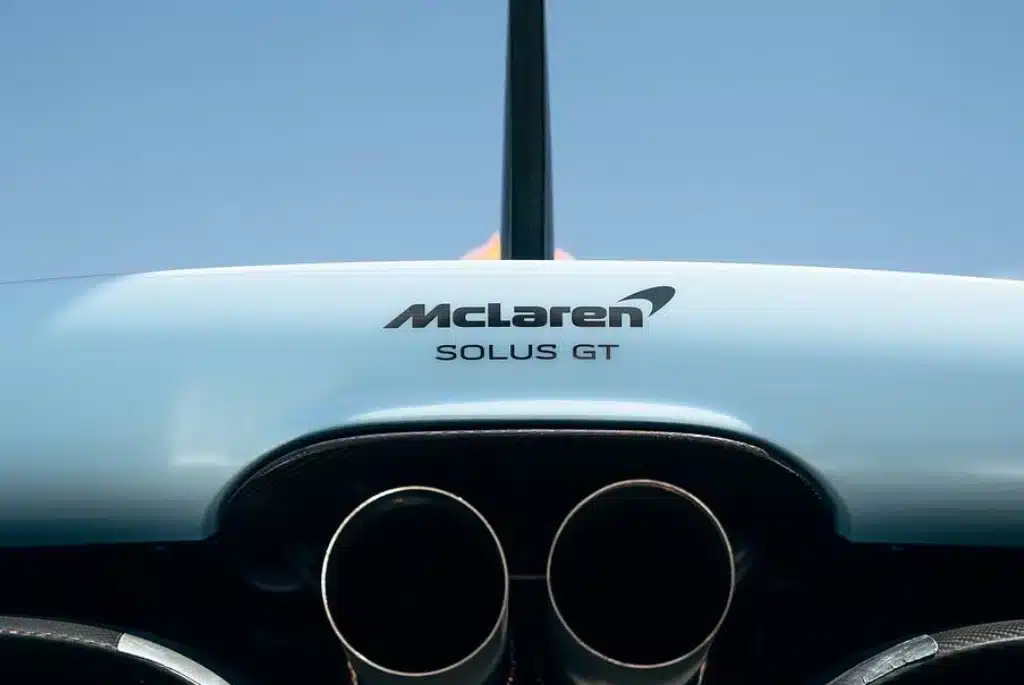
The McLaren Solus GT is ultimately less about traditional supercar conventions and more about what becomes possible when those conventions are removed.
A single seat replaces passenger accommodation. A sliding canopy replaces conventional doors. A 5.2-litre naturally aspirated V10 replaces the twin-turbo V8 found in McLaren’s road cars. Aerodynamic load becomes as important as engine power, while the carbon monocoque and racing-derived suspension are built around circuit performance.
With only 25 examples commissioned, the car was never intended to become a common sight, even within the specialised world of McLaren performance cars.
Its greatest significance, however, lies in the connection between imagination and engineering. What began as a virtual Vision GT concept eventually became a functioning single-seat hypercar capable of more than 200mph and generating downforce greater than its own mass.
The McLaren Solus GT is therefore an unusual chapter in modern automotive engineering: a machine born from a digital fantasy, stripped of conventional road-car compromises and turned into a genuine track weapon.
About The Author