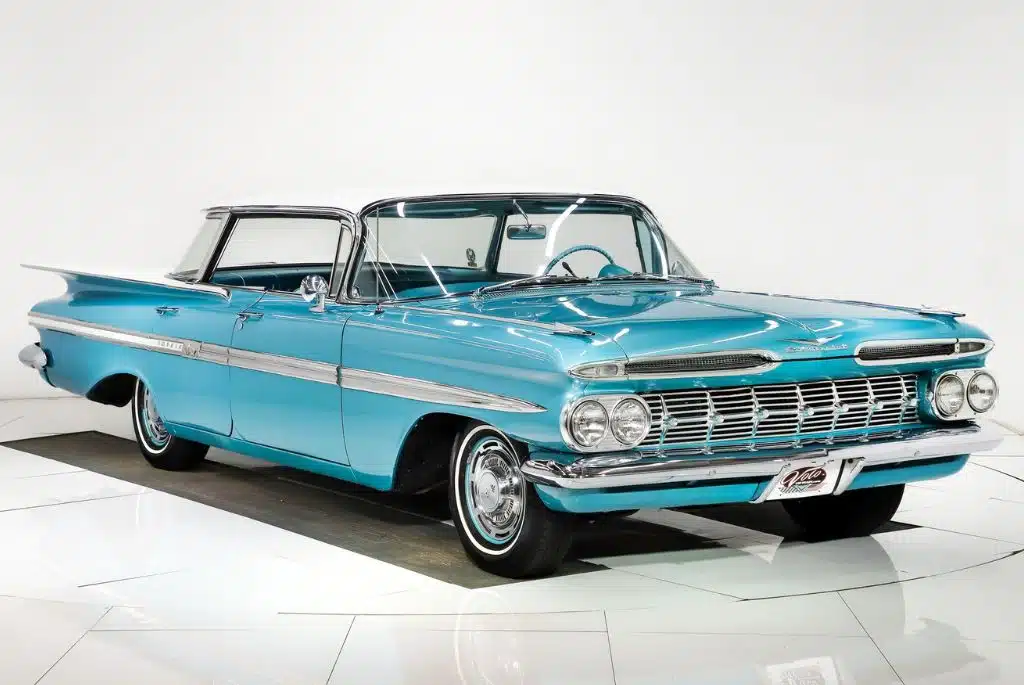
The 1959 chevy impala stands as one of the defining designs of Chevrolet’s late-1950s era, arriving with styling that was dramatically different from the model it replaced. The Impala had become a standalone Chevrolet line for 1959, and its new B-body platform brought a longer, lower and wider-looking profile. Its most recognizable details were the horizontal rear fins, cat-eye taillights and expansive glasshouse.
The 1959 model year was also important mechanically. Chevrolet offered a broad range of engines, from the 283-cubic-inch V8 to the larger 348 V8, while mechanically fuel-injected 283 versions added a more sophisticated performance option. Depending on specification, output ranged from 185 hp to 315 hp for the listed 283 and 348 V8 configurations.
1959 Chevy Impala: A Radical Change in Chevrolet Design
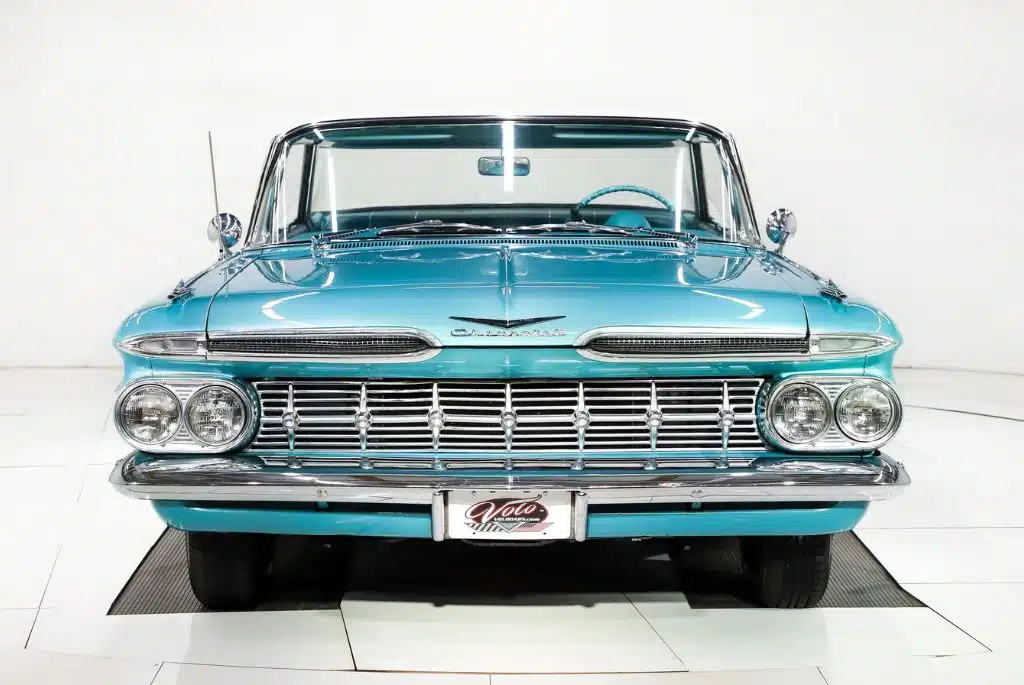
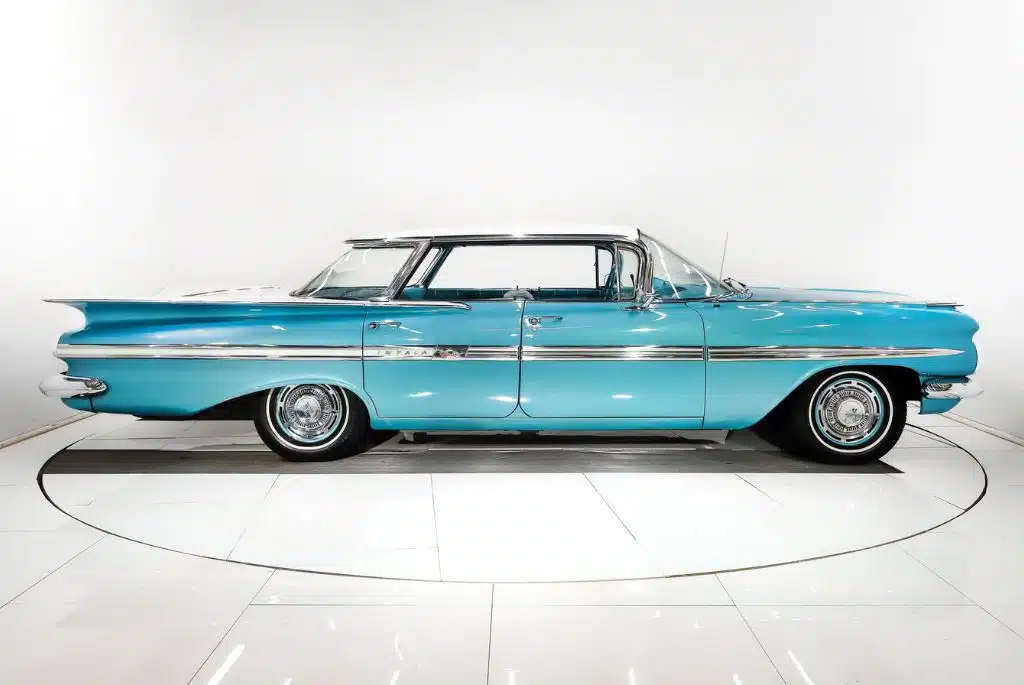
The 1959 Chevy Impala looked like next to nothing like the 1958 model. Chevrolet went to a new B-body platform, with a 119-inch wheelbase, and overall length increasing to 210.9 inches. The proportions were stretched substantially, giving the car the long, low stance that would become a hallmark of late-1950s American automobiles.
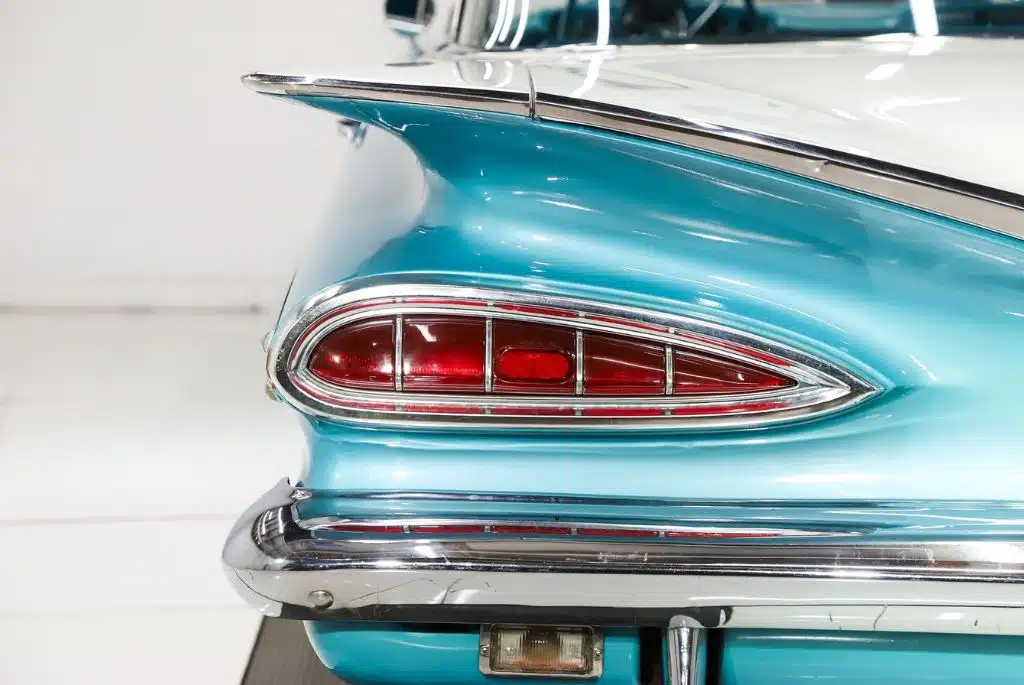
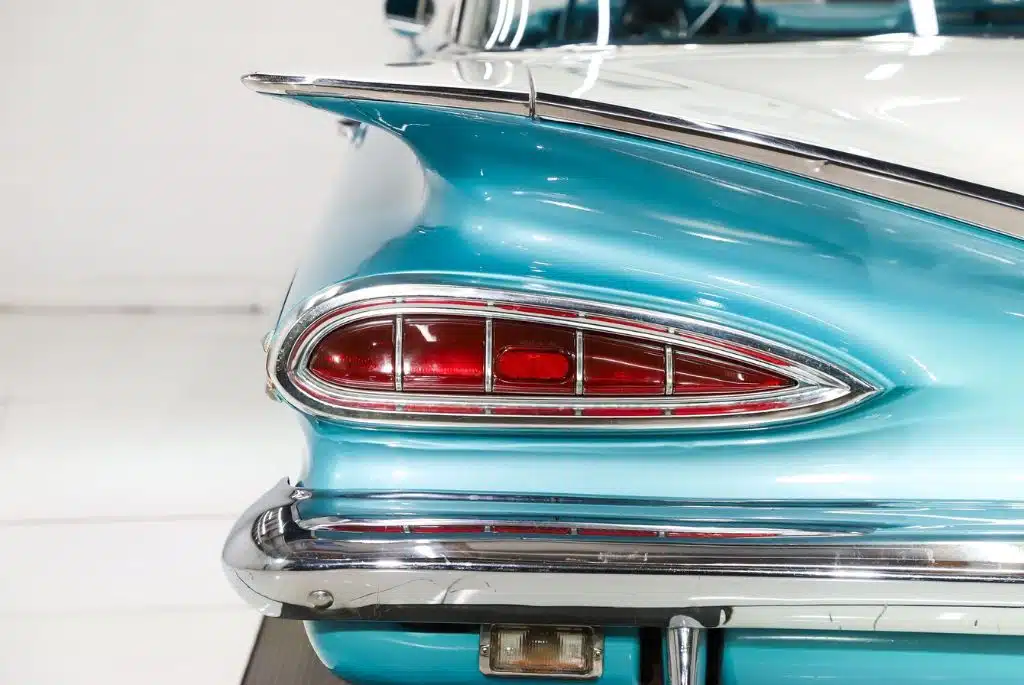
Chevrolet’s biggest visual statement came in the back end. Instead of the vertical fins of other early American vehicles, the Impala had wide horizontal fins that projected out from the rear quarters. Beneath them were the characteristic almond-shaped taillight housings that gave the automobile its “cat-eye” appearance, still one of its hallmark elements.
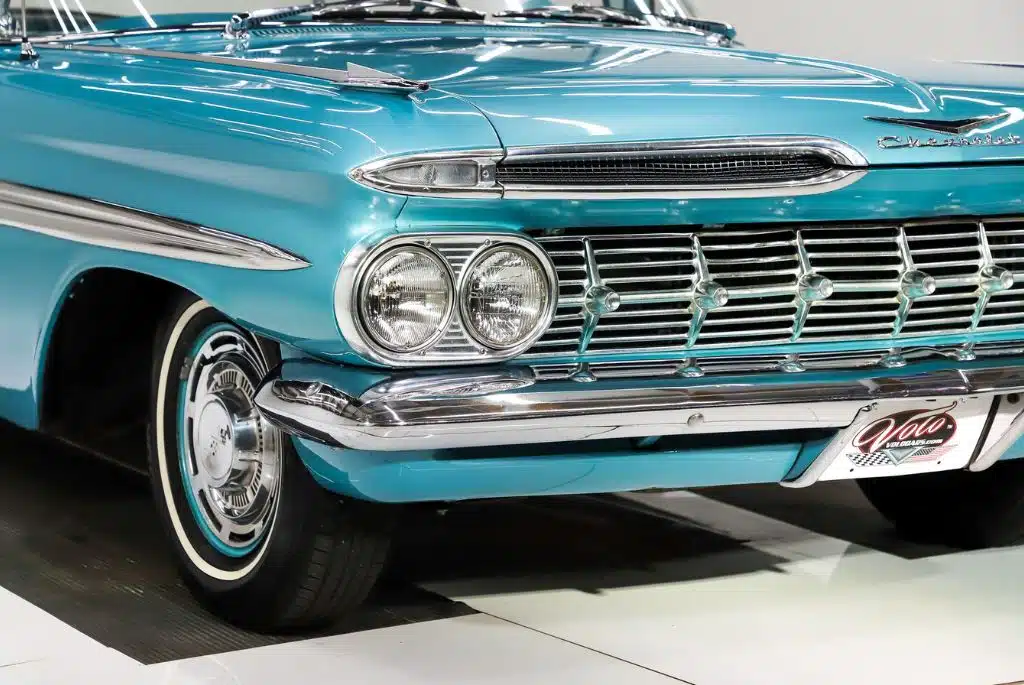
The front end was equally distinctive. Quad headlamps were positioned closer to the grille, while the body used slim pillars and large areas of glass. The result was a spacious-looking cabin and unusually strong outward visibility for a car of its era.
Key exterior design elements
- Horizontal rear “bat-wing” or “gull-wing” fins
- Distinctive cat-eye taillights
- Quad headlamps positioned near the grille
- 119-inch wheelbase
- Long, low B-body proportions
- Slim roof pillars and expansive glass
The styling was not subtle. The 1959 impala arrived at the height of America’s fascination with jet-age design, and Chevrolet leaned heavily into that cultural moment.
The 1959 Chevrolet Impala Becomes Its Own Line
The 1959 chevrolet impala represented an important change in Chevrolet’s model hierarchy. The Impala had originally appeared for 1958 as the top-level version of the Bel Air, but for 1959 it became a distinct line of its own.
That change gave Chevrolet a clearer position for the Impala within its full-size range. The model was aimed at buyers who wanted a more stylish and better-equipped full-size Chevrolet, while the Biscayne and Bel Air occupied positions below it.
The new body also gave the Impala a stronger identity. The proportions, chrome treatment and interior presentation separated it from Chevrolet’s more basic full-size offerings.
Engines and Performance
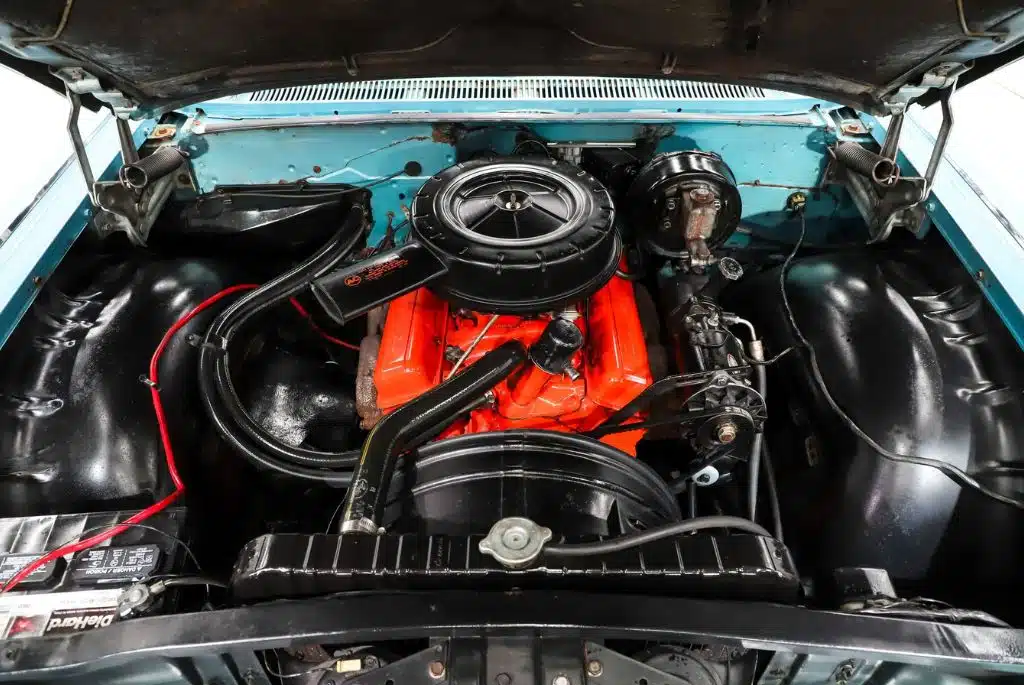
Underneath the flamboyant styling, the 1959 chevy impala offered a surprisingly broad range of mechanical choices.
The entry-level engine was a 135-hp six-cylinder, while the standard V8 was a 185-hp 283. Buyers could step up to a 230-hp 283 with a four-barrel carburetor or choose one of Chevrolet’s mechanically fuel-injected 283 V8s. The fuel-injected versions were rated at 250 hp and 290 hp respectively.
The larger 348-cubic-inch V8 expanded the performance range further. Chevrolet offered versions producing 250, 280, 300 and 315 hp, depending on the induction and internal specification.
That engine range gave the Impala a character that went beyond its styling. The car could be specified as a relatively straightforward full-size cruiser or equipped with a considerably more powerful V8.
Notable engine choices
- 283 V8: 185 hp
- Super Turbo-Fire 283: 230 hp
- Ram-Jet fuel-injected 283: 250 hp
- Fuel-injected 283: 290 hp
- 348 Turbo-Thrust V8: 250 hp
- 348 Super Turbo-Thrust V8: 280 hp
- 348 Special Turbo-Thrust V8: 300 hp
- 348 Special Super Turbo-Thrust V8: 315 hp
The available transmissions included Powerglide and Turboglide automatics, along with manual gearboxes including a new close-ratio four-speed. Overdrive was also available.
This combination of a large body and multiple V8 choices explains why the car remains interesting to both traditional Chevrolet collectors and performance-oriented enthusiasts.
Inside the 1959 Chevy Impala
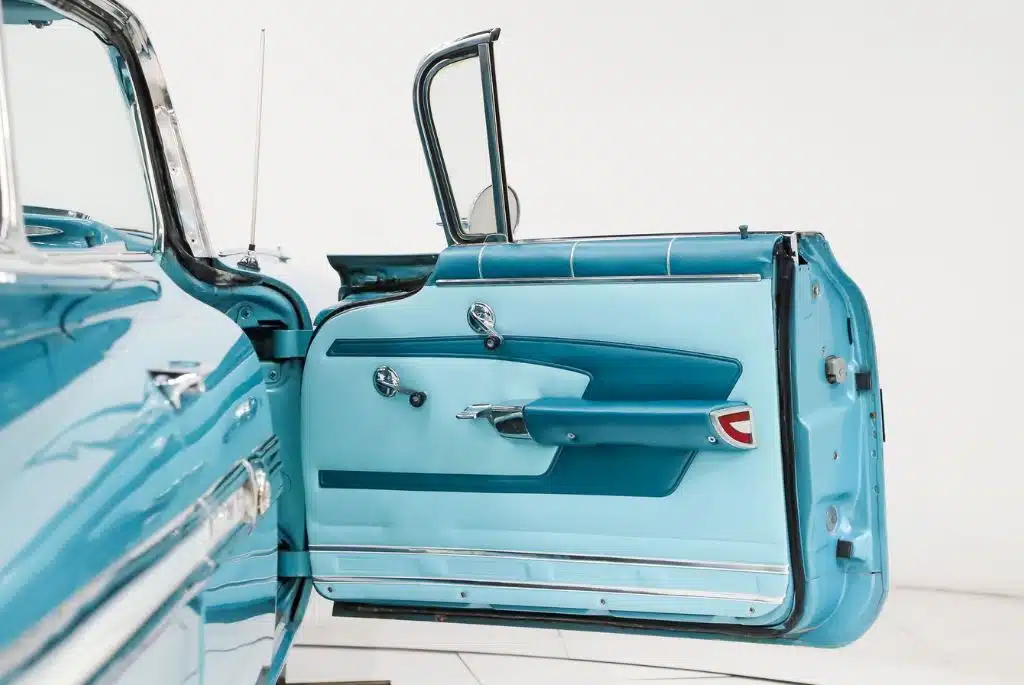
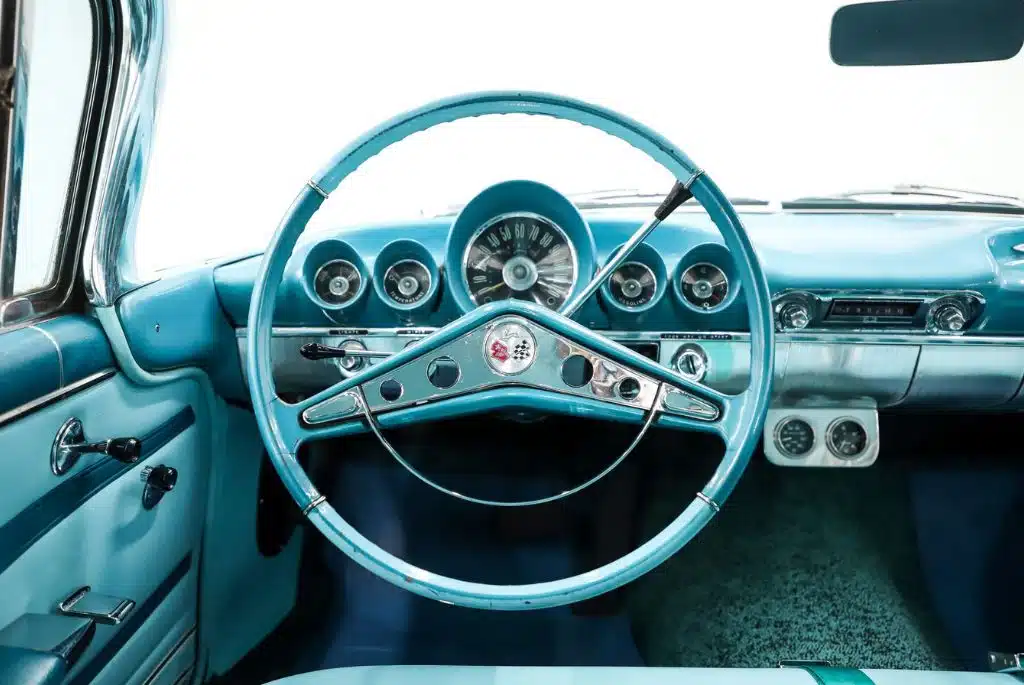
The interior of the 1959 chevy impala followed the exterior’s emphasis on style. Chevrolet used a dashboard with circular instruments, a two-spoke steering wheel and metallic trim. Split front and rear bench seats could be finished in textured vinyl and fabric combinations.
The cabin’s large glass area was particularly important. Slim pillars and expansive front and rear windows created an open visual environment, while the low roofline contributed to the car’s sleek appearance.
This was still a full-size American car built around comfort rather than sports-car ergonomics. The wide cabin, bench seating and generous dimensions suited the period’s preference for relaxed cruising.
Yet the Impala did not feel anonymous. Chevrolet gave the interior enough distinctive trim and instrumentation to reinforce its position near the top of the company’s passenger-car range.
1959 Impala vs. the Rest of the Chevrolet Range
The 1959 chevy impala occupied the upper end of Chevrolet’s full-size passenger-car lineup. The Biscayne and Bel Air remained important models, but the Impala had become its own line and carried the strongest combination of styling and equipment.
That positioning mattered because Chevrolet was competing in an era when styling could be as important to a buyer as mechanical specification.
Ford, Chrysler and GM’s other divisions were engaged in the same design arms race. Each new model year brought significant visual changes, and the 1959 Chevrolet was among the boldest results of that period.
Its fins were particularly distinctive. While Cadillac pursued towering vertical fins and Chrysler experimented with its own dramatic shapes, Chevrolet took the horizontal route.
What Made the 1959 Chevy Impala So Different?
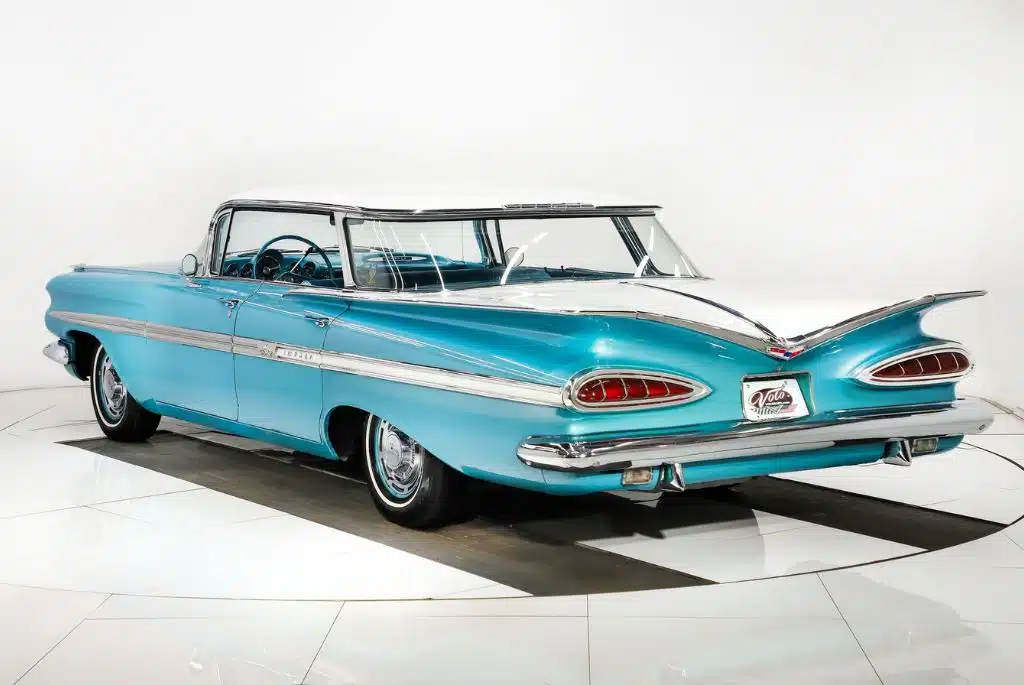
The 1959 chevy impala was not simply an updated version of the 1958 model. It represented a complete change in design direction.
The previous Impala had already established the nameplate, but the 1959 car pushed the concept much further. The body became longer and lower, the fins became broader, and the cabin gained a lighter visual appearance through its thin pillars and large glass surfaces.
The mechanical package was also broad enough to support different types of buyers. A standard 283 V8 could provide conventional full-size-car performance, while fuel injection and the 348 V8 gave the Impala considerably more muscle.
That mixture is central to its appeal today.
1959 Chevrolet Impala Price Then and Value Today
The original price of a 1959 chevrolet impala depended heavily on body style, engine and equipment. The model was available in several configurations, and Chevrolet offered an extensive list of optional powertrains and equipment.
Hagerty’s current valuation data places a typical 1959 Chevrolet Impala in good condition at approximately $55,225, although values vary significantly according to specification and condition.
The difference between ordinary and exceptional cars can be substantial. Hagerty records auction sales ranging into six figures, including a recent $258,500 sale in May 2026 and a three-year high of $368,500.
Convertible versions and cars equipped with desirable V8 combinations can command considerably more than standard examples.
Current market factors
- Originality and matching components
- Engine specification
- Body style
- Factory options
- Restoration quality
- Documentation and history
- Condition
- Desirable colour combinations
For collectors, the specification can matter as much as the overall condition. A highly desirable engine and documented factory equipment can significantly change the value of an otherwise similar car.
Why Collectors Still Want the 1959 Impala
The 1959 impala has survived as one of the most recognizable American cars of its decade because its design captures a very specific moment in automotive history.
The tailfins are perhaps the obvious attraction, but the car’s appeal extends further. Its large proportions, chrome detailing, jet-age dashboard and wide selection of V8 engines create a complete picture of late-1950s American automotive culture.
It also represents an interesting transition point. American manufacturers were still building enormous full-size cars, but engineering was beginning to move toward greater sophistication. Fuel injection was available, four-speed manuals were offered, and buyers could specify increasingly powerful engines.
The Impala therefore sits between two eras: the extravagant styling of the 1950s and the performance-focused muscle-car period that would follow during the 1960s.
The 1959 Impala represents one side of American automotive history; the modern Ram 2500 Big Horn shows how American vehicles have evolved toward greater capability, utility and technology.
The Legacy of the 1959 Chevy Impala
Few Chevrolet designs are as immediately recognizable as the 1959 chevy impala. The car’s horizontal fins, cat-eye taillights and long body made it an unmistakable product of its time, while the mechanical range gave it substance beneath the styling.
The model also helped establish the Impala as a standalone Chevrolet nameplate after its debut as a Bel Air-based model in 1958.
Its influence can still be seen in the collector market. Restored examples attract attention at auctions and shows, while modified cars demonstrate how adaptable the underlying platform can be.
Yet original cars remain particularly important because they preserve the details that made the 1959 model unique.
Final Verdict
The 1959 chevy impala represents American automotive excess at one of its most recognizable moments. Its horizontal fins and cat-eye taillights are unmistakably late-1950s Chevrolet, but the car was more than a styling exercise.
The 119-inch wheelbase, broad B-body construction, expansive glasshouse and extensive V8 lineup gave the Impala genuine substance behind its extravagant appearance. Fuel-injected 283s and multiple 348 configurations also showed that Chevrolet was willing to offer serious mechanical variety alongside the chrome and fins.
Today, the 1959 chevy impala remains valuable not simply because it is old, but because it captures a moment when American car design was changing almost year by year. It was bold, unmistakable and engineered around the expectations of an era when a new Chevrolet was expected to look dramatically different from the car before it.
That combination of design, mechanical variety and cultural significance has kept the 1959 Impala firmly established among the most recognizable classic Chevrolets.
About The Author