The electric vehicle market in India has been interesting to watch. Some manufacturers jumped in early with products that felt rushed. Others waited too long and missed the initial wave. Mercedes Benz found itself somewhere in the middle with a string of electric cars that never quite connected with buyers the way the company hoped.
The EQC arrived with much fanfare but with ground clearance issues. The EQS sedan and SUV were technological marvels priced for the ultra wealthy. The EQA and EQB did their jobs without setting any hearts on fire. Across the showroom floor, BMW seemed to have figured something out with its multi powertrain approach, where the same car could be had with petrol, diesel or electric power.
Now comes the 2026 Mercedes Benz CLA, and it feels like the company finally listened. This is not another adapted electric car. This is something built from the ground up with electricity as the primary focus, and it shows in every detail.
2026 Mercedes-Benz CLA EV: Platform and Architecture
The most important thing about the 2026 Mercedes-Benz CLA EV is what you cannot see. Underneath the body sits an entirely new platform called MMA, which stands for Mercedes Modular Architecture. This is a skateboard chassis designed first for electric power, though it retains the flexibility to accommodate internal combustion engines if needed.
For the electric versions, this matters enormously. The battery pack integrates directly into the floor structure, lowering the centre of gravity and improving rigidity. The system operates on 800 volt architecture, which means faster charging with less heat buildup. Mercedes has also developed its own electric motor, transmission and power electronics in house rather than buying components from suppliers.
The high voltage architecture brings real world benefits. Less energy is lost as heat during charging, and the battery accepts higher charge rates for longer periods. This is why the CLA can maintain impressive charging speeds without the dramatic tapering that plagues many electric vehicles.
2026 Mercedes-Benz CLA EV: Design and Exterior

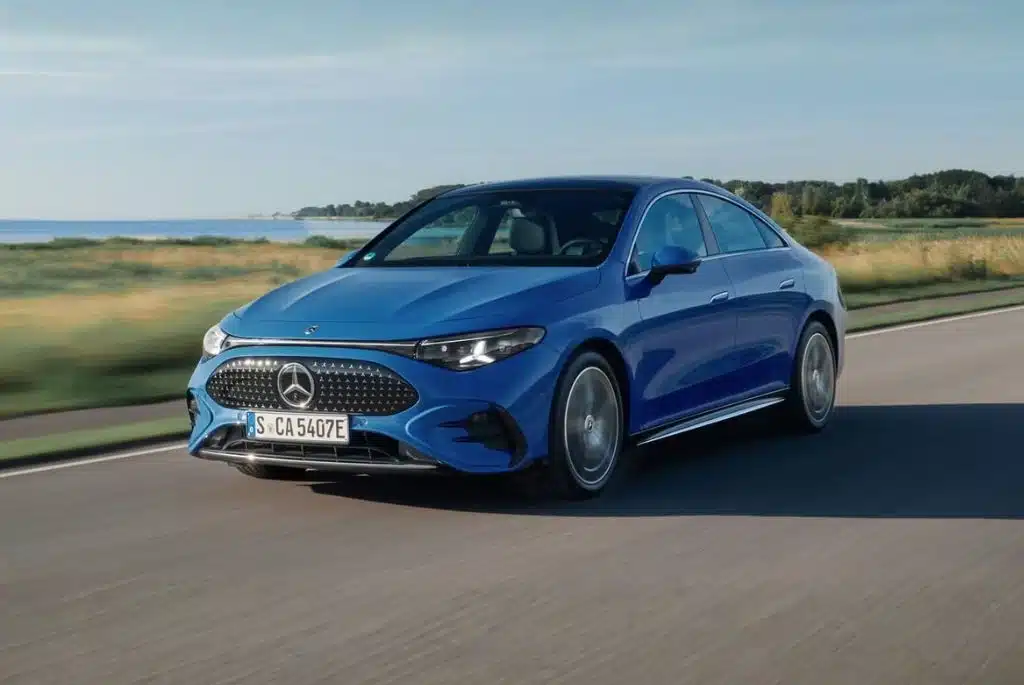
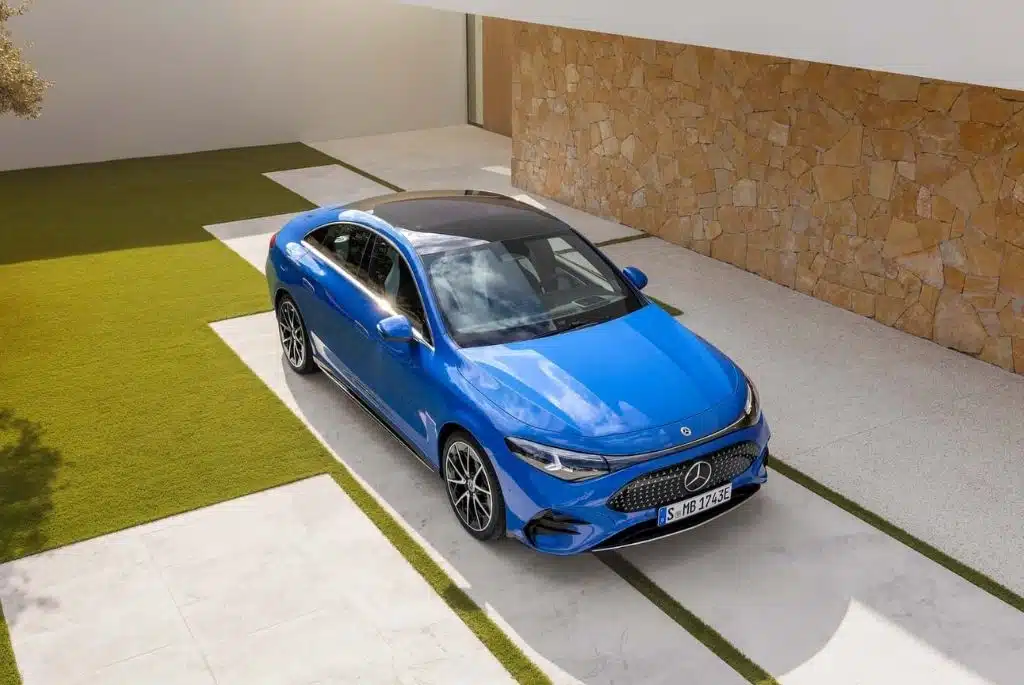
The exterior of the 2026 Mercedes-Benz CLA EV has generated strong reactions since its global reveal, and those reactions continue in person. The front end features a gloss black panel where the traditional grille would live, studded with 142 illuminated stars. The headlights themselves are shaped like stars and connected by a light bar that runs across the nose.
Some observers find this design too soft compared to the previous generation CLA. That car had sharp angles and a wedge like stance that suggested speed even at a standstill. The new car is smoother, more rounded, as if Mercedes took all the edges and sanded them down. The AMG Line package adds flared bumpers and chrome accents, but even that does not fully address the polarising nature of the front end.
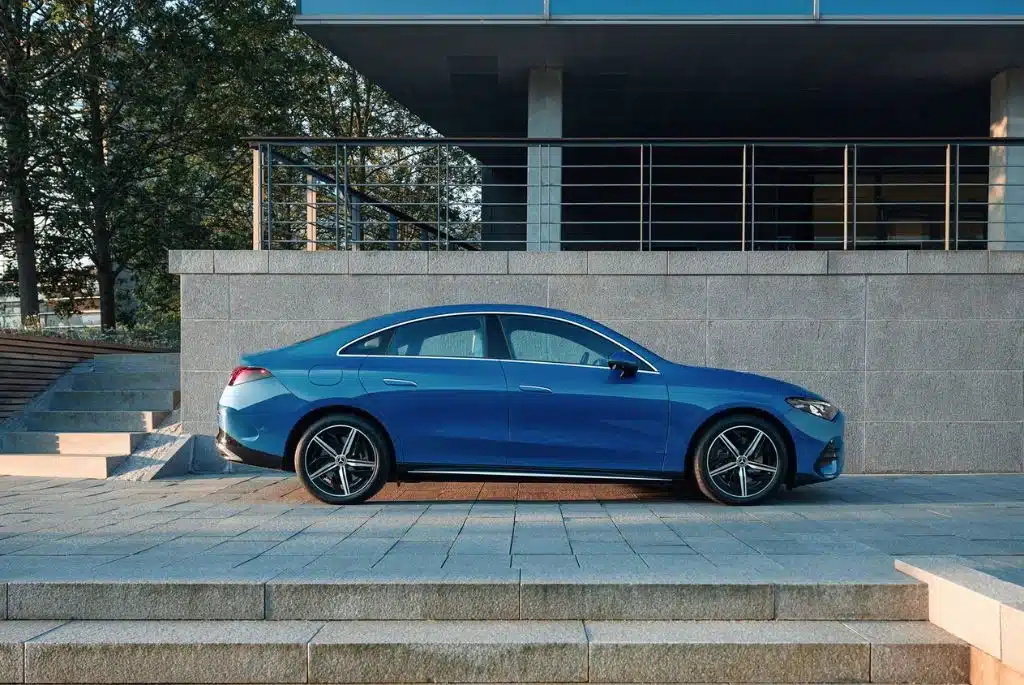
From the side, the proportions work better. The sloping roofline continues a tradition that CLA buyers have always loved, flowing elegantly into a short rear deck. At 4,723 millimetres long and 1,855 millimetres wide, the car is almost exactly the size of a C Class. It is actually 28 millimetres shorter but 35 millimetres wider than the current C Class, which gives it a planted stance on the road.
Aerodynamics play a huge role in the car’s capabilities. The drag coefficient sits at just 0.21, which ranks among the slipperiest shapes in production today. Achieving this required obsessive attention to detail. The door handles sit flush. The mirrors are smaller than typical. Vents in the front bumper create air curtains that smooth flow around the wheels. Plastic spoilers sit in front of each tyre to break up turbulence in the wheel arches. Even the rear diffuser has two different designs depending on whether the car has a tow hook. Every piece exists to let air flow past without disturbance.
The rear continues the star theme with taillights shaped like the Mercedes emblem and another light bar connecting them. The overall effect is cohesive if not universally appealing.
2026 Mercedes-Benz CLA EV: Interior and Comfort

Open the door of the 2026 Mercedes-Benz CLA EV and the conversation changes entirely. The cabin is where Mercedes reminds everyone why the three pointed star commands a premium.
The dashboard houses a single piece of glass that spans from the centre to behind the steering wheel. This contains a 14 inch central touchscreen and a 10.25 inch digital instrument cluster. International markets get an optional third screen for the front passenger, but India does not receive that configuration. A panel ahead of the co-driver features illuminated stars that glow at night, continuing the exterior theme inside.
Below the infotainment screen sit new central air conditioning vents, and below those lies the centre console with cupholders and storage spaces. The seat adjustment switches have been redesigned and work intuitively. The window switches, however, have been reduced from four buttons to two with a toggle to select front or rear. This feels like cost cutting in an otherwise premium environment, though most owners will adapt within minutes.
The steering wheel comes from recent AMG models, flat bottomed and thick rimmed. Behind it sit redesigned stalks. The left stalk controls indicators and wipers. The right stalk is a multifunction unit with the start stop button at the end, gear selection via up and down motion, and regenerative braking adjustment via push and pull. It sounds complicated on paper but becomes natural after a few minutes of use.
Material quality throughout is exceptional. Brushed aluminium trim runs across the centre console and door panels. The pedals are aluminium. The AMG seats feature black and white upholstery with red stitching and are made from recycled materials. Everything you touch feels substantial and well considered.
There are compromises, and they matter. The panoramic glass roof comes with a heat rejecting film instead of a physical sunshade. In India’s climate, this is a significant oversight. The film helps but does not block enough heat or glare on bright days. Front seats offer heating and massaging functions but no ventilation, another miss for a hot country.
Rear passengers find themselves in a knees up seating position that provides adequate space but not the relaxed posture of a C Class. Headroom is sufficient for most adults, but the position means long journeys will be less comfortable than they should be. For owners who frequently carry rear passengers, the C Class remains the better choice.
Storage is a strong point. The boot offers 405 litres of capacity, which is competitive for the segment. There is also a 101 litre frunk under the bonnet, marking the first time in 90 years that a Mercedes has offered front storage. This space is perfect for charging cables or a small weekend bag.
2026 Mercedes-Benz CLA EV: Tech and Infotainment
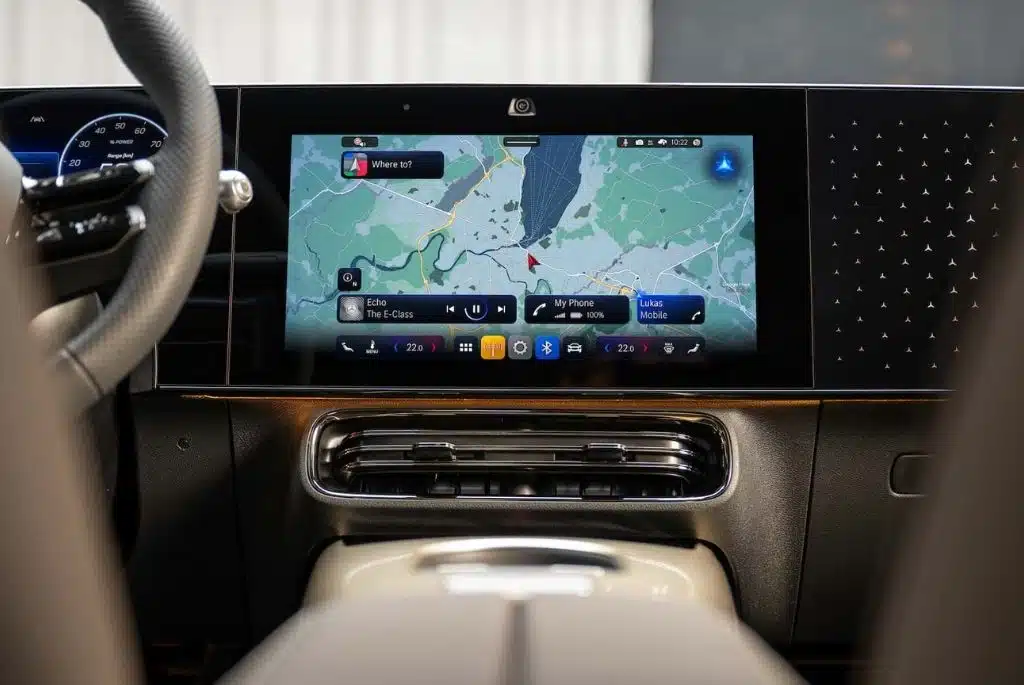
The 2026 Mercedes-Benz CLA EV introduces MB.OS, the Mercedes Benz Operating System, which represents a fundamental shift in how the company approaches software. This is not just an updated infotainment system but a complete architecture running on an Nvidia Orin chip capable of 508 trillion operations per second.
The user interface has been completely overhauled with fresh graphics and simpler menus. Icons are larger and more intuitive. Menus are logically organised. Response times are immediate without the lag that plagued some previous Mercedes systems.
More importantly, the voice assistant now integrates ChatGPT, Google Gemini and Microsoft Bing. This allows natural language conversations where you can ask for a florist along your route or request a supermarket stop, and the system handles it without requiring specific command phrases. The system understands context and can handle follow up questions.
Navigation uses Google Maps natively for the first time, which is a massive improvement over previous systems. The maps are always up to date, traffic information is accurate, and the interface is familiar to anyone with a smartphone. The system plans routes that include charging stops, shows real time charger availability, displays charger speeds, and estimates stop durations directly on the screen.
Mercedes also provides an RFID card that works with multiple charging networks. This single card eliminates the need to juggle different apps and memberships when travelling across state lines. You simply tap the card at the charger and the billing is handled automatically.
During testing, the voice system handled supermarket searches and detour requests competently. It was not perfectly conversational and occasionally required repeated commands, but the foundation is solid. Mercedes claims the system learns over time, which means it should improve with use. The potential for over the air updates means features can be added long after the car is purchased.
2026 Mercedes-Benz CLA EV: Powertrain and Performance
The 2026 Mercedes-Benz CLA EV 250+ uses an 85.5 kilowatt hour battery pack paired with a single rear mounted motor. Power output sits at 268 brake horsepower with 335 Newton metres of torque. The claimed zero to one hundred kilometre per hour time is 6.7 seconds, which is quick without being overwhelming. Top speed is limited to 209 kilometres per hour.
For buyers looking at the more accessible end of the range, the CLA 200 uses a 58 kilowatt hour battery and produces 221 brake horsepower. That version reaches 100 kilometres per hour in 7.5 seconds.
On the road, the 2026 Mercedes-Benz CLA EV 250+ reveals its true character. This is not a car trying to set acceleration records or embarrass sportier machines at traffic lights. It is an executive sedan designed to cover vast distances smoothly and comfortably.
The acceleration builds linearly rather than arriving with the neck snapping shove that some electric vehicles deliver. Full throttle produces a strong surge of power, but it builds progressively and encourages a relaxed driving style. The two speed transmission contributes to this feeling, with first gear handling acceleration and second gear engaging around 100 to 110 kilometres per hour for efficient cruising. The shift is imperceptible.
Regenerative braking offers a range from full coasting to aggressive one pedal driving where the car comes to a complete stop without touching the brake pedal. Coasting mode feels most natural for relaxed driving, while higher regen settings add range and reduce brake usage. The system is smooth in all modes without the jerkiness that some manufacturers cannot eliminate.
2026 Mercedes-Benz CLA EV: Ride and Handling
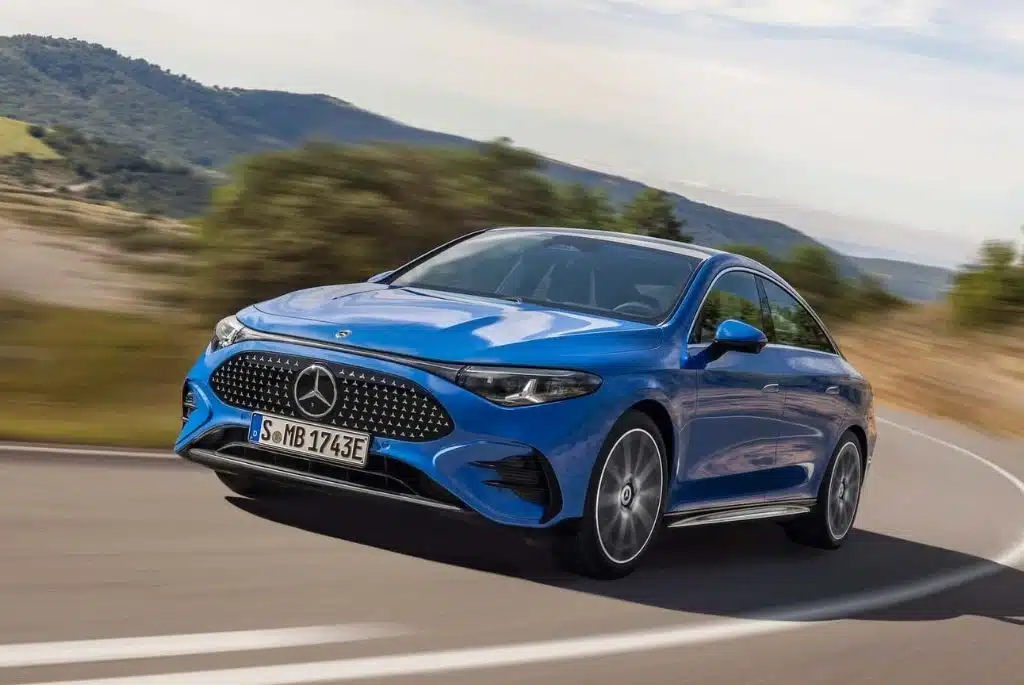
The suspension has been raised and retuned specifically for India. The result is a ride quality that rivals larger Mercedes sedans. Potholes disappear beneath the wheels. Rough patches are absorbed without transmitting harshness to the cabin. Undulations are managed with composure. There is a hint of firmness from the two tonne weight, but vertical movement stays well controlled even under hard braking or acceleration.
Body control deserves praise. The car remains flat through corners and stable during quick direction changes. Turn in is not razor sharp, but the chassis follows inputs faithfully and grips strongly. The steering weights up nicely in Sport mode without becoming artificially heavy. Brakes are by wire but feel natural, with strong stopping power and progressive pedal feel.
The driving experience feels connected and involving in a way that many electric vehicles miss. There is feedback through the chassis and steering that lets you feel what the car is doing. You can enjoy spirited driving on a twisty road, but the car settles into a relaxed cruise just as happily when that is what you want.
2026 Mercedes-Benz CLA EV: Range and Charging
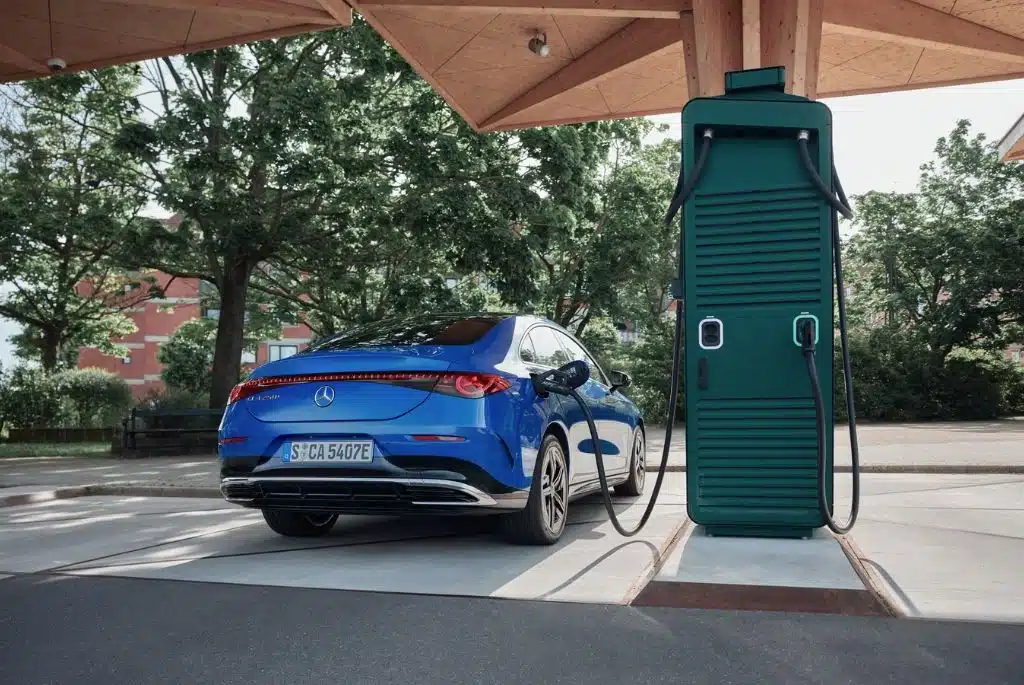
The claimed WLTP range of 792 kilometres for the 2026 Mercedes-Benz CLA EV 250+ seemed almost unbelievable when announced. Real world testing suggests it is not just marketing hype.
With a full charge showing 684 kilometres on the display, a test route combining highways and country roads over 90 minutes returned efficiency of 8.1 kilometres per kilowatt hour. Mathematics translates that to approximately 693 kilometres of real world range under mixed Indian driving conditions.
Seven hundred kilometres from a single charge changes what an electric car can do. It means Delhi to Mumbai is possible with range to spare. It means a full day of driving twelve to fourteen hours can be completed without stopping to charge. It eliminates the anxiety that has kept many buyers away from electric vehicles.
Charging capability deserves special attention. The 250+ variant can accept up to 320 kilowatts on a direct current fast charger. On a more realistic 240 kilowatt charger, which India is slowly acquiring more of, the car can add 400 kilometres of range in 20 minutes. The CLA 200 adds 320 kilometres in the same time. These figures transform what ownership feels like because the car spends less time plugged in and more time on the road.
Achieving this required the aerodynamic obsession mentioned earlier plus the efficient motor and transmission. The two speed gearbox allows the motor to spin slowly at highway speeds, reducing energy consumption. Every element works together toward the same goal.
Safety and Driver Assistance Systems
The 2026 Mercedes-Benz CLA EV comes equipped with Level 2 advanced driver assistance systems. Hardware includes cameras, radar sensors and ultrasonic sensors throughout the car. Features include adaptive cruise control that works in stop and go traffic, brake assist, lane keep assist, and an emergency corridor function that moves the car over for emergency vehicles.
Mercedes claims the system has been calibrated for Indian traffic conditions and understands how to respond to local driving behaviours. During testing, the assistance systems behaved predictably and never created the urge to switch them off. The car monitored traffic ahead and adjusted speed appropriately even with cruise control disengaged.
An over the air update can upgrade the system to Level 2 Plus, adding steering assist functions. International markets offer more advanced self driving capabilities, though those are not confirmed for India. The hardware is already in place, so future upgrades remain possible if regulations allow.
Specifications Table
| Specification | 2026 Mercedes-Benz CLA EV 250+ | 2026 Mercedes-Benz CLA EV 200 |
| Platform | Mercedes Modular Architecture MMA with 800 volt architecture | Mercedes Modular Architecture MMA with 800 volt architecture |
| Battery Capacity | 85.5 kilowatt hours | 58 kilowatt hours |
| Drive Type | Single rear mounted motor | Single rear mounted motor |
| Maximum Power | 268 BHP | 221 BHP |
| Peak Torque | 335 NM | Not disclosed |
| Transmission | Two speed automatic | Two speed automatic |
| Acceleration 0 100 km h | 6.7 seconds | 7.5 seconds |
| Top Speed | 209 kilometres per hour | Not disclosed |
| WLTP Range Claimed | 792 kilometres | 542 kilometres |
| Real World Efficiency | 8.1 kilometres per kilowatt hour observed | Not tested |
| Real World Range | Approximately 693 kilometres observed | Not tested |
| Maximum DC Charging Speed | 320 kilowatts | 240 kilowatts |
| Fast Charging Performance | 400 kilometres range in 20 minutes on 240 kilowatt charger | 320 kilometres range in 20 minutes on 240 kilowatt charger |
| Boot Capacity | 405 litres | 405 litres |
| ADAS Level | Level 2 upgradable to Level 2 Plus via OTA | Level 2 upgradable to Level 2 Plus via OTA |
Price and Positioning
Previous Mercedes electric vehicles struggled in India for various reasons. The EQC had ground clearance that did not suit local conditions. The EQS models cost more than equivalent S Class cars while offering less comfort. The EQA and EQB competed in a crowded segment without clear advantages.
The 2026 Mercedes-Benz CLA EV takes a different approach. It arrives as a completely new product on a new platform with capabilities that genuinely advance what an electric car can do. The range eliminates the primary objection to electric ownership. The interior feels special in a way that entry level luxury buyers expect. The driving experience satisfies without demanding compromise.
Competition comes from the BMW iX1 Long Wheelbase, the Volvo EX30, the BYD Seal and the Kia EV6. Each has strengths, but none combine the range, interior quality and driving polish of the CLA in quite the same way.
Mercedes India has announced tentative pricing of ₹59 lakh ex showroom for the CLA 250+ and ₹55 lakh for the CLA 200. These are fully imported cars priced like locally assembled vehicles to remain competitive. Final pricing will depend on exchange rates at launch around mid April 2026.
The cars arrive as Completely Built Units, which means they are fully imported rather than assembled locally. Mercedes has made clear that localization is not planned for this generation. Despite this, the company has committed to pricing them competitively against locally assembled rivals.
Verdict
The 2026 Mercedes-Benz CLA EV 250+ is not a perfect car. The glass roof will leave occupants warm on sunny days. Rear seat passengers deserve better comfort. The lack of ventilated front seats in a hot country is baffling. The design will not appeal to everyone.
Yet as a complete package for Indian conditions, this is the most coherent electric Mercedes yet offered. The range is genuinely transformative. The interior feels special in ways that justify the premium pricing. The driving experience engages without demanding constant attention. The technology works more often than it frustrates.
For buyers who have waited for an electric Mercedes that does not feel like a science project or a compromise, the wait is over. The 2026 Mercedes-Benz CLA EV delivers on its promises and sets a new standard for what an entry level luxury electric car can be. It is the electric Mercedes that finally gets it right.
The CLA arrives at a time when the electric vehicle market is maturing and buyers are becoming more discerning. Range anxiety remains the biggest barrier to adoption, and this car addresses that head on with real world capability that matches the claims. The charging speed means long journeys are practical rather than stressful. The interior quality means you are not sacrificing luxury for electrification.
Mercedes has learned from its earlier mistakes. The company listened to criticism about ground clearance, about range, about interior comfort. The result is a car that feels designed for markets like India rather than adapted for them. That effort shows in every kilometre driven.
The 2026 Mercedes-Benz CLA EV 250+ deserves serious consideration from anyone shopping in the luxury electric space. It sets a new benchmark that rivals will struggle to match.
About The Author