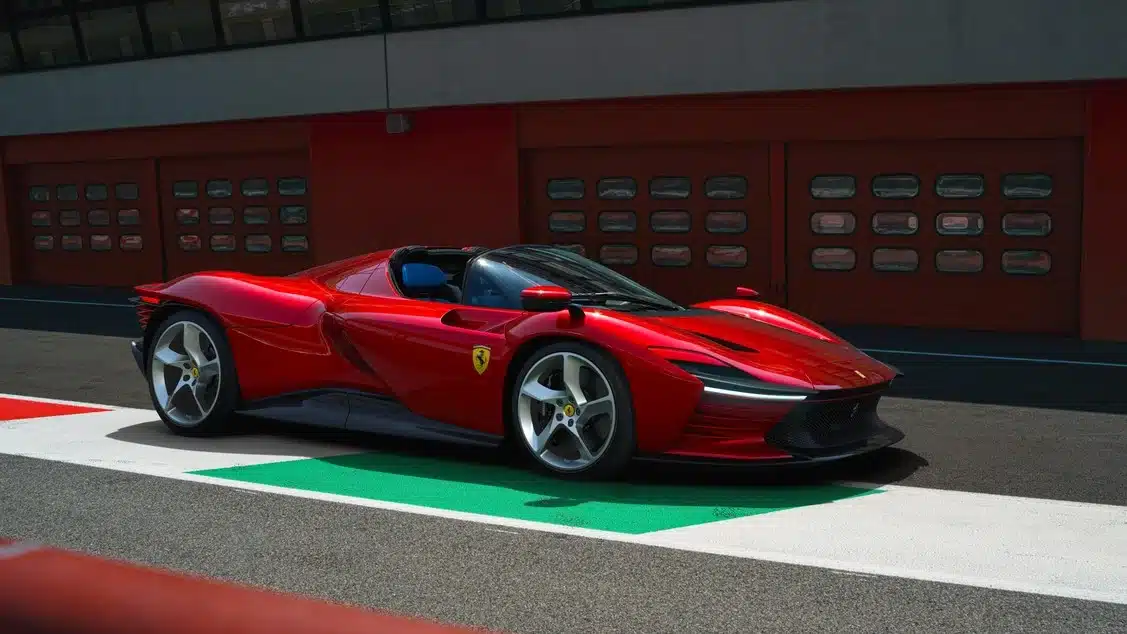
The Ferrari Daytona SP3 is one of the most extreme road cars Ferrari has ever built. It pairs a naturally aspirated V12 with a carbon-fibre body and a design that looks back at the brand’s racing history in the 1960s. It is the kind of car that is made for drivers and collectors rather than for everyday use.
It belongs to the Icona series, a special line of limited-edition cars inspired by Ferrari’s most iconic models. The series began with the Monza SP1 and SP2, and the Daytona SP3 is the third car in the family. Ferrari revealed it in November 2021.
Production was capped at 599 units, and the engine makes about 840 CV while revving to 9,500 rpm. The price was reported at around €2 million before taxes and personalisation, and the car is now seen mostly on the pre-owned and collector market.
Ferrari Daytona SP3: A Modern Tribute to Daytona 1967
The name comes from the 1967 24 Hours of Daytona, where Ferrari finished first, second and third. That result is one of the proudest moments in the brand’s racing history, and it is the main reason the car carries the Daytona name.
The Ferrari Daytona SP3 takes its inspiration from Ferrari’s sports prototypes of the 1960s, including the 330 P3/4, the 412 P and the 350 Can-Am. It does not copy any of these cars directly. Instead, it uses modern engineering and materials to capture the same low, wide and purposeful character.
This approach is what defines the Icona series. Ferrari does not build a retro replica. It builds a new car that feels connected to the past, using the technology of today.
Design and Exterior: Low, Wide and Sculpted
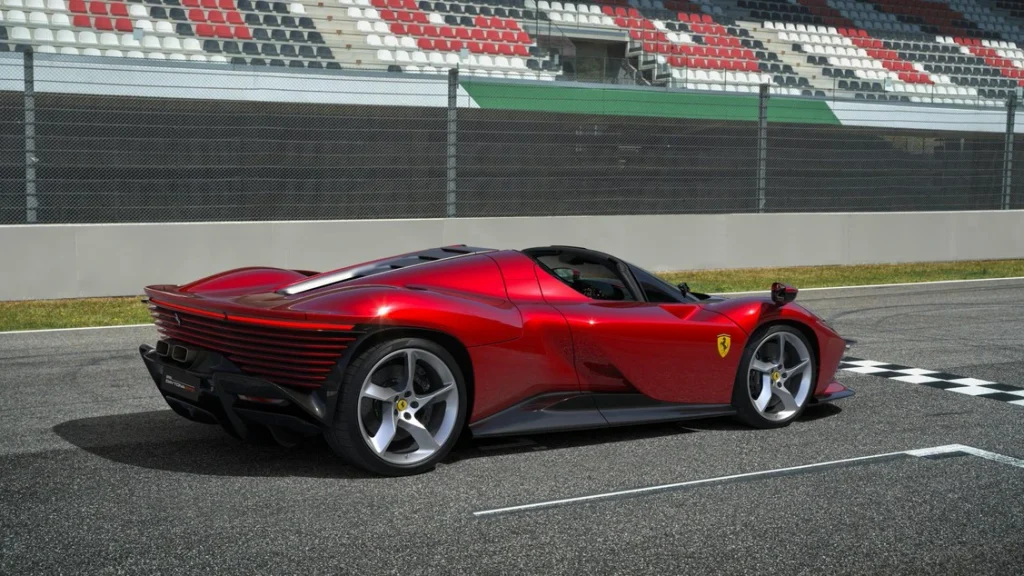
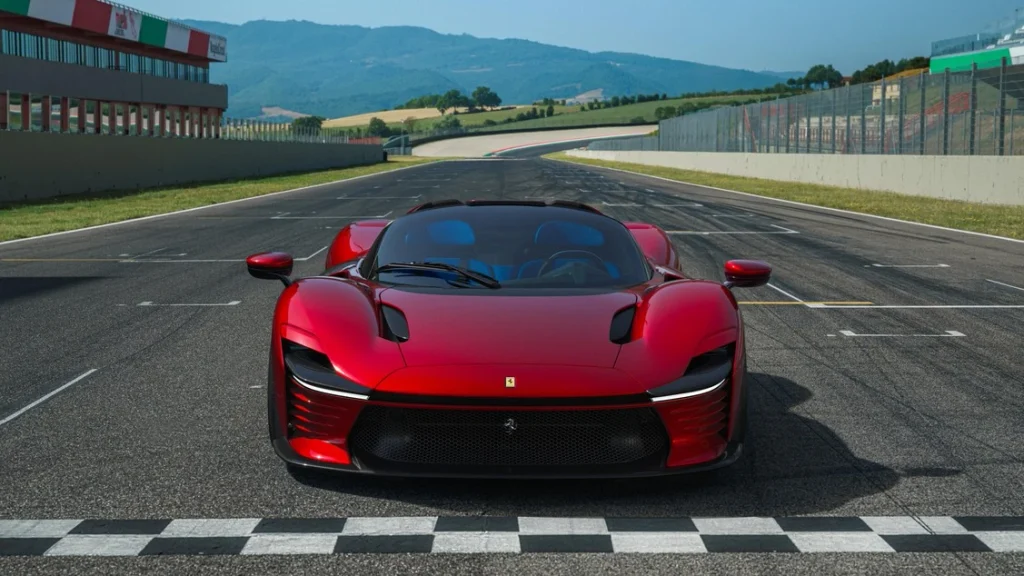
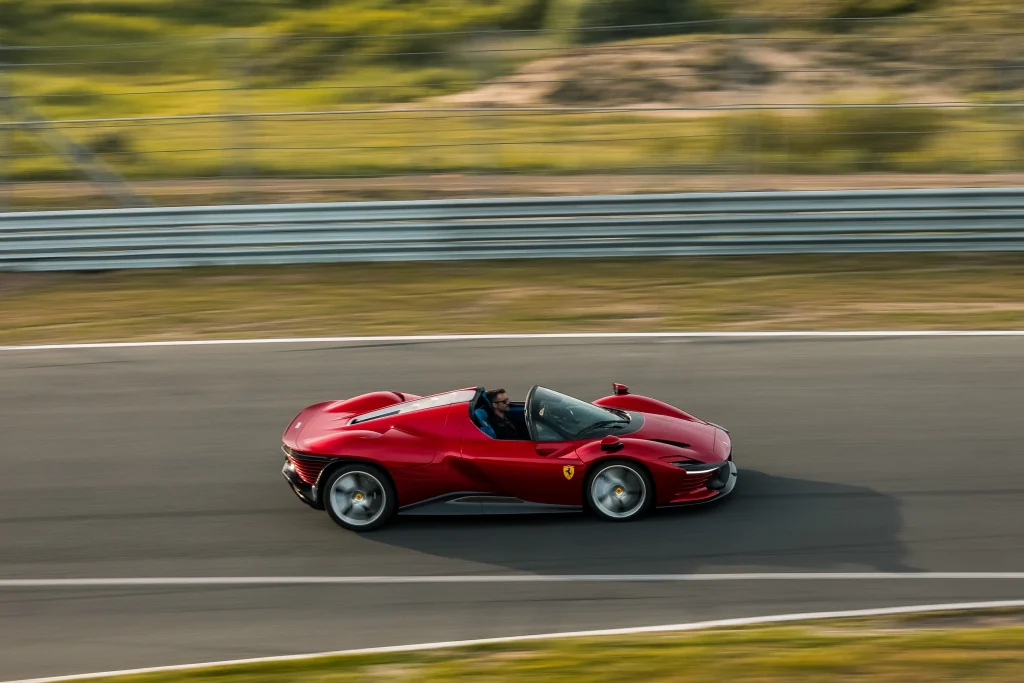
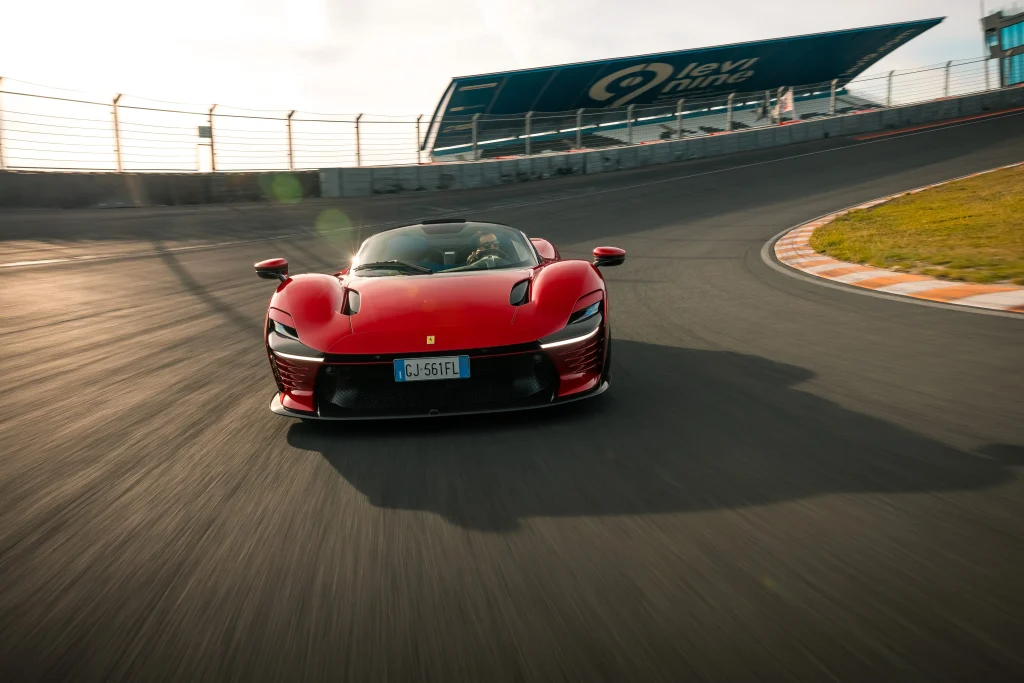
The design of the Ferrari Daytona SP3 was led by Flavio Manzoni and Ferrari’s in-house design team. The body is low and sculpted, with very few straight lines, and the whole shape is built around airflow. From the front, the car looks wide and flat, while the sides flow smoothly towards the rear.
The monocoque chassis and body panels are made of carbon fibre. This keeps weight down while maintaining strength, which is important for a car that is meant to feel light and quick. A removable targa-style roof gives an open-air feel without the structure of a full convertible, and the doors open upward and forward in a dihedral style.
Aerodynamics are managed without a large fixed rear wing. This keeps the rear clean and smooth, and it helps the car look more like a 1960s prototype than a modern wing-heavy supercar. Small lights and a sculpted tail add another nod to those older race cars.
Overall, the exterior looks dramatic without feeling cluttered. Every surface seems to have a purpose, and that is exactly what Ferrari wanted from this project.
Ferrari Daytona SP3 Engine: A 6.5-Litre Naturally Aspirated V12
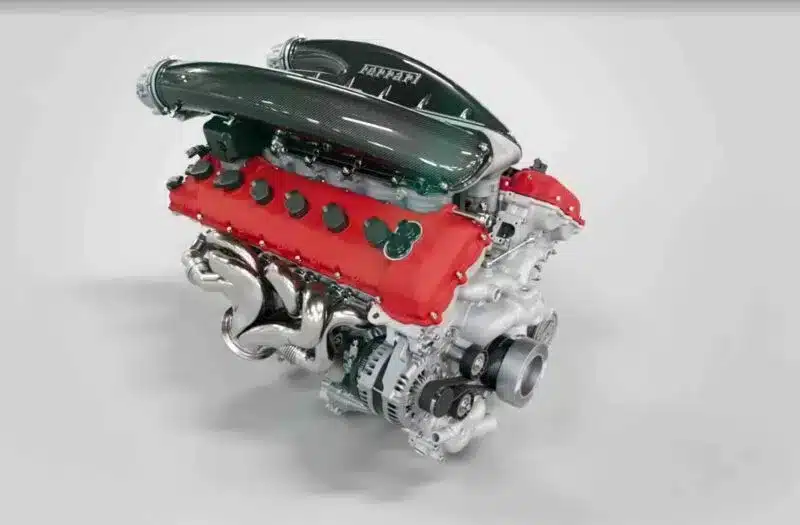
The heart of the car is a 6.5-litre naturally aspirated V12, closely related to the engine in the Ferrari 812 Competizione. As stated by Ferrari, it produces about 840 CV (829 hp) and 697 Nm of torque, with a maximum engine speed of 9,500 rpm.
Power goes to the rear wheels only, through a 7-speed dual-clutch gearbox. The engine is mounted in the middle of the car, which improves weight balance andGives the driver a more direct connection to the road. This layout is typical for Ferrari’s most driver-focused models.
Ferrari lists a dry weight of around 1,485 kg. For a car with this much power, that is a strong figure, and it comes largely from the carbon-fibre construction.
The Ferrari Daytona SP3 uses a pure petrol V12 with no hybrid or electric assistance. In an era when most performance cars are adding turbos and batteries, this is one of its biggest attractions for enthusiasts.
Performance and Handling
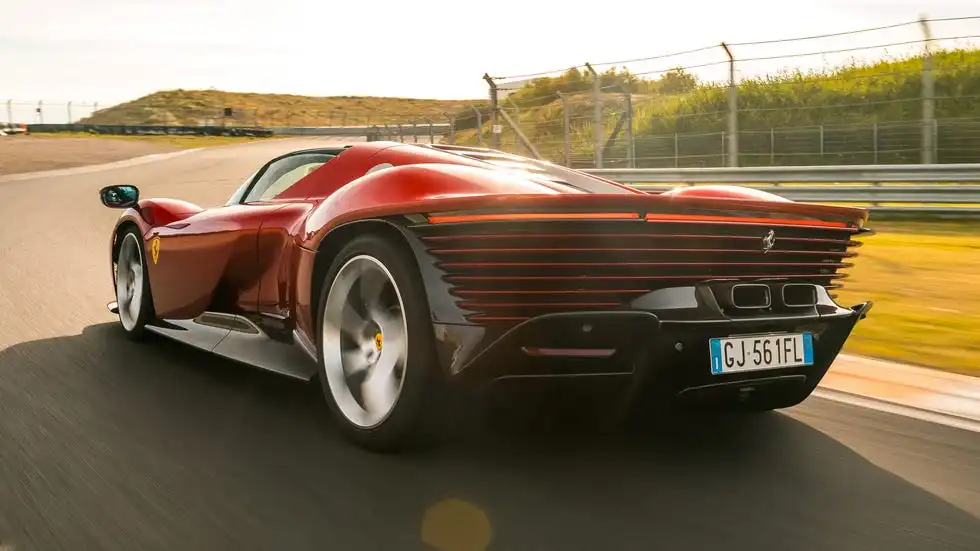
Ferrari quotes 0-100 km/h in about 2.85 Seconds and a maximal speed of more than 340 km/h. These figures identify the car under the fastest ferraris of the road, but they narrated only part of the story.
As the engine naturally aspirated, power constructs smoothly as the speeds rise. There is no sudden turbo-ascent. Instead, the railcar is getting stronger and stronger as it approaches the top race, which many riders consider the most rewarding means to utilise a v12.
The light weight also helps in corners. With the engine in the middle and the power going to the rear wheels, the Daytona SP3 is designed to feel balanced and responsive. The sound of the high-revving V12 is also a big part of the experience, and many enthusiasts value it as much as the speed itself.
It is worth remembering that this is a road car with a strong racing influence. It is built for engagement, not for comfort or practicality.
Interior and Driving Experience
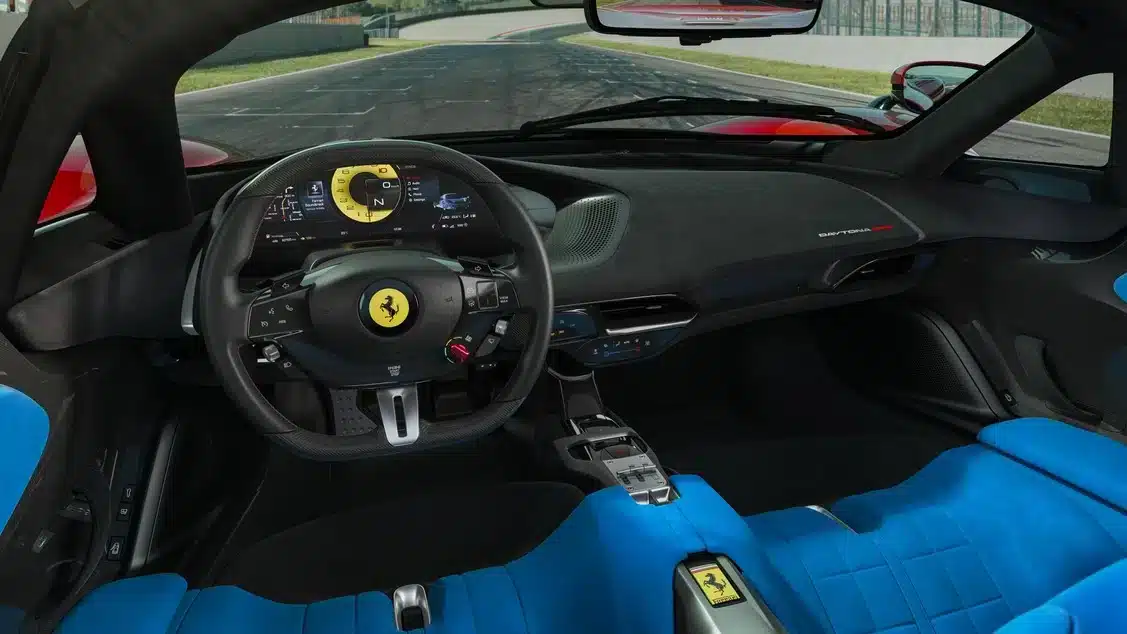
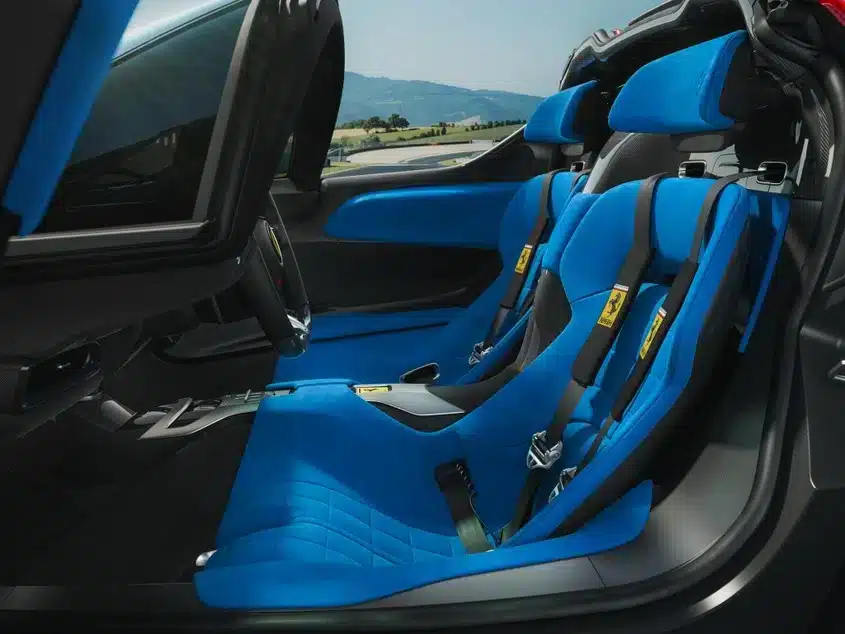
Inside the Ferrari Daytona SP3, everything is focused on the driver. The cabin is compact and minimal, with a carbon-fibre structure and a seat built into the body. This saves weight and keeps the driver close to the car’s structure, which adds to the feeling of being part of the machine.
Key controls sit on the steering wheel, and information is shown on a digital driver display. The idea is simple: fewer distractions and more attention on the road. There is very little decoration, and most of what you see has a clear job to do.
The cabin follows the same philosophy as the exterior. It is modern and clean, but it still carries the mood of a classic racing prototype.
Ferrari Daytona SP3 Price, Production and Availability
Exclusivity is a big part of this car’s identity. Ferrari limited production to 599 units worldwide, and cars were offered by invitation to selected clients. Most buyers were long-term Ferrari customers, so the car was never sold in the usual way.
The ferrari daytona s3 price was indicated before taxation and customization with about 2 million euros. The precise pricing varies according to the market and the choices, so it is best to postulate for the belatedest information with ferrari or an approved distributor.
Because the production run is closed, the car now trades mostly on the pre-owned and collector market. Prices there depend on condition, options, history and demand, and they can differ a lot between sellers and countries.
How It Compares With Other Icona Cars
The Monza SP1 and SP2 were open-top speedsters with no windscreen. The SP1 was a single-seater and the SP2 a two-seater. Both were built around the idea of a pure, stripped-back driving experience.
The Daytona SP3 is more usable by comparison. Its roof adds weather protection, and the cabin feels more complete, while the car still keeps a raw and focused character.
All three cars follow the same idea: modern engineering wrapped around a design inspired by Ferrari’s past. The difference is in the type of car each one recalls, with the Monza models looking back at open-top racers and the SP3 looking back at endurance prototypes.
Why the Ferrari Daytona SP3 Still Matters
In an age of turbos and electrification, the Ferrari Daytona SP3 shows that a high-revving, naturally aspirated V12 still has a place in a modern supercar. It combines racing heritage, lightweight construction and a design that stands apart from almost everything else on the road.
It is built as a high-stream road vehicle and the last road registration depends on the rules of each country. For accumulates, the 599-car subspecies unit, and ferrari legacy make it a long-term symbolization.
About The Author