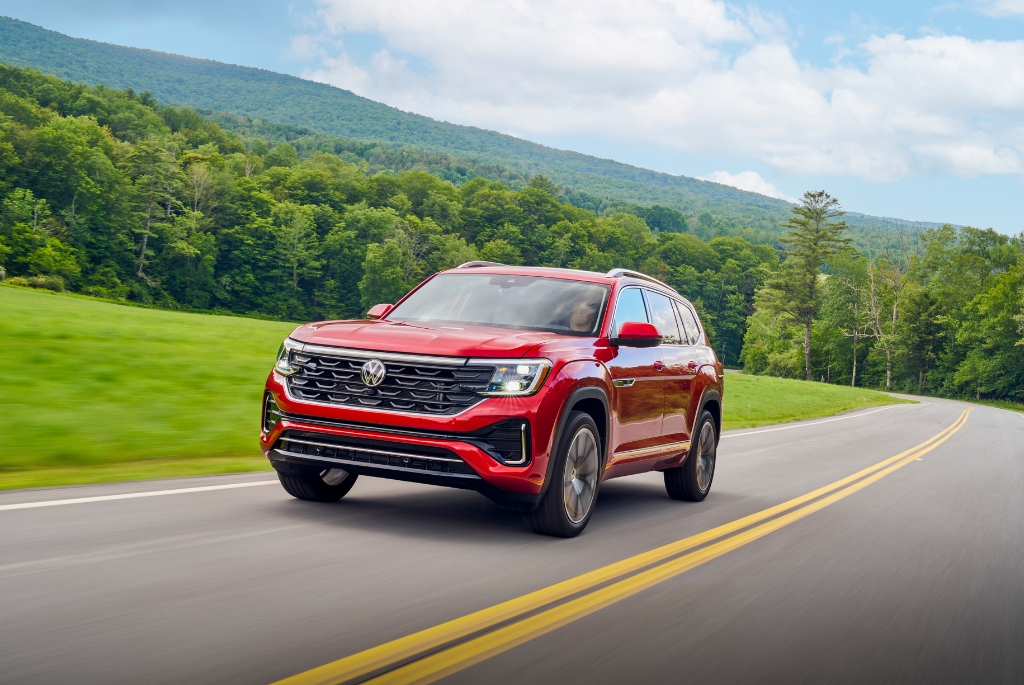
The 2026 Volkswagen Atlas isn’t trying to reinvent the family SUV. Instead, Volkswagen has made its big three-row crossover the one that families care about most: lots of room inside, useful cargo space, comfortable ride and enough power to do daily chores. The 2026 Atlas is basically the same as the 2025 model year. The only real change is a HomeLink rearview mirror, factory standard on SE with Technology and higher trims.
That may sound like a small update, but the Atlas is already a very different vehicle than the one that arrived a few years ago. For 2024, the update brought a turbocharged four-cylinder engine to replace the old V6, refreshed the styling and added more tech. The 2026 model is built on that foundation, not as a disruption of it.
For buyers who want three rows without stepping up to a full-size SUV, the 2026 volkswagen atlas remains one of the most practical options.
2026 Volkswagen Atlas: What Has Changed?
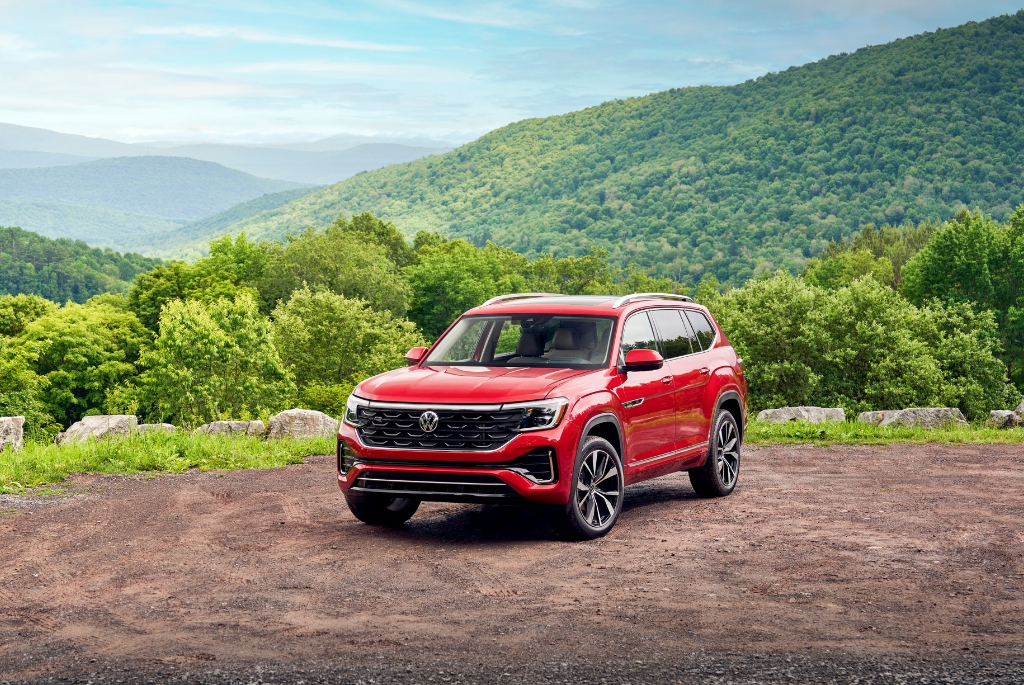
The 2026 Volkswagen Atlas arrives for the new model year with few mechanical changes.
The biggest change is the factory-installed HomeLink mirror added to the SE with Technology trim and up. It’s a system built into the rearview mirror, with controls for compatible garage doors and other smart-home devices.
And what follows is the rest of the formula:
- 2.0-litre turbocharged four-cylinder motor
- 269 PS
- Torque: 273 foot-pounds.
- 8-speed auto gearbox
- Front-wheel drive or optional 4Motion all-wheel drive
- 7 seats seating capacity
- Towing Capacity Up To 5K Pounds
12.0-inch infotainment display; Not a big update, not surprising at all. Volkswagen is giving the Atlas a major refresh for 2024, so the 2026 model is a tweaking of the newer package in play.
A Big SUV With a Clean, Familiar Shape
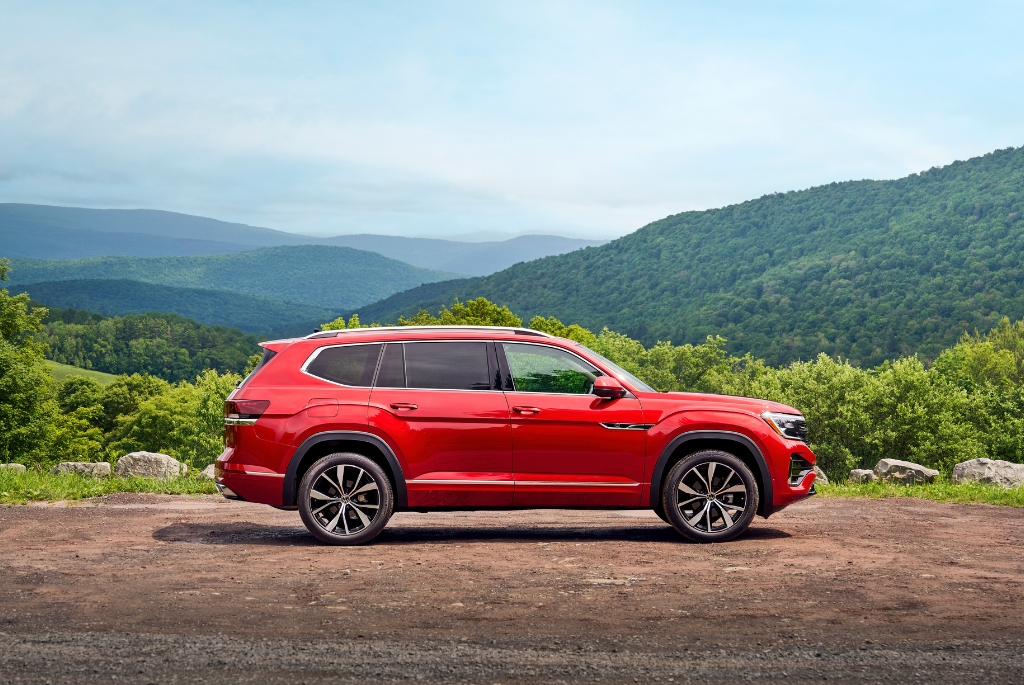
The 2026 volkswagen atlas design is certainly more aggressive than previous versions but not too much to handle.
In front there’s a broad grille and narrow light elements and the body has the upright proportions you’d expect from a practical three-row SUV. The big windows help keep the interior feeling spacious and the rather square rear end is good for cargo use.
The Atlas doesn’t try to look like a sport-ute. The numbers speak for themselves. It’s a comfort vehicle for passengers, luggage and long distance.
That gives it an advantage over sleeker options. A steep roof pitch can look nice, but it can hurt third row space and cargo flexibility. That trade-off has been mostly avoided by Volkswagen with the standard Atlas.
The result is a vehicle that looks serious without any overt styling drama.
The 2.0-Litre Turbo Is Now the Only Engine
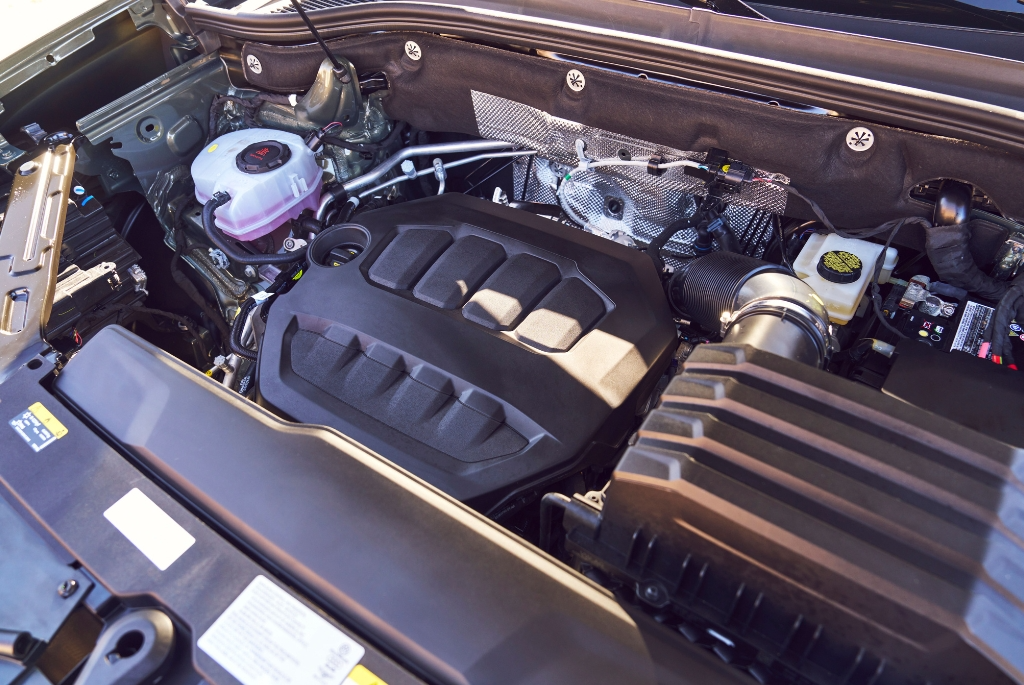
The 2026 Volkswagen Atlas gets a turbocharged 2.0-liter four-cylinder that develops 269 horsepower and 273 lb-ft of torque. Depending on the configuration, drive is sent to the front wheels or all four wheels via an eight-speed automatic gearbox.
The engine is a huge change from the V6 that powered previous Atlas models.
The turbocharged engine has fewer cylinders but more torque than the old four-cylinder and provides a useful spread of pulling power. Torque is low in the rev range which is good for a big SUV full of passengers and gear.
Car and Driver subjected an Atlas to the instrumented testing, and recorded a 0-to-60-mph time of 7.3 seconds. So the turbo-four has enough muscle to get the big SUV moving with decent urgency.
It’s not a performance SUV, and the powertrain doesn’t attempt to be one. The strength of the engine is that it can accelerate confidently without having to work all the time.
How the 2026 Atlas Drives
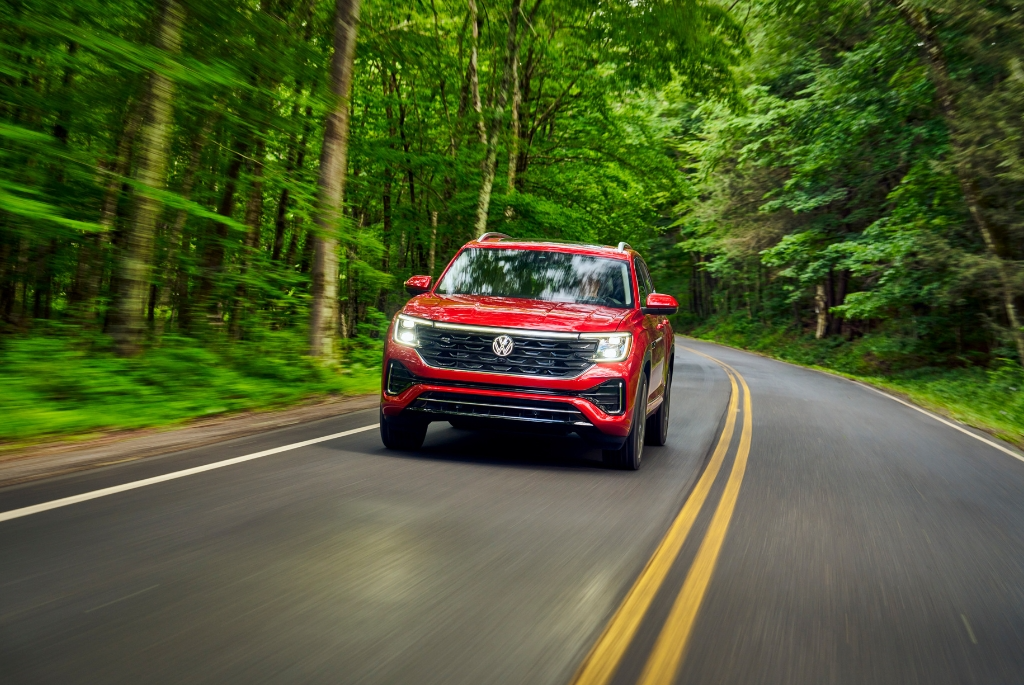
The 2026 volkswagen atlas is happiest as a long-distance family hauler, rather than a corner-carving machine.
It handles predictably and the suspension copes with everyday road imperfections quite well. And on highways the Atlas falls into a relaxed rhythm that’s exactly where a large three-row SUV should excel.
Push harder on the corners and it becomes more apparent in size. Car and Driver writes that the Atlas is “composed on the highway and reasonably manageable around town,” but its handling isn’t as agile as some rivals, like the Mazda CX-90.
That’s not necessarily a bad thing. This big of a vehicle has to balance ride quality, passenger comfort, and stability.
The Atlas strikes that balance pretty well.
A Cabin Built Around Family Life
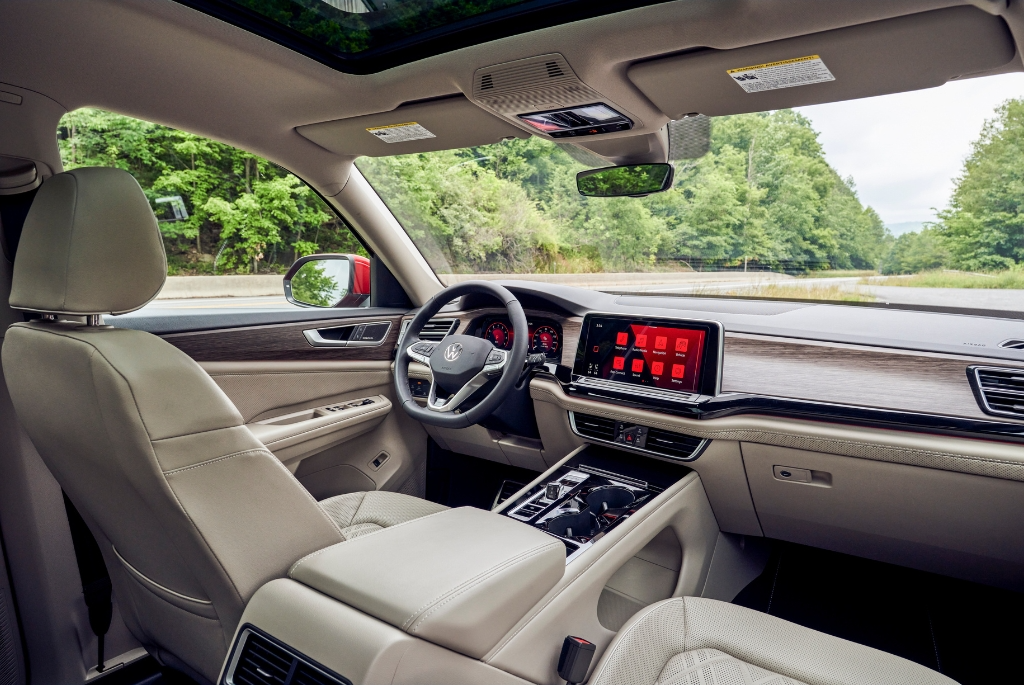
The 2026 Volkswagen Atlas makes its best argument once the doors open.
Volkswagen has designed the inside to be usable space, not an exercise in stuffing a small cabin full of decorative details. The three-row layout can accommodate up to seven passengers, and the third row is spacious enough for adults to use it, not just as an emergency-only seating area.
Storage is another big plus.
There’s lots of storage spaces around the cabin, and the big center console and numerous cupholders make the Atlas particularly family friendly.
Volkswagen states the cargo capacity is 96.6 cubic feet with the rear seats folded.
That number tells only part of the story. The shape of the cargo area is equally important and the Atlas benefits from upright SUV proportions.
For a family loaded with sporting gear, shopping bags or holiday luggage, that useful layout can be worth more than a few extra horses.
Technology and Infotainment
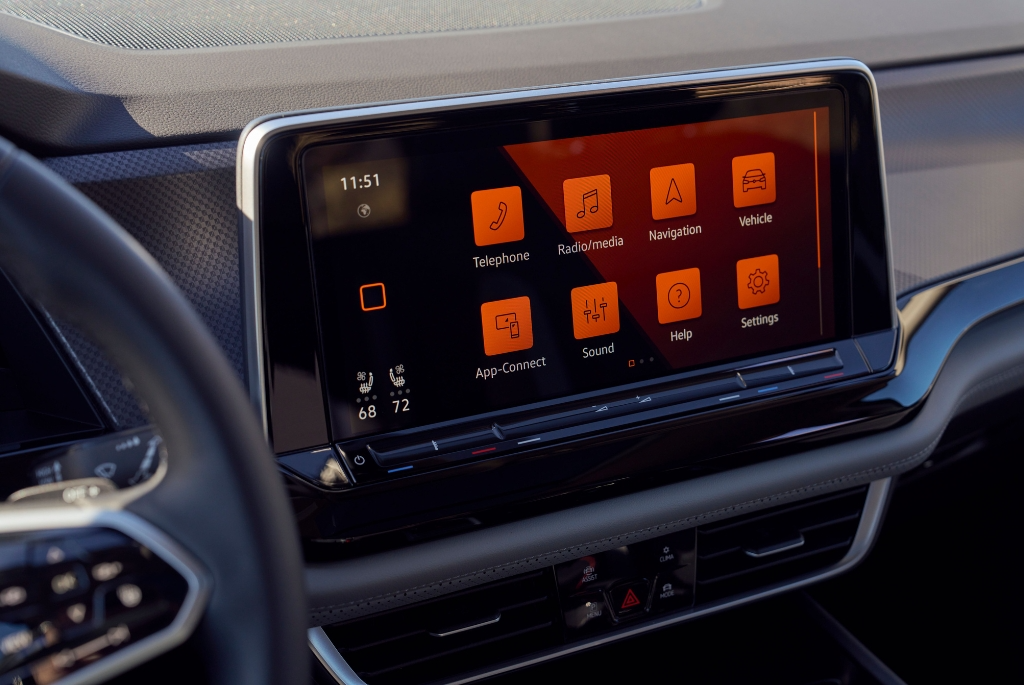
The 2026 volkswagen atlas comes with a 12.0-inch standard infotainment touchscreen, plus apple carplay and android auto compatibility. Standard tech features include a six-speaker audio system, wireless phone charging and six USB-C ports, capable of 45-watt charging.
Higher trim levels include more equipment and luxury touches.
Features available include:
- Heated and cooled front seats
- Higher spec massaged front seats
- Sunroof – panoramic
- High quality audio
- Climate control with three zones
- Smartphone wireless integration
- Digital instrument cluster
Volkswagen has also launched a ChatGPT-powered voice assistant for 2026 models with an active Car-Net connected-services subscription, according to Car and Driver.
The infotainment system is impressive in terms of screen size, but the reliance on touch controls can make some day-to-day adjustments less intuitive than traditional physical controls.
One of the Atlas’s few areas where modern design priorities have arguably come at the expense of convenience.
Comfort Is Where the Atlas Makes Its Case
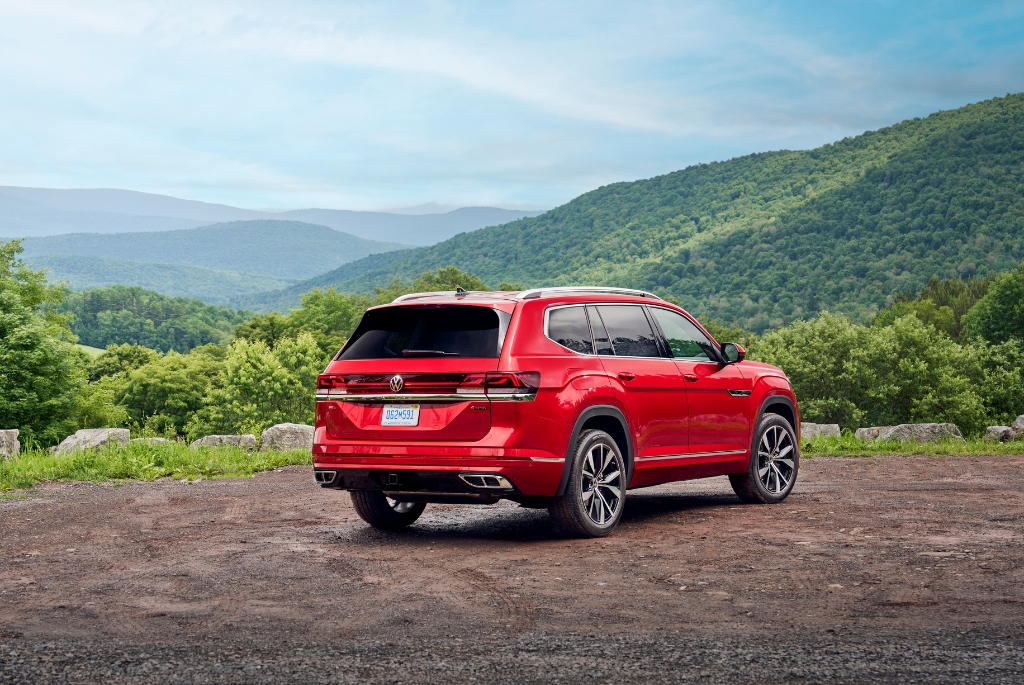
The 2026 volkswagen atlas is an all-around comfort-focused suv.
The seat position gives you a commanding view of the road and the cabin is spacious enough to allow passengers to settle down for longer journeys. You can also get massaging front seats and three-zone climate control on Volkswagen models, pushing higher grades ever closer to premium territory.
The ride is generally smooth, especially over normal road surfaces.
For an SUV this size, you don’t expect sports-car-like body control. Instead, the Atlas is all about stability and passenger comfort.
That makes the character easy to grasp. First and foremost, this is a family vehicle and it shows in the engineering.
Towing and Everyday Utility
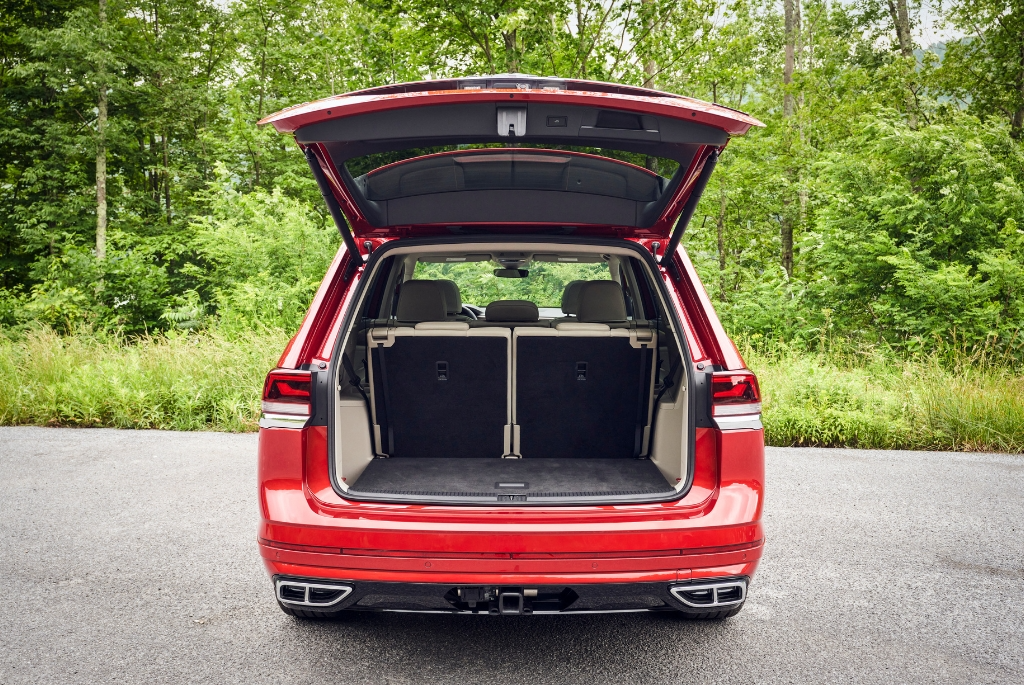
The 2026 volkswagen atlas is more capable than you might think from its family-friendly looks.
Max towing capacity is 5,000 pounds with the right equipment on the Volkswagen Atlas.
That provides it with enough capability for a trailer, small boat or recreational equipment, while keeping its role as a day-to-day family vehicle.
Towing rating will not be the same for all configurations. Car and Driver notes that SE with Technology and higher trims come with a standard trailer hitch, but some lower trims have reduced towing capacities.
That distinction is important to buyers who intend to tow regularly.
The Atlas is capable, but you’ll need to find the precise specification for the trailer weight and equipment you plan to tow.
Fuel Economy: Acceptable Rather Than Exceptional
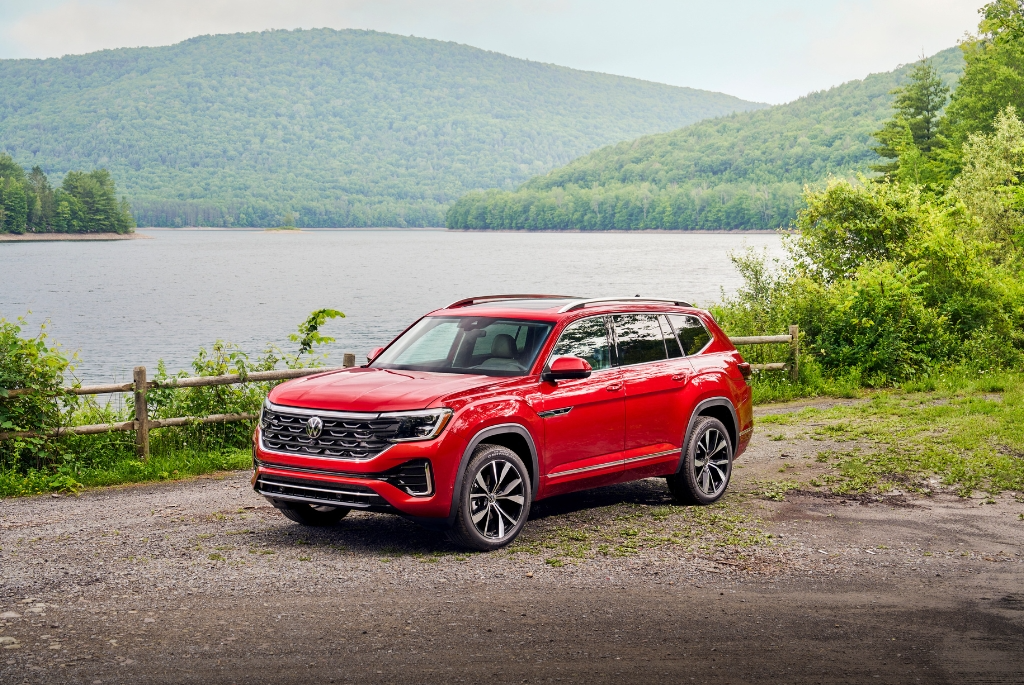
The 2026 Volkswagen Atlas isn’t trying to beat smaller hybrid SUVs on fuel economy.
EPA estimates differ by drivetrain and trim. Car and Driver says the front-wheel-drive models are rated at 20 mpg city and 27 mpg highway, and most of the all-wheel-drive versions are rated at 20 mpg city and 26 mpg highway. The Peak Edition gets a lower 19 mpg city and 25 mpg highway.
Those numbers are competitive for a big 3-row SUV with a turbocharged petrol engine, but efficiency isn’t the Atlas’s strong point.
Rather the case is made on the basis of space, towing capability, comfort and flexibility.
Safety and Driver Assistance
Safety technology is an important part of the 2026 Volkswagen Atlas package.
The Atlas comes with a wealth of driver-assistance systems, although availability depends on the trim. Volkswagen’s safety suite is designed to help with braking, lane positioning, vehicle detection and highway driving.
The modern assistance systems and the large cabin make the Atlas perfect for family transportation.
The SUV has the advantage of a big road presence and commanding seating position, but those traits should never replace careful driving or proper attention behind the wheel.
2026 VW Atlas Trims and Pricing
The 2026 vw atlas is available in a variety of trim levels, allowing buyers to choose between value, technology, comfort or style.
The starting MSRP for the 2026 Atlas is $39,310 for the U.S. market, Volkswagen says.
The wider Atlas range is rated by Car and Driver at around $40,785 to $56,105, depending on trim and configuration.
The main line-up consists of:
- SE. Gateway to the Atlas mountains
- SE with Technology: Adds useful technology and convenience equipment
- SEL: Lifts the cabin to a more upscale level
- SEL R-Line: Sportier styling and equipment added
- Peak Edition: A more exclusive version with a focus on aesthetics
The SE with Technology will be most popular with many shoppers because it adds useful equipment without jumping all the way to the expensive upper trims. Car and Driver calls this its favourite configuration for the mix of features and price.
2026 Atlas vs the Competition
The 2026 Atlas is one of the most competitive segments of the American SUV market.
Its competitors include the Honda Pilot, Kia Telluride, Hyundai Palisade and Mazda CX-90. Each is a different approach, slightly different.
The Atlas is best known for its interior space and simple utility. The Mazda CX-90 is more fun to drive, whereas rivals like the Kia Telluride and Hyundai Palisade are more focused on premium cabin presentation.
This puts the Volkswagen in an interesting place.
It’s not the most exciting or luxurious option in the class, but it’s hard to ignore when passenger space and practicality are high on the priority list.
Is the 2026 Atlas Worth Considering?
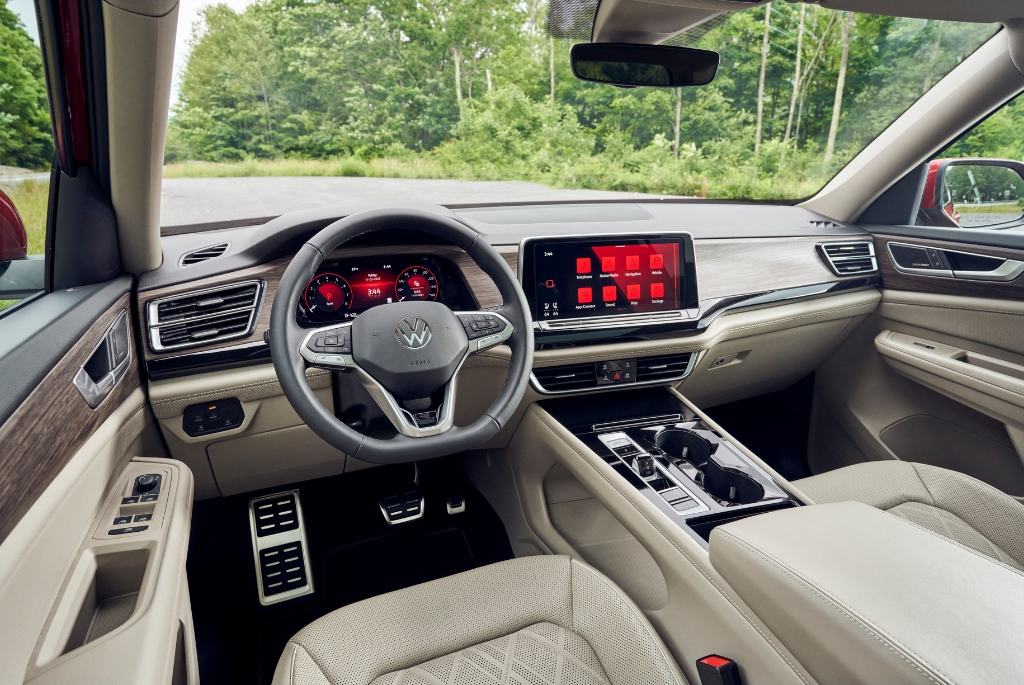
The 2026 Volkswagen Atlas is a solid choice for shoppers who want real three-row versatility without stepping up to a much larger, full-size SUV.
Its strengths are obvious:
- Large three-berth cabin
- Third row friendly for adults
- Powerful 269-hp turbocharged engine
- Available All Wheel Drive
- UP TO 5,000 LBS. TOWING CAPACITY
- Big cargo space
- 12-inch infotainment display (standard)
- Comprehensive suite of comfort and driver assistance features
- Its shortcomings are just as simple.
The interior controls are touch-heavy and can be frustrating. Fuel economy is only average for the segment and it doesn’t have the same driving involvement as some competitors.
None of these drawbacks really interfere with what the car is for.
Also read: Genesis Magma GT: Genesis’ Boldest Move into the Supercar World
The Atlas Formula Still Works
The 2026 volkswagen atlas is a vehicle that doesn’t need a drastic yearly transformation to stay relevant.
The big changes have already been made by Volkswagen. The V6 is gone, the turbocharged four-cylinder is here to stay, the cabin has been updated and the SUV has had a massive tech upgrade since its original launch.
The company has just tweaked the package for 2026.
In fact, that restraint may be appropriate for the Atlas. Most families do not need a new car every year. They need something that is comfortable to use on a Monday commute, big enough for a weekend trip and able to carry everyone without turning every journey into a logistical exercise.
The Atlas gives you those basics.
Where the Atlas Stands Today
The 2026 volkswagen atlas isn’t the quickest, most stylish or most engaging vehicle in the three-row SUV segment. Where it appeals is elsewhere.
It provides space without a full-size footprint, real towing ability without a truck-based chassis and a turbocharged engine that gives the big SUV enough authority on the road. The cabin works, the ride is comfortable and the tech on offer keeps it competitive with newer rivals.
The few changes for 2026 may not make headlines, but that’s not necessarily a bad thing. The Atlas already had its big update for 2024, and the current package is still more than up to its job.
The 2026 volkswagen atlas still remains a convincing three-row contender for buyers who prioritise room, comfort and everyday versatility over outright driving excitement.
About The Author