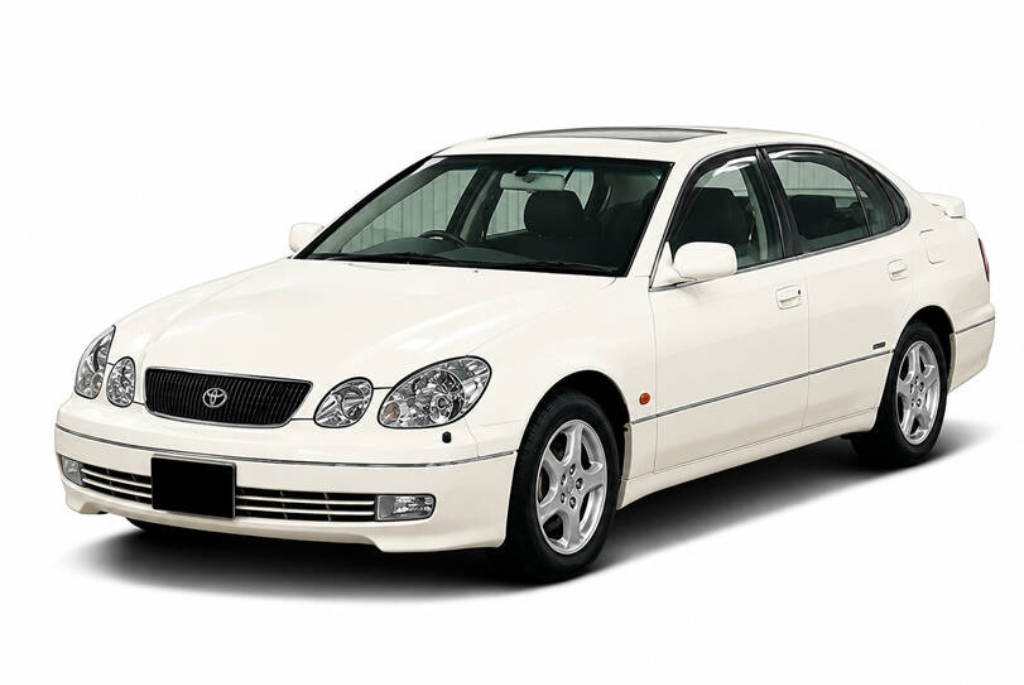
Some cars gain notoriety based on their original design. Others gain notoriety based on what enthusiasts have done to them after purchase. The Toyota Aristo is somewhere between those two. When Toyota made it for the first time in 1991, they made a high-performance luxury sedan, not a stripped sports machine. Still, the Aristo gained popularity because of the straight-six turbo that was placed in the executive-like body.
The formula was unusually convincing. A spacious four-door body, rear-wheel drive, sophisticated suspension and Toyota’s 3.0-litre inline-six gave the car a character that was difficult to define with a single label. It was part luxury sedan, part performance machine and, in later years, a favourite platform for tuning.
Toyota’s own history records the first-generation Aristo as a high-performance four-door sedan introduced in October 1991. The model was developed for Toyota’s Japanese dealer network and shared basic components with the Crown Majesta. Its styling was based on a prototype created by Italdesign under Giorgetto Giugiaro before being further developed by Toyota.
Toyota Aristo: Where Luxury Met Performance
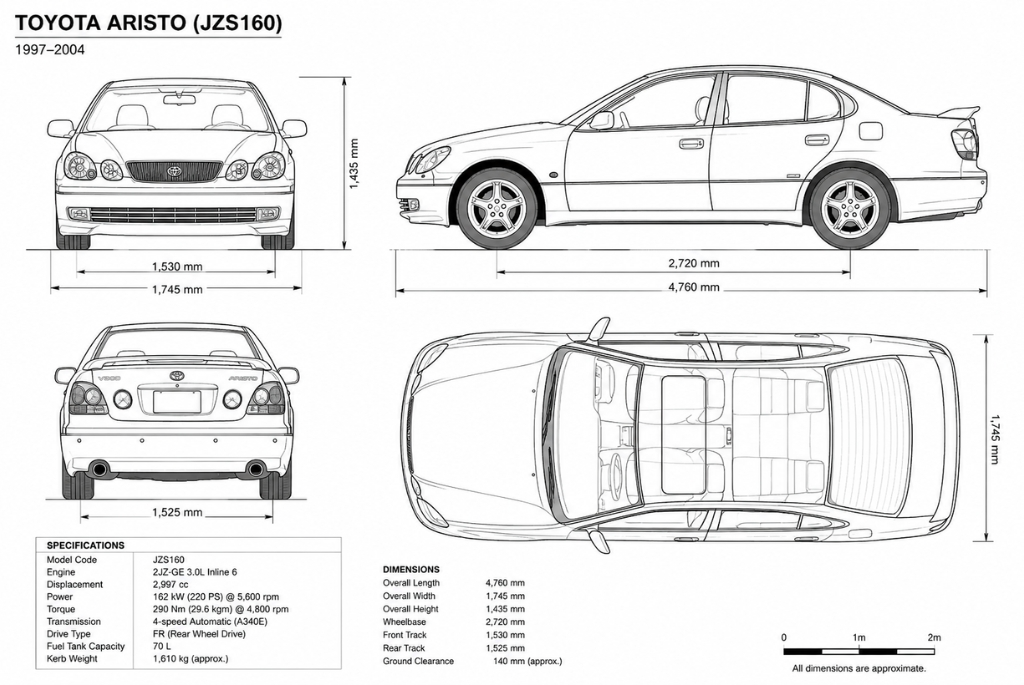
The toyota aristo arrived at an interesting point in Japan’s automotive history. Japanese manufacturers were producing increasingly sophisticated luxury cars, but performance engineering was advancing just as quickly.
Toyota did not treat the Aristo as simply another executive sedan. The company positioned it as a high-performance four-door, giving it a 3.0-litre DOHC inline-six in naturally aspirated and twin-turbocharged forms. The more powerful 3.0V used the 2JZ-GTE and produced 280 PS at 5,600 rpm, while the naturally aspirated 3.0Q used the 2JZ-GE with 230 PS at 6,000 rpm.
That combination immediately gave the Aristo a different personality from a conventional luxury sedan.
The first-generation car also used four-wheel double-wishbone suspension, with equipment such as Toyota’s Piezo TEMS, traction control and a torque-sensing limited-slip differential available depending on specification.
The first-generation formula included:
- 3.0-litre naturally aspirated or twin-turbocharged inline-six engines
- Rear-wheel drive on the main 3.0-litre models
- Four-wheel double-wishbone suspension
- Four-speed automatic transmission
- Available traction and stability-oriented technology
- Italdesign-influenced exterior design
It was a serious engineering package, even if the body suggested something more conservative.
The Design That Made the Aristo Stand Out
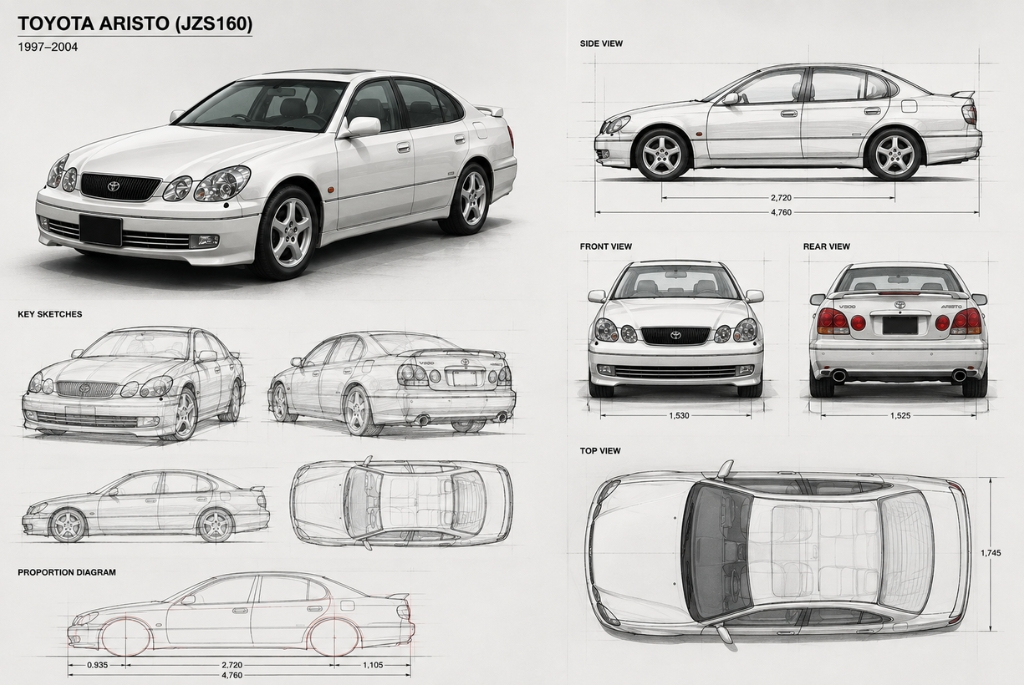
The toyota aristo did not follow the boxy executive-sedan formula that dominated parts of the market during the early 1990s. Its design had a distinctly European flavour, largely because of the Italdesign connection.
The first-generation car featured a wedge-shaped silhouette, a relatively long body and a large cabin. Toyota’s own historical account highlights the aggressive styling created from the Italdesign prototype and subsequently refined by Toyota.
That styling also helped distinguish the Aristo from the Crown-based luxury cars around it.
There was a sense of restraint to the design. It did not need enormous spoilers or exaggerated bodywork to communicate performance. The proportions did most of the work.
That understated approach would later become part of the car’s appeal. A well-kept Aristo could look like an ordinary Japanese luxury sedan until the engine revealed otherwise.
The 2JZ Connection
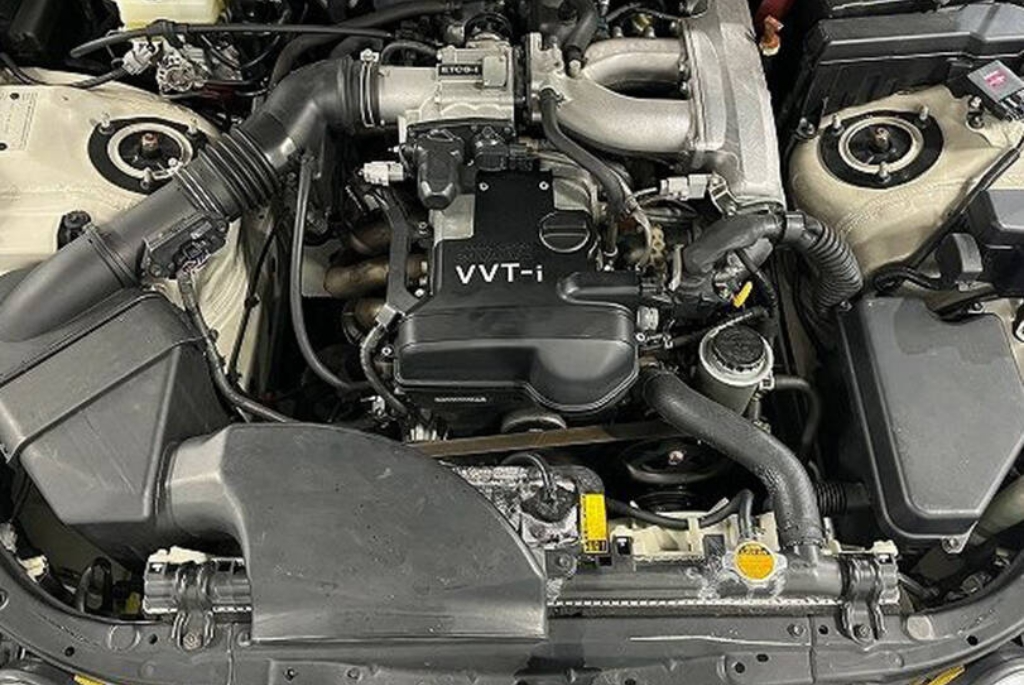
For many enthusiasts, the story of the toyota aristo 2jz begins with the engine.
The 2JZ-GTE was a 2,997cc DOHC inline-six with twin turbochargers, and Toyota rated the first-generation turbocharged Aristo at 280 PS. The second generation retained the 3.0-litre twin-turbo engine while adding VVT-i and intake-system improvements.
The significance of the engine goes beyond its factory output.
The 2JZ family developed a reputation for durability and tuning potential, helping make the Aristo an attractive alternative to more obvious Japanese performance cars. The engine’s presence also created an unusual connection between Toyota’s luxury sedan and the performance world.
The toyota aristo 2jz combination became especially interesting because the car offered four doors, a comfortable cabin and a more discreet exterior than the sports cars sharing Toyota’s performance technology.
That was the charm.
A performance-oriented Aristo did not necessarily need to announce its intentions at every traffic light.
Second Generation: A Sharper Aristo
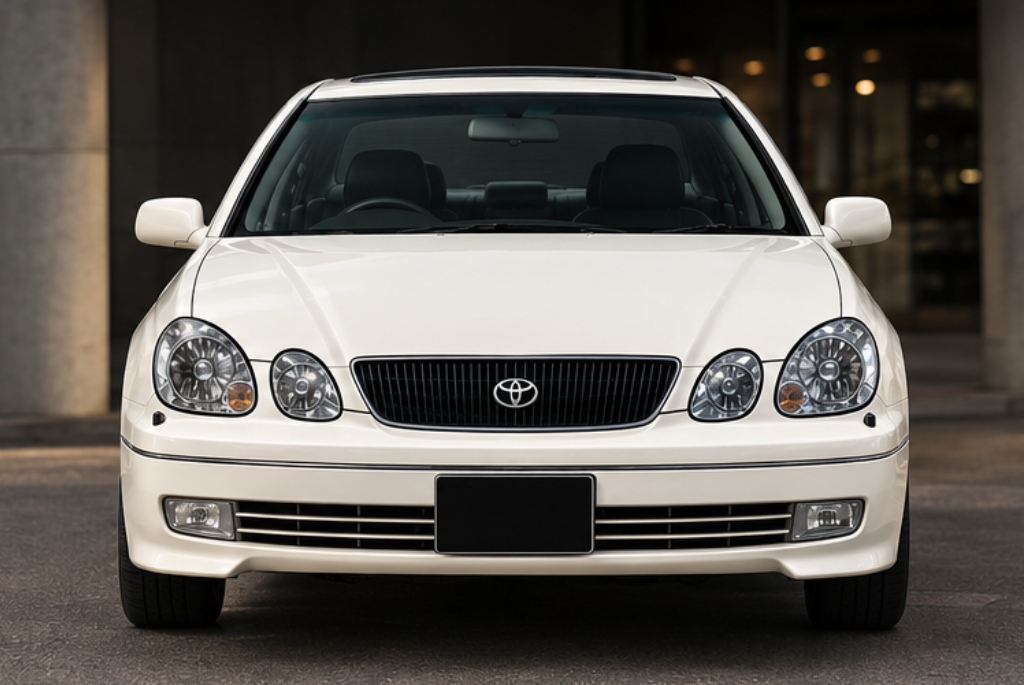
Toyota introduced the second-generation toyota aristo on August 27, 1997. The basic long-nose, short-deck proportions remained, but the car moved onto a newly developed platform. Toyota shortened the front and rear overhangs and moved the engine further rearward to improve weight distribution and handling.
The changes were significant.
The second-generation car measured 4,805mm long, 1,800mm wide and 1,435mm tall, with a 2,800mm wheelbase. The V300 weighed 1,680kg.
The V300 was the headline model. Its 2JZ-GTE remained a 2,997cc twin-turbocharged inline-six, producing 280 PS at 5,600rpm. Toyota’s Japanese specification data lists 451Nm of torque at 3,600rpm for the V300.
This was still a luxury sedan, but the engineering underneath had become more performance-focused.
Toyota Aristo V300: The Sleeper at the Top
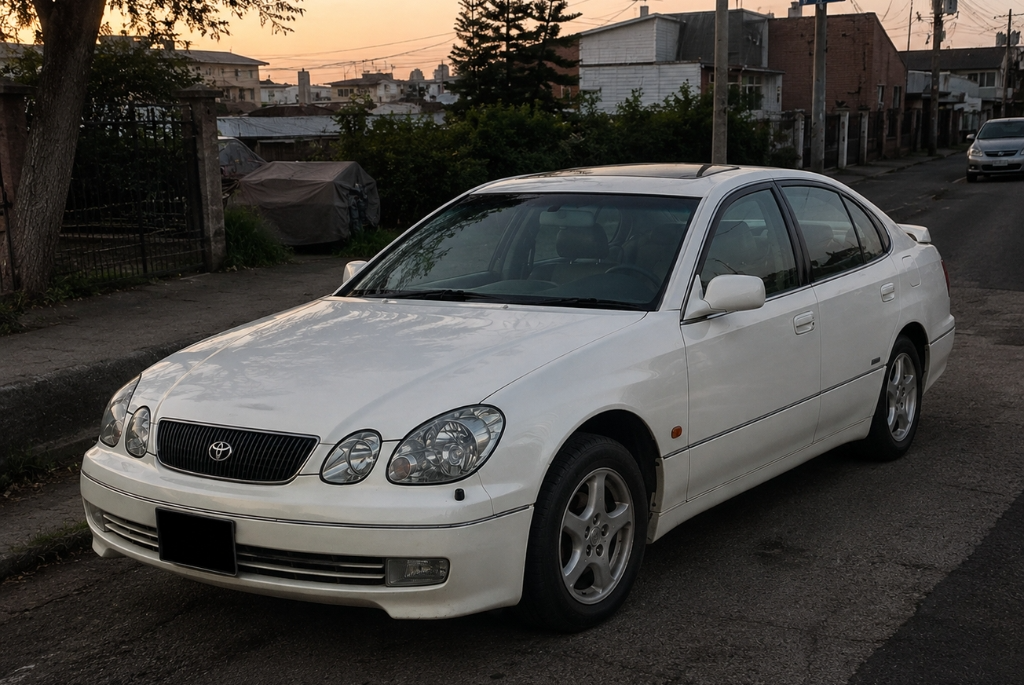
The toyota aristo v300 became the version most closely associated with the model’s performance reputation.
Toyota paired the 280-PS 2JZ-GTE with a four-speed automatic transmission. The V300 also used four-wheel double-wishbone suspension, while later models received electronic systems designed to manage the car’s substantial torque.
The numbers may seem modest by modern performance-car standards, but context matters.
This was a large four-door sedan designed during the late 1990s. It was not intended to be a stripped-down track car. Its appeal came from the combination of pace and everyday usability.
The V300 could therefore occupy two worlds. It could behave like an executive sedan during normal driving, yet the twin-turbo straight-six gave it the mechanical character expected from Toyota’s performance machinery.
The toyota aristo v300 also gained a Vertex Edition, which brought specific visual and equipment changes. Toyota’s catalog records the V300 Vertex Edition alongside the standard V300 and S300.
Technology Before It Became the Norm
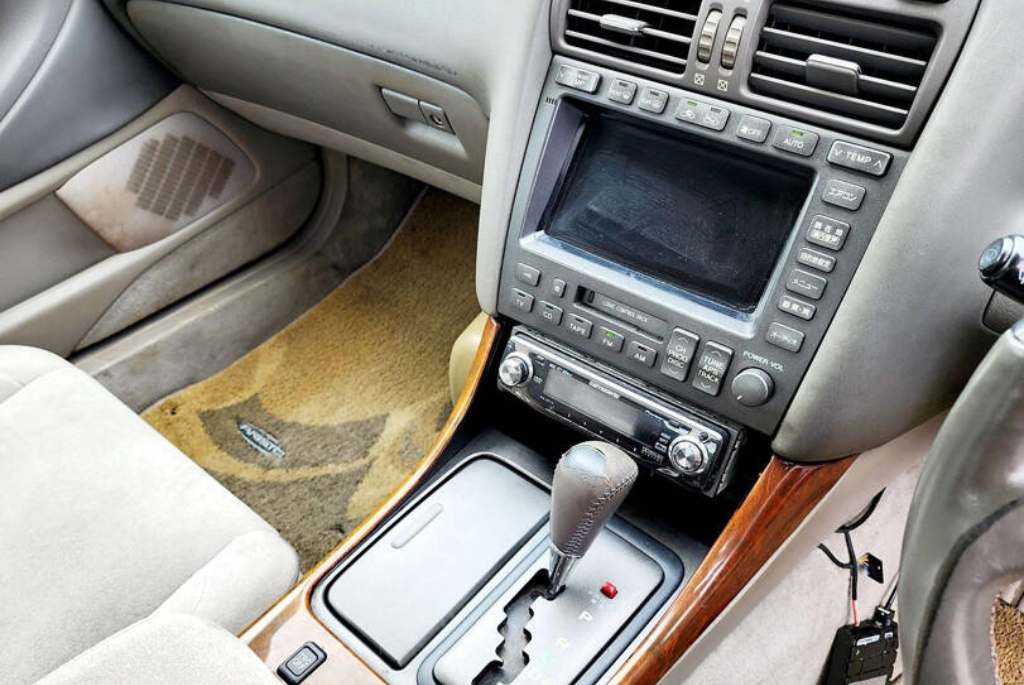
One of the less discussed aspects of the toyota aristo is its technology.
The second generation incorporated Vehicle Stability Control and traction control, both particularly relevant to a powerful rear-wheel-drive sedan. Toyota also offered navigation technology, and a 1999 update introduced a DVD-ROM-based GPS voice navigation system with improved route calculation and more detailed destination searching.
This is where the Aristo’s identity becomes clearer.
It was not simply a 2JZ engine placed inside a large sedan. Toyota engineered the car as a complete package, combining power with electronic assistance, comfort and sophisticated suspension.
That balance explains why the car has remained interesting long after production ended.
What Made the Aristo Different From the Supra?
The comparison is inevitable because of the engine.
The toyota aristo and Toyota Supra became closely connected in enthusiast culture because both could be equipped with the 2JZ-GTE. But their personalities were completely different.
The Supra was designed around sports-car proportions and driver involvement. The Aristo was a four-door luxury sedan that happened to have serious performance hardware underneath.
That distinction matters.
The Aristo offered:
- Four doors
- Seating for five
- A large luxury-oriented cabin
- A substantial boot
- Rear-wheel-drive architecture
- A twin-turbocharged inline-six in V300 form
The Supra, meanwhile, was much more overtly focused on sporting performance.
The Aristo’s appeal therefore came partly from its contradiction. It had the mechanical ingredients of a performance car without looking like one.
A Sedan That Became a Tuner Favourite
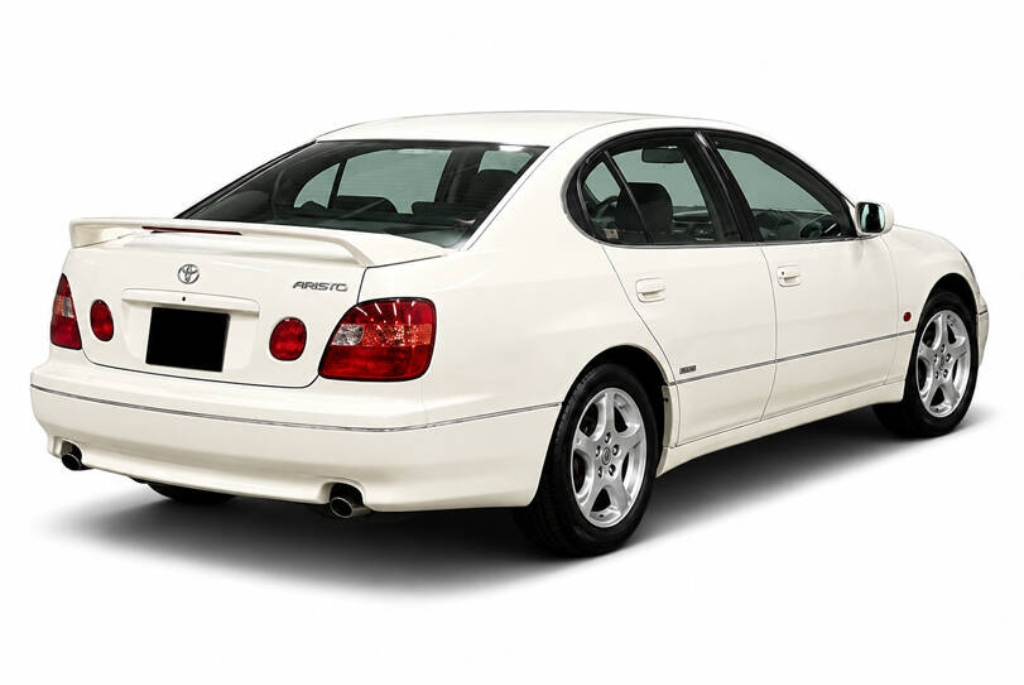
The toyota aristo eventually found a second life among the tuning community.
Its combination of rear-wheel drive, the 2JZ-GTE and a relatively spacious engine bay made it attractive to owners looking for more power. The four-door layout also gave modified cars a distinctive character that separated them from the usual Japanese sports-car builds.
However, factory specification and modified examples should not be confused.
A tuned Aristo can produce figures far beyond Toyota’s original output, but those numbers depend entirely on aftermarket modifications. Factory V300 models remained rated at 280 PS.
That distinction is important when discussing the car’s reputation. The Aristo’s tuning potential helped build its legend, but the original car was already an accomplished performance sedan.
Also read: Genesis Magma GT: Genesis’ Boldest Move into the Supercar World
Why the Aristo Was Sold as the Lexus GS Overseas
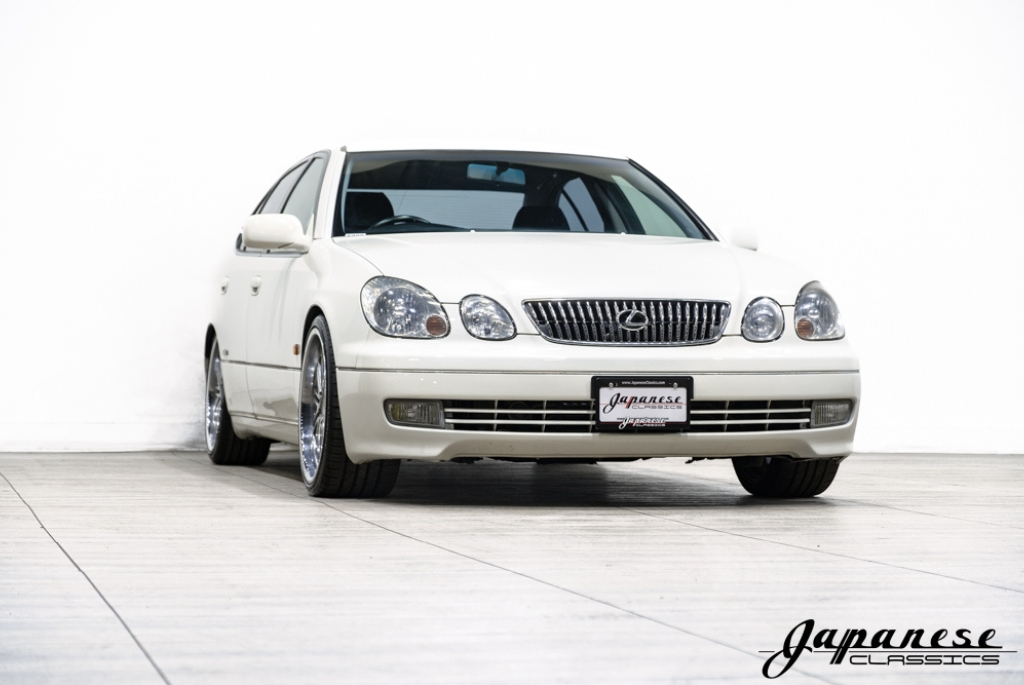
The toyota aristo also had an unusual international identity.
Toyota’s first-generation Aristo was marketed in North America as the Lexus GS from 1993. Toyota’s historical archive confirms that the Lexus version shared the Aristo’s basic platform and represented Lexus’ entry into the performance-oriented luxury sedan segment.
This created an interesting split.
Japanese buyers knew the car as the Aristo, while international markets often encountered the same basic formula under the Lexus name.
The Lexus GS eventually developed its own identity, but the Aristo remains particularly significant to enthusiasts because of its connection with Toyota’s Japanese domestic-market performance culture.
What Happened to the Aristo?
Toyota continued selling the second-generation model through the early 2000s. Toyota’s current historical catalog lists the second-generation Aristo from August 1997 through December 2004.
The Aristo name then disappeared.
Its successor relationship with Lexus is important here. Toyota’s own historical material states that after the second generation, the Aristo line was discontinued and the next generation moved forward as the Lexus GS.
That effectively closed the chapter on the Aristo as a Toyota-badged Japanese-market sedan.
But the story did not end there.
The combination of styling, luxury and 2JZ power had already given the model a strong following among enthusiasts.
The Aristo’s Place in Japanese Car Culture
The toyota aristo is an interesting example of how a car can become more important after its original production run.
It was never marketed as an exotic supercar. It was not designed to be a lightweight sports sedan. Its appeal was subtler.
The car took a familiar luxury-sedan format and added hardware that could deliver serious performance. That approach helped establish the Aristo as one of the era’s great sleeper cars.
Its understated body also aged relatively well. The first generation carries the unmistakable design language of the early 1990s, while the second generation looks cleaner and more purposeful.
Neither generation needs exaggerated styling to remain interesting.
Why the Toyota Aristo Still Matters
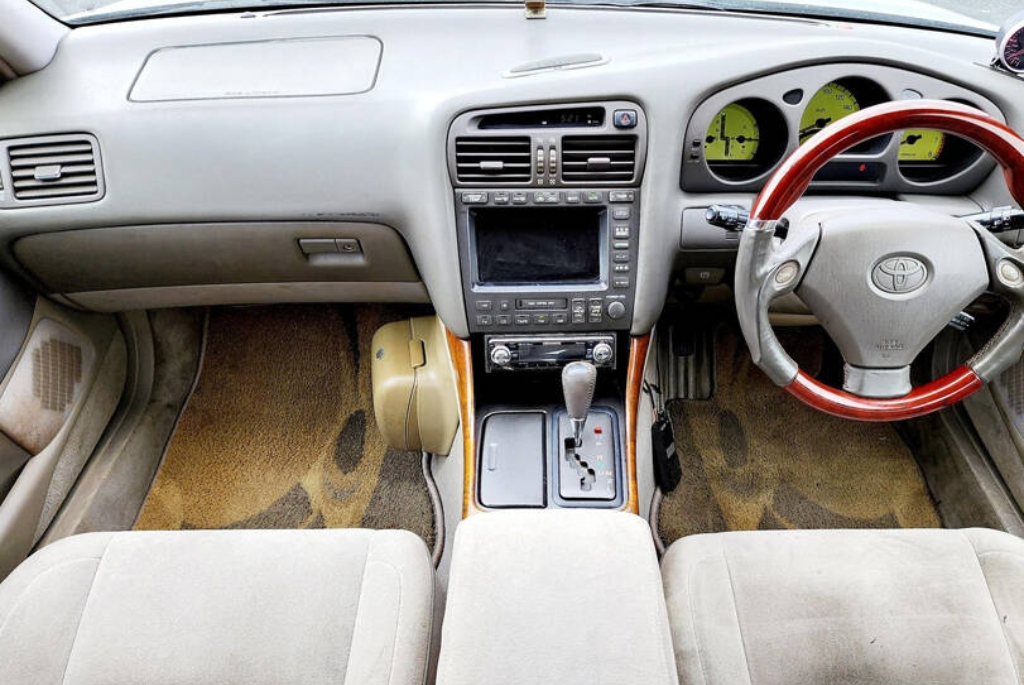
The toyota aristo represents an era when manufacturers could build sophisticated performance sedans without turning them into overtly aggressive machines.
The V300’s twin-turbocharged straight-six is the obvious headline, but the wider engineering package deserves equal attention. Toyota used double-wishbone suspension, electronic stability systems and rear-wheel-drive architecture to make the car capable of handling its performance.
The second-generation platform was also engineered with weight distribution in mind, with Toyota moving the engine rearward and reducing the overhangs.
That attention to fundamentals is what separates the Aristo from the idea of simply being “a sedan with a 2JZ.”
The Legacy of a Japanese Sleeper
The toyota aristo has become one of those cars that makes more sense with hindsight.
At launch, it was a high-performance luxury sedan aimed at buyers who wanted comfort without giving up speed. Years later, the same qualities made it attractive to a completely different audience.
The V300 became the star, but the wider Aristo story is just as interesting. It brought Italian-influenced design, Toyota engineering and a powerful straight-six together in a package that remained remarkably understated.
Its 2JZ connection certainly helped cement the reputation, but the car’s appeal goes beyond the engine. The toyota aristo was a genuinely capable luxury sedan that happened to possess the mechanical ingredients of a much more aggressive machine.
That is why it remains such an intriguing chapter in Toyota’s performance history.
About The Author